 English
 Dansk
Dansk Deutsch
 English
 Español
 Français
 Hrvatski
 Italiano
 Magyar
 Nederlands
 Norsk
Norsk Polski
 Română
 Slovenský
 Slovenščina
 Suomalainen
 Svenska
 Česky
Česky Ελληνική
 Български
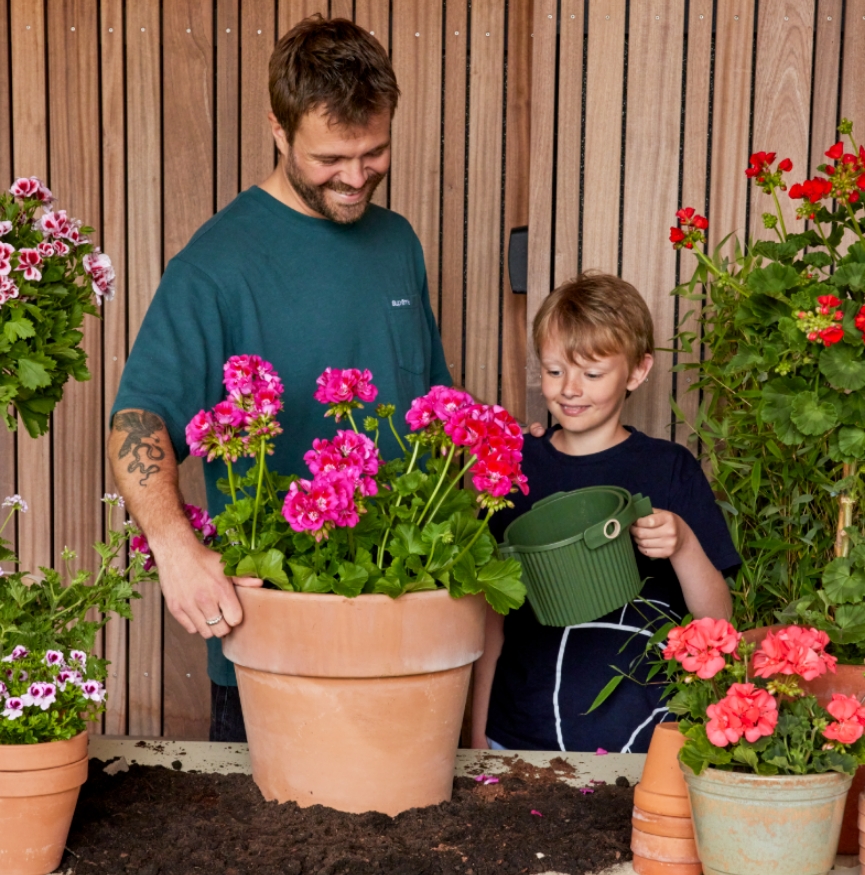
Geraniums are ideal for little gardeners: they are hardy, colourful and easy to care for. Here, you can learn how to plant and water them, as well as how to craft with them. You will also discover why gardening is so much more than just a pastime. It’s perfect for parents or grandparents who want to enjoy the outdoors with their children or grandchildren and instil a love of gardening in them.
Children gardening? At first, it might sound chaotic. But it’s often quite the opposite, offering a peaceful introduction to understanding nature. They get their hands in the soil, watch the leaves grow and eventually the flowers bloom. Anyone who has experienced this knows how proud children can be of their plant.
You don’t need flower beds or an allotment. You certainly don’t need a greenhouse either. Apart from a watering can and a small spade, you don’t even need gardening tools. A pot on the balcony, terrace, or even a sunny windowsill is all you need. The key is choosing a plant that can withstand the occasional mistake when it comes to watering. So, geraniums are perfect for children. You can sow or plant seedlings for harvesting vegetables in another gardening project later on.
Table of contents
- Why geraniums are perfect for gardening with children
- Step by step: How to plant a geranium
- Small pot, big impact – sustainable gardening
- Caring for geraniums properly, explained in a child-friendly way
- Geraniums & Co: Plants that taste good too
- Craft idea: Vases that make an impact
- In brief: Questions about gardening with children
💪 Why geraniums are perfect for gardening with children
Geraniums are loyal garden companions. They are hardy, grow quickly and bloom reliably. They can tolerate minor care mistakes and cope well with heat and rain, quickly looking like a ‘success’. This motivates children to gain experience.
Another advantage is their diversity. With colours ranging from red to pink to white or multicoloured, every child can choose their favourite. This greatly increases their attachment to their plant. ‘My plant’ is different from ‘the others out there’.
🧓 Geraniums – plants with history
Geraniums are here to stay. For decades, they have been a summertime staple on balconies across Europe. Many people have fond childhood memories of them, whether from their grandmother’s house, a neighbour’s property, or a holiday destination.
Geraniums are becoming increasingly popular, not just because of nostalgia, but because of their characteristics: they are long-lasting, easy to care for and reliable. It’s a gardening tradition that’s easy to pass on.
➡️ Do you know the story of how the geranium came to Europe?
🧒 And at what age does this become possible?
Children can join in as soon as they can carry a small watering can. Even preschoolers can fill a pot with compost, plant a seedling and check daily to see if anything is happening. The important thing is not to take on projects that are too big. One pot per child is enough. Two is quite ambitious.
🌱 Step by step: How to plant a geranium
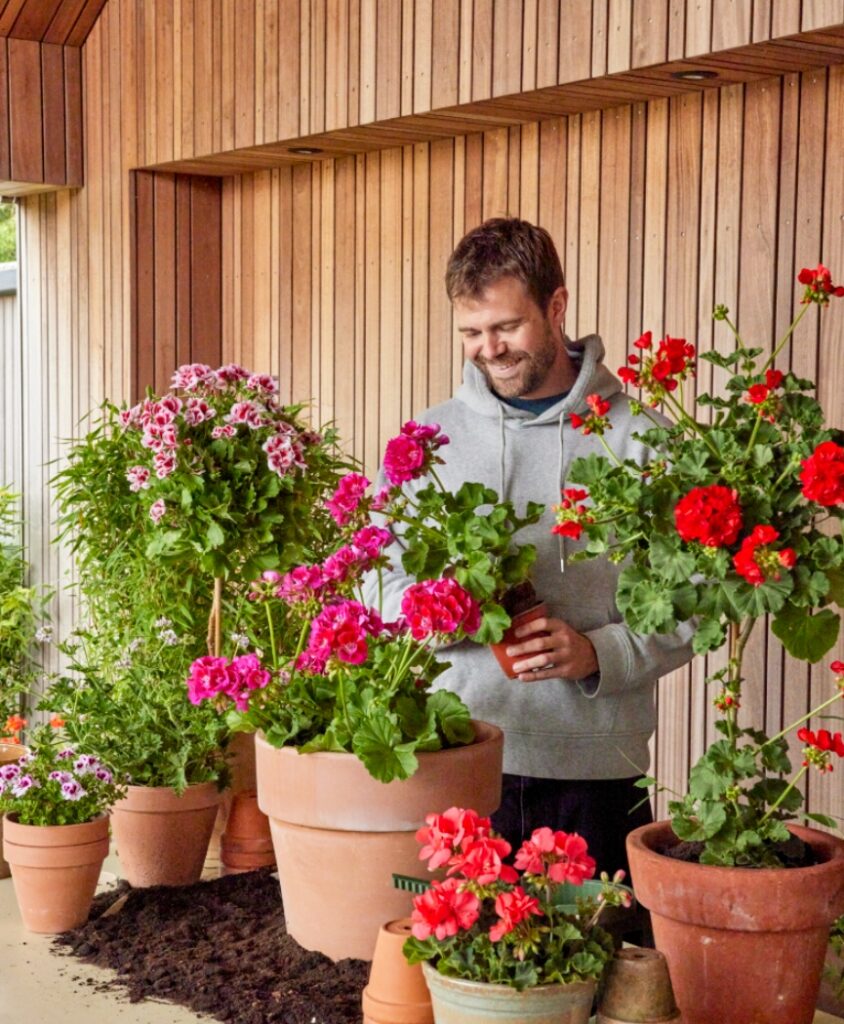
Here’s what you’ll need:
• a pot 20 cm diam. x 18 cm h with drainage hole
• expanded clay or gravel for drainage
• quality geranium or balcony plant compost
• a healthy geranium plant
• a bucket of water
• a full watering can
• optional: slow-release fertiliser
Here’s how to do it:
- Prepare the pot:
Place a layer of expanded clay or gravel 2–3cm deep, in the bottom of the pot. - Fill with compost:
Fill the pot two-thirds with compost.
(Optional) If using a slow-release fertiliser: with fertiliser sticks, insert them into the compost according to the packet instructions. If using granular feed, mix it into the soil before potting. - Water the plant:
Keeping it in its pot, immerse the geranium root ball in the bucket of water until no more air bubbles rise. Then carefully remove it from its pot. Tip: Press lightly against the base of the pot to loosen the root ball. - Insert and fill:
Place the plant in the centre of the prepared pot. Fill in around the plant with more compost, leaving a 1cm border at the top. Press down lightly but not too firmly. - Watering:
Using the watering can, soak the soil well until liquid runs out of the bottom of the pot. - Place the geranium in position:
A bright spot with at least four to six hours of sun per day is best. Geraniums should only be placed outside after the risk of frost is over.
🎨 Colourful variety: Which shade would you like?
Red, pale pink, hot pink, apricot, purple, white, two or more colours – the choice is huge. And this makes a difference, especially for children; the colour they have chosen themselves is given pride of place.
If you want to go further, after your initial success with geraniums, you can also try growing from seeds with your children. Growing seedlings from seeds is exciting but requires more patience and attention. Fast-germinating seeds such as cress, radishes or peas are a good choice, while the geranium continues to flower reliably.
Small pot, big impact – sustainable gardening
When gardening with children, you can talk about sustainability and explain why we should use peat-free compost. You can also talk about why we reuse plant pots, as well as discussing why we water with rainwater. Even small decisions like these show children that gardening is not only fun, but also good for the environment.
➡️ Why peat-free compost is better for the climate and nature
✅ Caring for geraniums properly, explained in a child-friendly way
💧 Watering:
• Regularly, but not too much
• Mornings are ideal. On hot days, water in the morning and evening.
• Although the top layer of soil may dry out, it should remain moist underneath.
• Overwatering can damage the roots.
🌞 Location:
• Sunny! At least 4–6 hours of sun daily.
• More sun = more flowers.
🌿 Fertiliser:
• If your compost doesn’t contain slow-release fertiliser, start feeding after four weeks.
• Apply liquid fertiliser weekly, following the packet instructions.
• Slow-release fertiliser lasts almost the entire season. If flowering slows down in late summer, apply liquid feed again.
✂️ Remove spent flowers:
• Regularly remove dead blooms so the plant can form new ones.
• To do this, carefully pinch off the dead flower and its stem between two fingers.
• Your plant will look neater immediately.
💡 Want more tips?
➡️ Discover them now and become a geranium expert: in our geranium care guide, you’ll find everything you need to know – from choosing and watering to overwintering!
Little garden explorers: How do plants actually drink?
When you water it, you don’t see it right away – but the geranium sucks the liquid up from the soil through its roots. It then travels through thin ‘tubes’ in the stems and leaves. At the top, the water evaporates again, like when you boil water. This is one of the basic processes of life. Here’s how you can make this process visible.
🧪 Mini experiment
Cut off the palest celery stick you can find (leaving the leaves on) and place it in water dyed with food colouring. After a few hours (or overnight), coloured lines will appear inside the stick. Cut the celery lengthwise for an even better view of the coloured veins.
Geraniums & Co: Plants that taste good too
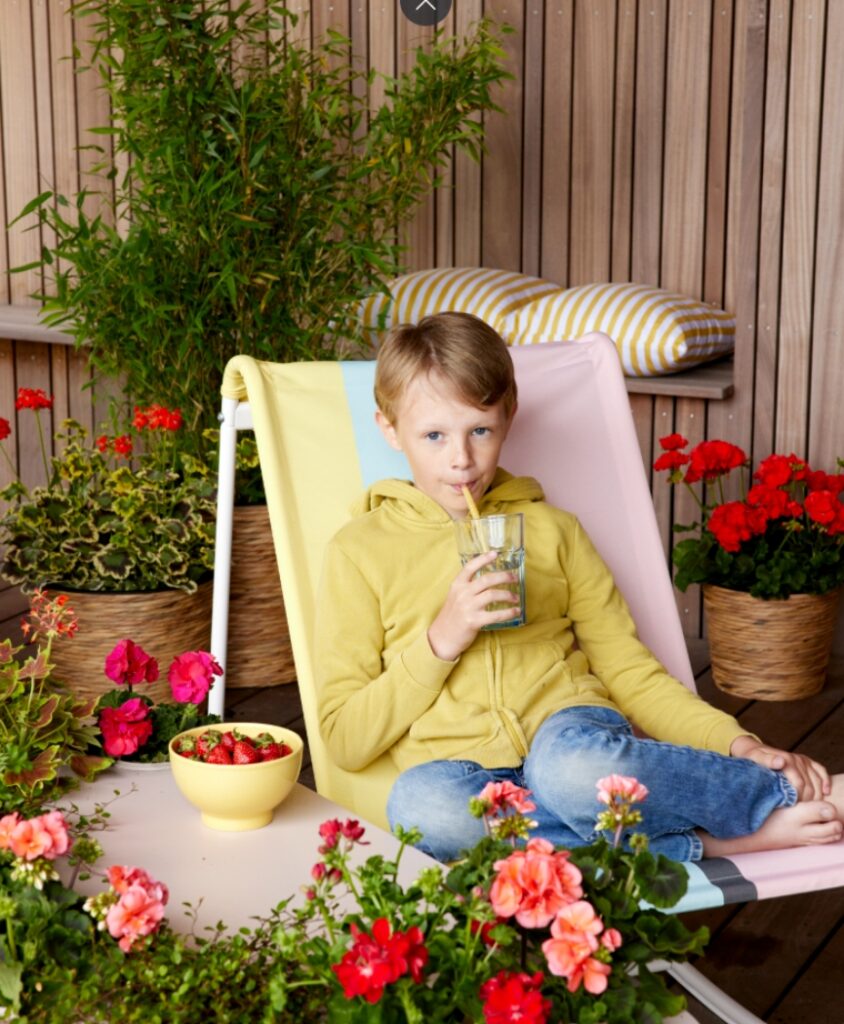
Things get even more exciting when you grow a few strawberries, tomatoes or herbs among your geraniums. This transforms a little balcony garden into a snacking paradise. Many of these plants also attract bees, which encourages children to observe them and wonder: ‘Who’s buzzing there?’
🔍 Discover the parts of plants: What is what?
Your children could draw a picture of their geranium and label the different parts. Alternatively, make a plant puzzle together.
• Root – underground part for drinking
• Stem – holds the leaves and flowers
• Leaves – need sun and make food
• Flowers – colourful and there to attract insects
👃 A fragrance to discover: geraniums have more to offer
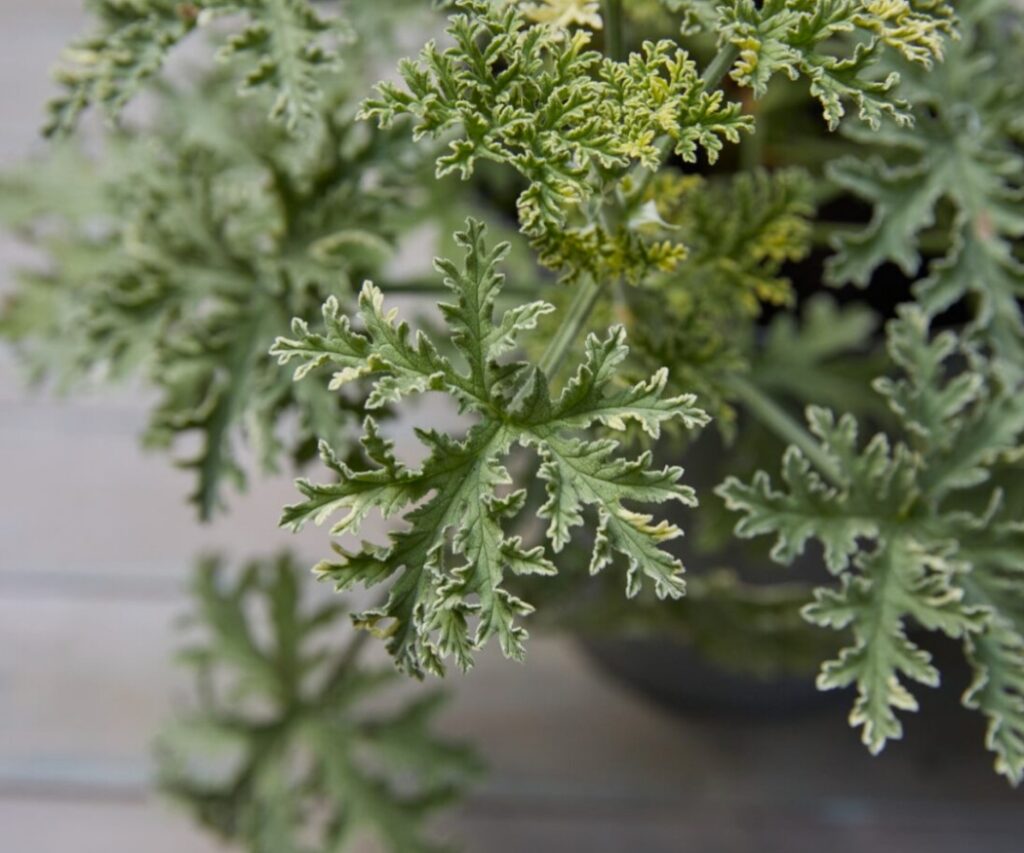
Not all geraniums smell the same. Some varieties are scented like lemon, while others have a fragrance like cola or roses. Some of them are even edible, provided they are organically grown. Try adding a few leaves to sparkling water or cake batter. Children love trying that.
Having a few pots of different varieties on the windowsill is enough to create a little, scented garden. Experiment with how the different varieties smell together. Close your eyes and see if you can guess!
🖌️Craft Idea: Vases that make an impression
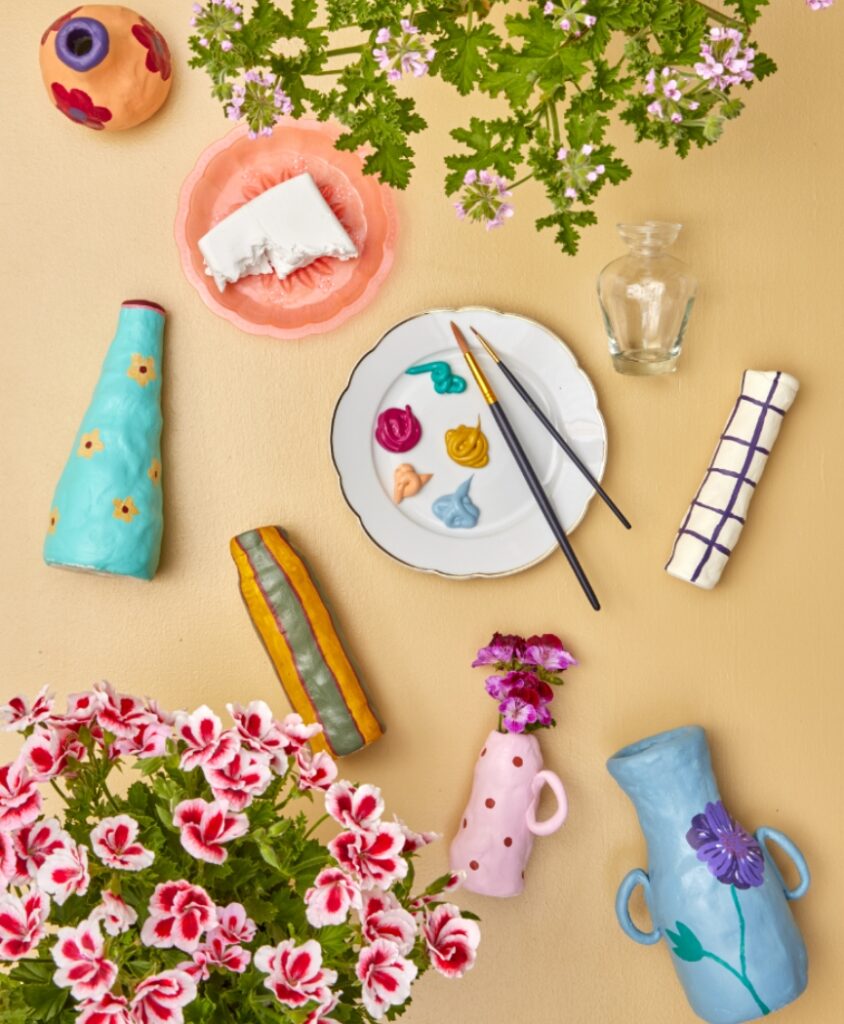
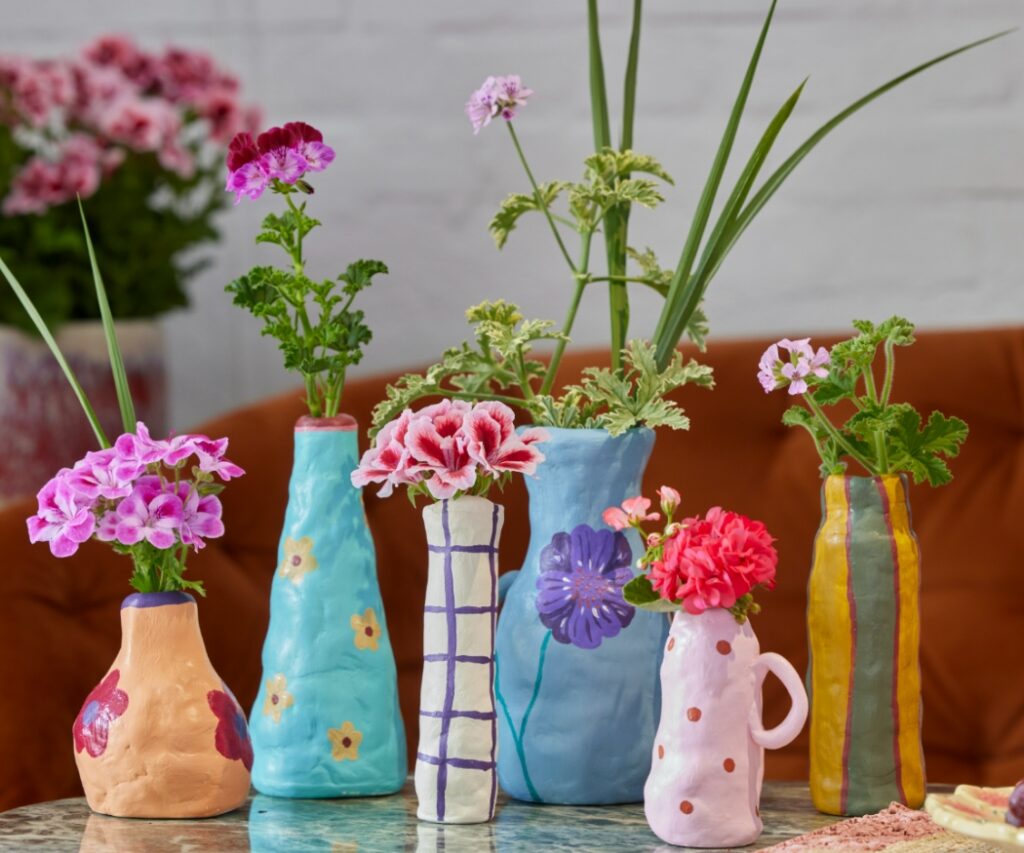
Vases don’t always have to come from a shop. Make your own simple, unique version using old glasses or cups, white modelling clay and acrylic paint. First, roll out the clay thinly with a rolling pin and cut it into a strip big enough to cover your vessel.
Tip: Use a paper template to check how large the strip needs to be beforehand. Wrap it around the glass/cup and press the ends together lightly. Your base layer is ready! After drying for one to two days, paint the surface in bright colours. Add extra shine with a coat of clear varnish.
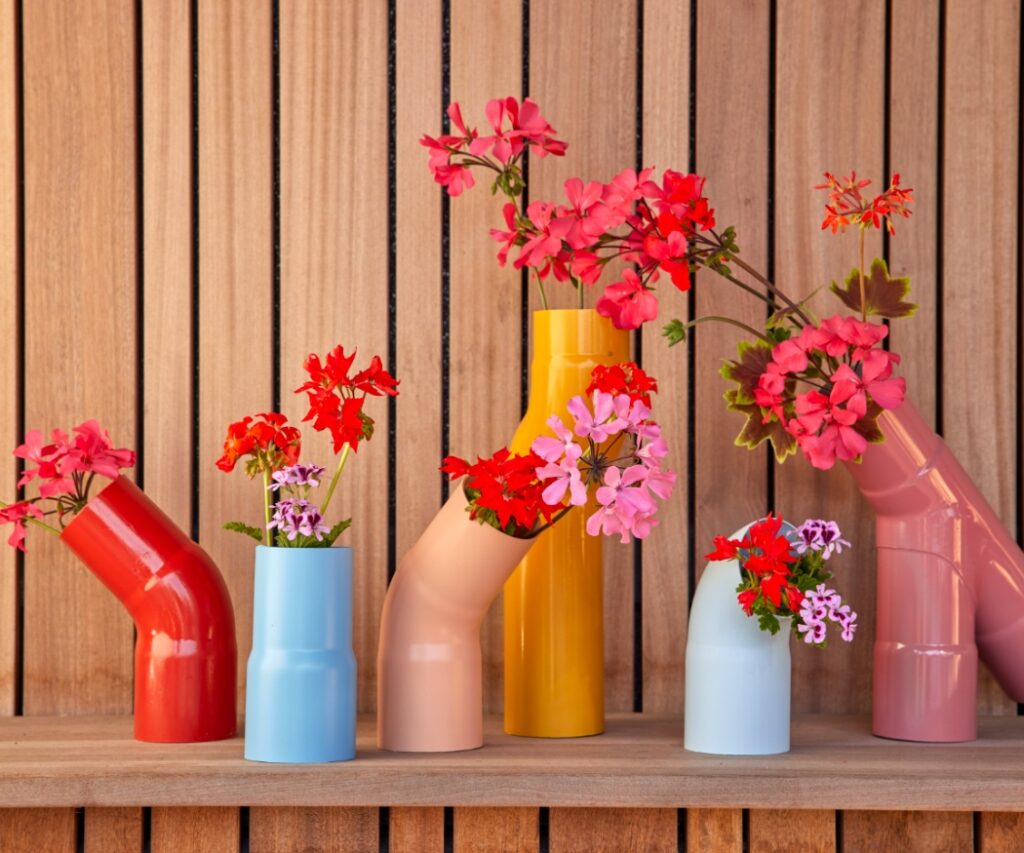
Prefer something completely different? Spray-painted plastic pipe sections (e.g. drainpipes from a DIY store) can be transformed into modern, colourful vase covers using waterproof paint. Simply cut a length of pipe to size, spray it your desired colour, then place it over a glass vase. Place several lengths of pipe in different heights, widths and colours next to each other, for a striking effect.
🎨 Want even more creative ideas?
➡️ Get inspired now! In our decor section, you will find lots of simple craft projects featuring geraniums – ideal for children, families and anyone who loves to get creative.
Finally: It doesn’t need to be perfect
Just as not every day is sunny, gardening with children doesn’t have to be perfect. The important thing is to do it together. Dig the soil, water and observe together. And rejoice when something grows. A pot, a geranium, a little compost, water and a few weeks of summer – that’s all you need for a little gardening adventure.
Note: geraniums should only be placed outside after the risk of frost is over.
In brief: Questions about gardening with children
Are geraniums suitable for children?
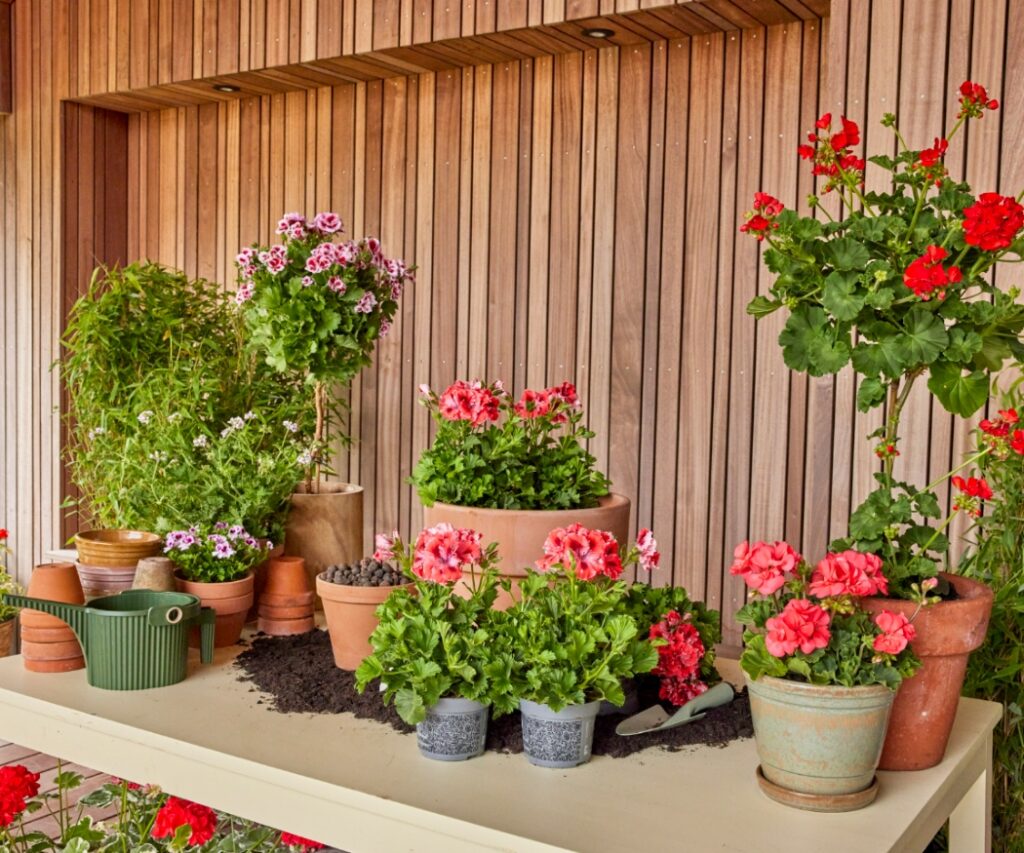
Yes, they’re ideal for children. They’re resilient to overwatering, grow quickly and produce flowers reliably. This motivates children and ensures they see the fruits of their labour.
At what age can children start gardening?
Even pre-schoolers can take on simple tasks such as filling pots with compost, watering plants and observing leaves. It’s important that projects are small and manageable.
Which plants are good for children?
Easy-care plants such as geraniums, strawberries, mint and cherry tomatoes are ideal. They grow quickly, are forgiving of little mistakes and provide visible results — and even something to snack on!
Are microgreens, sprouts or vegetables an alternative to geraniums?
Microgreens (young vegetable seedlings harvested and eaten very early on), sprouts or vegetable plants such as pumpkins, peppers, carrots and cucumbers can make exciting additions. However, they often require more attention and care when sowing. Geraniums are usually a better option for getting started when gardening with children. Other plants for harvesting can be added to another project later on.
Can you garden with children if you don’t have a garden?
Yes — a balcony box, a plant pot on the terrace, or even a windowsill (as long as the plant pot is securely fixed!) are all good options. The key is to find a sunny spot.
What can children learn from gardening?
They learn responsibility and patience, and develop an appreciation of nature and the changing seasons. They also enjoy it, especially when they’re given the freedom to make their own decisions and designs.
How much time does gardening with children take?
It doesn’t have to be a big project. Often, just a few minutes a day is enough for activities such as watering, checking for changes and perhaps removing a dead leaf. The key is regularity, not duration.