 English
 Dansk
Dansk Deutsch
 English
 Español
 Français
 Hrvatski
 Italiano
 Magyar
 Nederlands
 Norsk
Norsk Polski
 Română
 Slovenský
 Slovenščina
 Suomalainen
 Svenska
 Česky
Česky Ελληνική
 Български
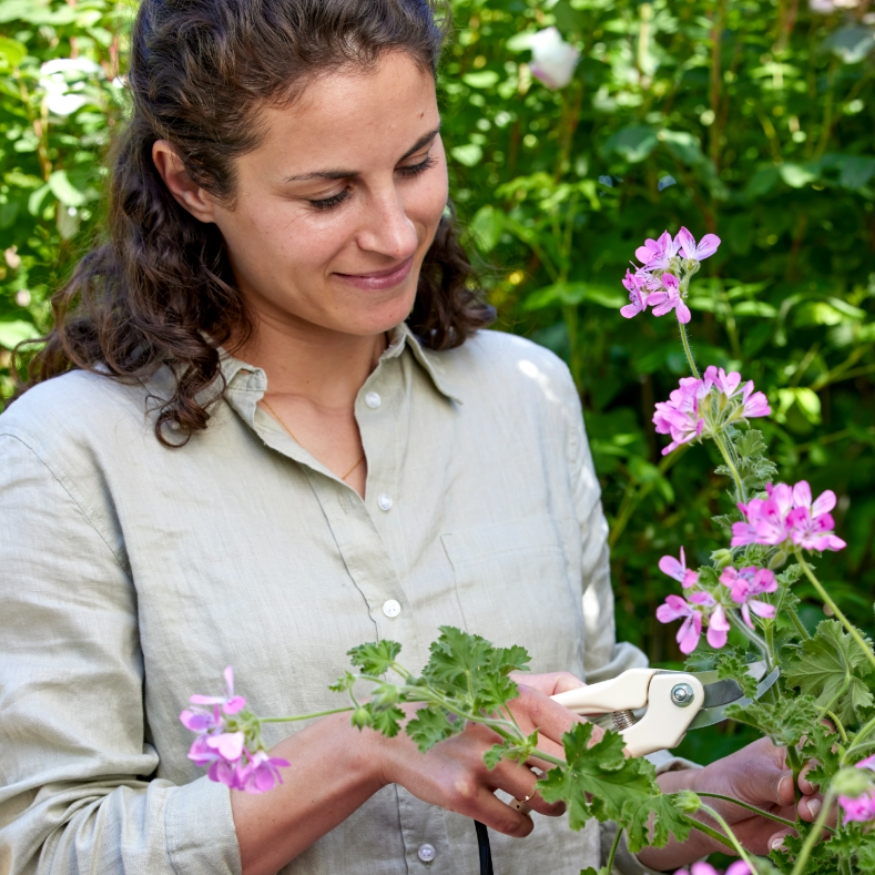
More flowers, compact growth, healthy plants: we explain when you should prune, when just deadheading is enough – and why poor pruning often does your geraniums more harm than good.
When to prune geraniums: an overview of key points
Overwintered geraniums should be pruned back in spring to encourage new growth. In summer, there’s no need to cut them back, just remove dead flowers. Exceptions: If you want to reduce their water requirements during a long absence, or if you want to promote bushier growth. In autumn, shoots should be pruned heavily to prepare these long-lasting summer flowers for overwintering. The decisive factor is not the date, but whether you want your plant to grow, flower or conserve energy.
Table of Contents
- When to prune geraniums: an overview of key points
- How to prune geraniums correctly
- Prune in spring – or not?
- Pruning geraniums in summer: why deadheading is better
- Prune in autumn = prepare for winter
- Why overwintering geraniums is sustainable
- Pruning makes geraniums bushier – the science behind it
- This happens without cutting
- FAQs about pruning geraniums
- Glossary: Important terms
How to prune geraniums correctly
Cut just above a leaf node. This is where the budding points are located, from which new shoots grow. Don’t cut the shoot in the middle of the ’empty’ stem, as the stumps will just dry out. When cutting, remove anything that is dead, weak or damaged as well. This allows the plant to focus its energy on healthy shoots. After pruning, place the geranium in a bright spot and water sparingly. Wait until new shoots appear before fertilising.
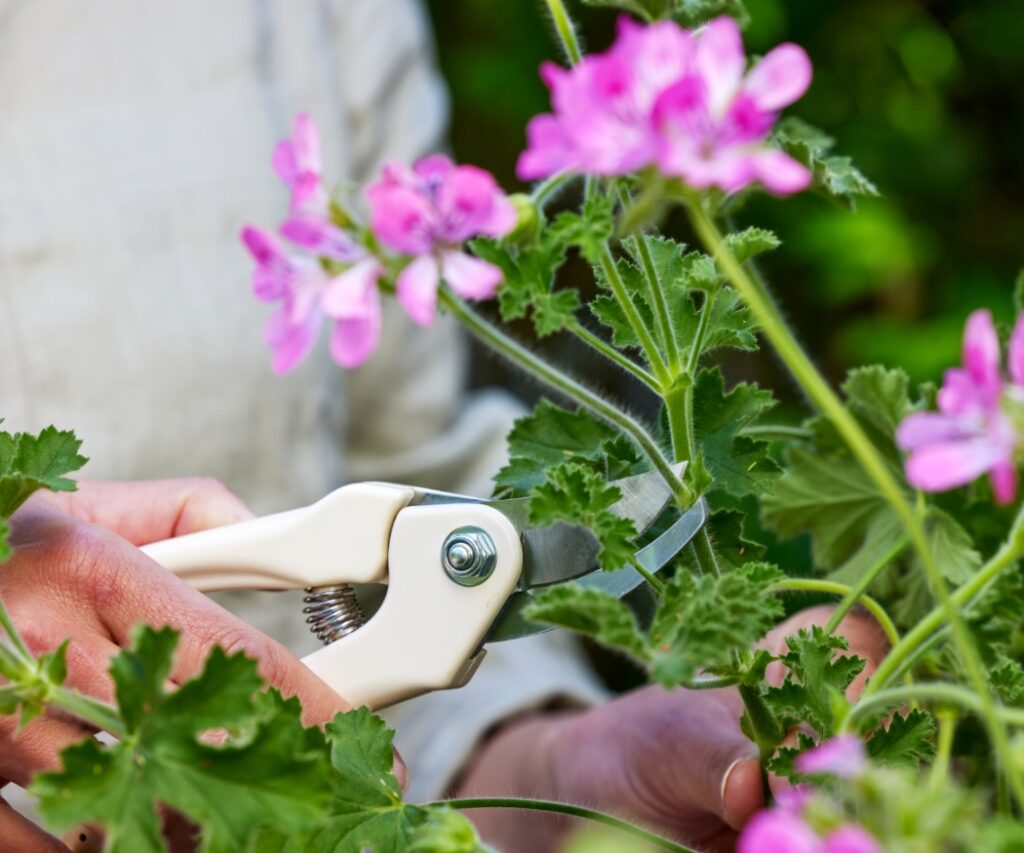
It’s important to use a sharp, clean tool when cutting. Using blunt scissors or an unsharpened knife will crush the shoots. These wounds heal poorly and can lead to disease. Are you cutting several plants? If so, clean the cutting blade with 70 per cent alcohol after each plant, to be on the safe side and ensure no diseases are transmitted between plants. This is a tip professionals use.
Prune in spring – or not?
Whether or not a geranium needs pruning in spring depends on whether it’s newly purchased or has been overwintered. Geraniums you’ve just bought don’t need to be pruned. They are cultivated regionally and in such a way that they grow compactly and have good branching structures. Pruning would only delay flowering. Geraniums from Europe are known for being quality, healthy plants with reliable growth. Simply plant them appropriately, water regularly and place in a warm, sunny spot.
The situation is different for overwintered geraniums. Sometimes they produce long, spindly shoots in their winter home and may grow unevenly. At the end of February or beginning of March, cut back the shoots to about 10-15cm long. Cut just above a leaf node and completely remove any dead or weak shoots or any that cross over each other. This encourages strong new shoots to grow. After pruning, place the plants in a brighter, warmer spot and water sparingly. Only fertilise them once they start to sprout again.
Geraniums have a long tradition in Europe and are an integral part of the beauty of summer on balconies and terraces.
Rule of thumb: Allow newly bought geraniums to grow. Rejuvenate overwintered specimens in spring by pruning them.
Pruning geraniums in summer: why deadheading is better
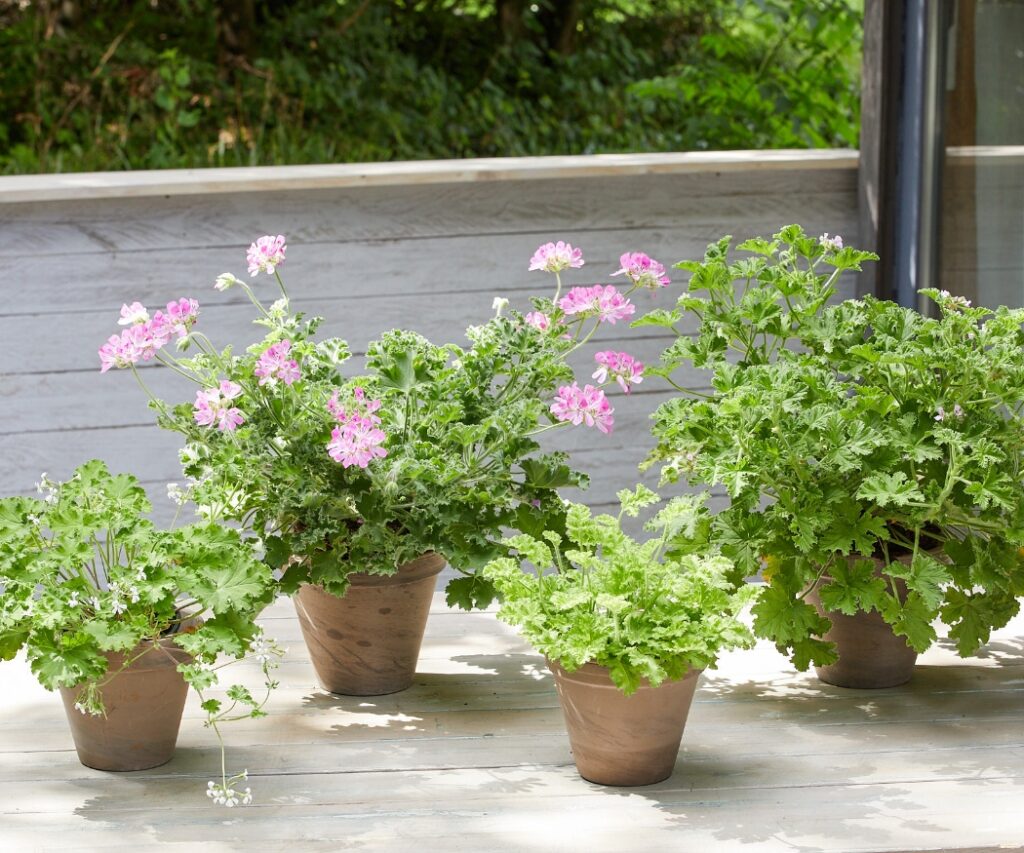
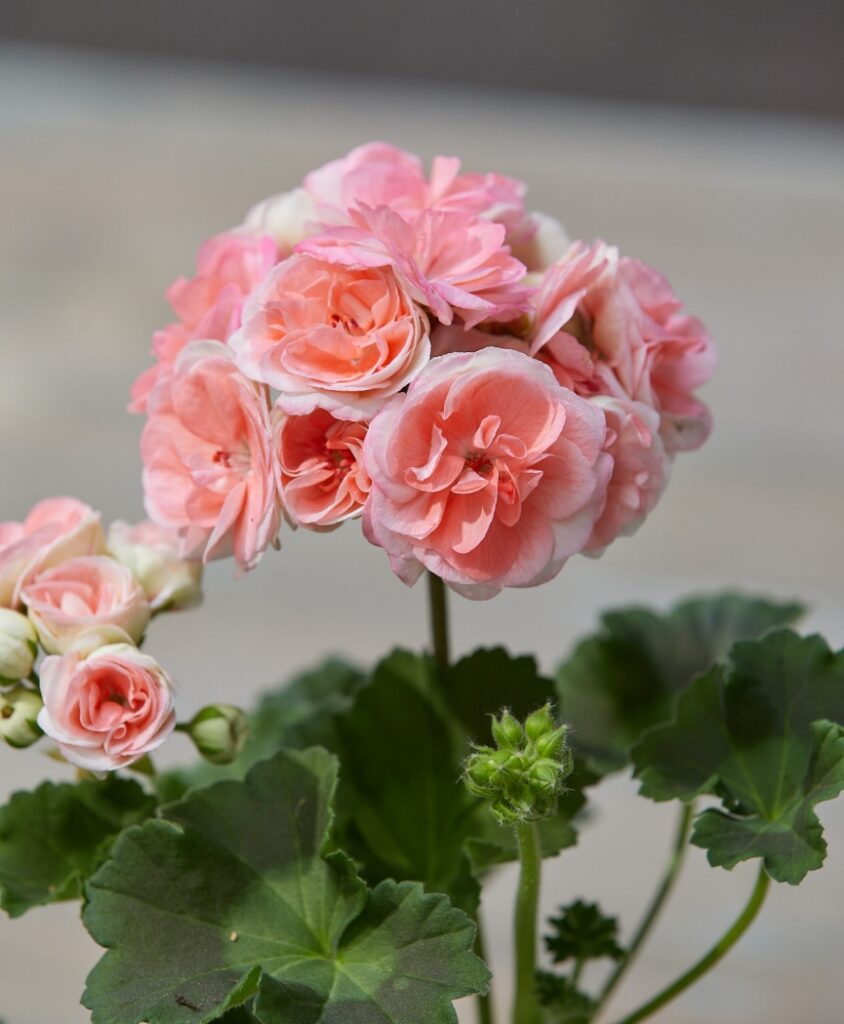
Geraniums come in a wide variety of colours and shapes, ranging from simple to striking, so there’s something to suit every taste. In summer, allow them to bloom and avoid cutting them back. After pruning, the plant will form new shoots before it produces beautiful flowers. Instead, simply deadhead your favourite trailing or zonal varieties.
Tip: Geraniums make ideal cut flowers for summer arrangements. Cutting the stems for this purpose also stimulates bloom formation.
What is deadheading?
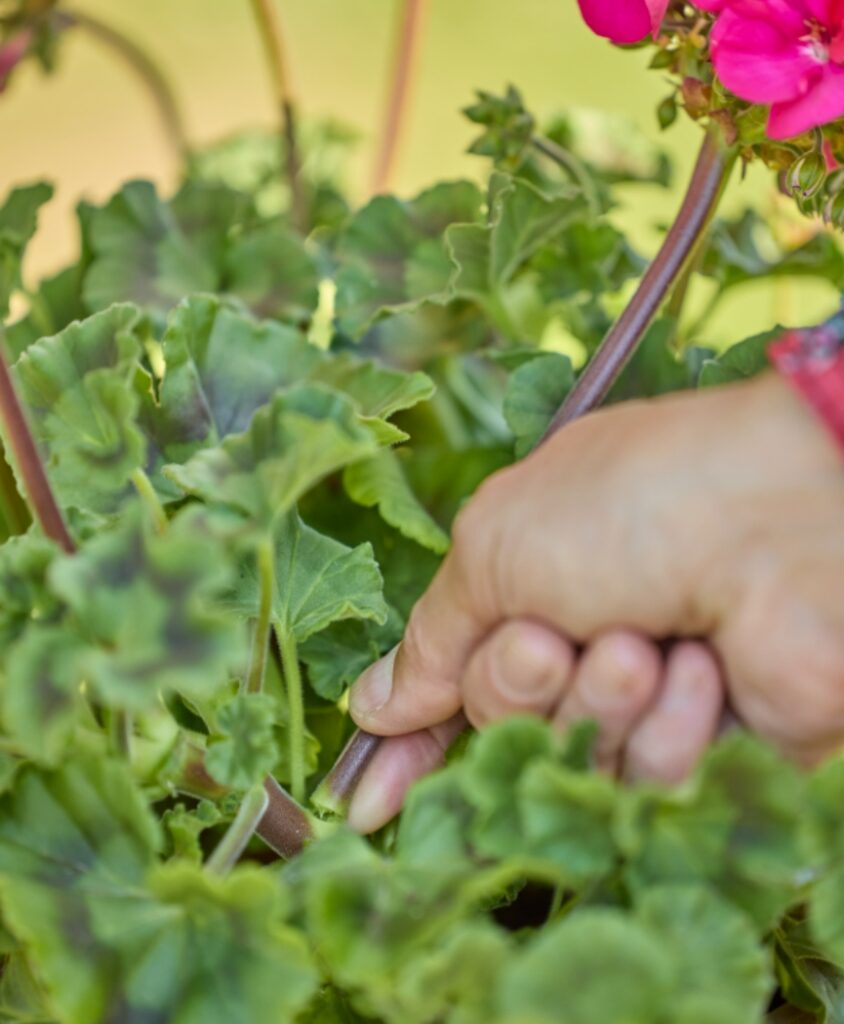
Deadheading is the process of removing any spent flowers. Simply pull individual, dead florets out of the flowerhead. If the flowers are wilting but not dead yet, break them off individually at the base. To remove an entire head, run two fingers along the stem until you reach the base of the shoot, then break the stem off in the opposite direction to the growth.
Why? The geranium wants to produce seeds from its spent flowers. Once it has produced them, it thinks ‘job done’ and stops blooming. By removing dead flowers, you trick the plant into thinking that it still needs to produce seeds, so it keeps forming new flowers.
Deadheading is especially important for double-flowered varieties, as their full blooms are more susceptible to rot in rainy weather. Self-cleaning trailing geraniums – the best-known variety is called “Ville de Paris” – shed their dead flowers automatically.
Summer pruning is only necessary in certain circumstances, such as when individual shoots have grown out of shape or been weakened by extreme heat. If this is the case, cut back the affected shoots slightly. Heavy pruning always results in a longer pause in flowering.
Note: When deadheading geraniums, it’s important to remove the entire flower head and stem – not just the withered petals.
Regal pelargoniums benefit from heavier pruning
There are always exceptions to every rule. After flowering, regal pelargoniums (Pelargonium grandiflorum) need to be pruned back more severely to sprout again and reward you with a second flowering in midsummer.
Special case: a haircut before the holidays
Going on holiday and can’t find anyone to water your plants? Then cut back your favourite geraniums beforehand, including the flowers. Plants with fewer leaves and flowers consume less water. This will help them survive the days without water and encourage them to sprout fresh shoots while you’re away. If you don’t do this, you’ll have to remove lots of dead flowers when you get back.
Prune in autumn = prepare for winter
Geraniums are long-lived plants that can grow and flower for many years with proper care. If you want them to bloom again, you can overwinter them. To achieve this, cut them back in autumn. The best time to do this is when the nights become consistently cooler and growth slows down. Pruning should be done before the first frost.
Cut the shoots back to about 10-15cm, trimming just above a leaf node. Remove any dead, weak or crossing shoots completely. Remove all flowers and buds too. This means the plants will no longer put energy into flowers. With less leaf mass, geraniums in pots will survive the winter more easily.
After pruning, place the plants in a cool, frost-free location between 5–10°C, such as a garage or cool stairwell. Important: Don’t place them somewhere too warm, otherwise they will sprout too early. Water them sparingly in their winter location (just enough to prevent them from drying out) and do not fertilise.
Why overwintering geraniums is sustainable
- Avoids throwaway culture: Geraniums are one of the plants that will last for years with proper care.
- Conserves resources: If you keep your plant, there is no plastic used for new pots or packaging and no extra transport to/from the shops.
- Plants with character: Scented geraniums (e.g. Pelargonium graveolens) become increasingly interesting with each passing year as they develop unique growth forms and an intensified scent profile. This results in unique plants with an unmistakable appearance – an aspect that collectors particularly appreciate.
Pruning makes geraniums bushier – the science behind it
Cutting off the tip of a shoot will make a geranium grow bushier. Why? This is due to a phenomenon known as ‘apical dominance’. This is when the main shoot inhibits the growth of the side shoots. The plant hormone auxin is responsible for this and is produced in the shoot tip. It promotes the shoot tip’s upward growth while simultaneously inhibiting the development of side buds.
If the shoot tip is missing, the auxin inhibitor is also missing. Other growth substances, especially cytokinins, can then activate the side buds, causing the plant to branch out. New flower buds form on the new branches. Many branches = many flower buds.
The same applies to trailing geraniums (Pelargonium peltatum) – with one difference: the new side shoots don’t grow upwards but hang down. More branching means more trailing shoots.
This happens without cutting
You don’t need to prune newly purchased geraniums. However, overwintered specimens won’t die without pruning. In spring, these plants tend to grow long, thin shoots instead of bushy, compact ones, so unpruned plants need a lot of space in their winter location. This dense foliage can also accumulate moisture, which could lead to the spread of grey mould (Botrytis cinerea).
FAQs about pruning geraniums
Can I prune geraniums during flowering?
You can, but you shouldn’t. In summer, it’s better to just deadhead them. Pruning hard when in bloom will cause a pause in flowering.
Does this also apply to trailing geraniums?
In principle, yes. The same applies here: deadhead in summer; prune selectively in spring and autumn if overwintering.
Do I have to prune every year?
No. Newly purchased geraniums don’t need pruning in spring. This only becomes important if you want to overwinter your plants.
What do I do with the cuttings?
You can compost healthy cuttings. Diseased or mouldy shoots should be disposed of in general waste. You can also take cuttings from strong shoots that are at least 10cm long and root them.
➡️ Find out more on water, nutrients and location in this blog on geranium care.
Glossary: Important terms
Apical dominance
The shoot tip controls growth. As long as it remains intact, side shoots grow more slowly. If it is removed, the plant branches out more.
Auxin
A plant hormone present in the shoot tip. It promotes longitudinal (upward) growth and inhibits lateral (side) shoots.
Deadheading
The proces of removing spent flowerheads completely, including the stem. This prevents seed formation and encourages new blooms. Includes removing dead leaves as well.
Leaf node (Nodium)
The point on a stem where a leaf is attached. New shoots and flowers can develop from here.
Flowerhead (Inflorescence)
Several flowers growing together on a stem. In geraniums, the inflorescence is called an umbel.
Cytokinins
Cytokinins are growth substances that promote side shoots. They exert their effect independently of the inhibitory auxin present in the shoot tip.
Pruning
This is the targeted cutting of stems to control growth and branching. Unlike deadheading, green, healthy stems are also cut back.
Seed formation/seed setting
The process by which a plant forms seeds after flowering. This activity is energy-intensive and can slow down subsequent flowering.
Side shoot
A shoot that grows from a budding point at the leaf node. This ensures bushy growth.
Shoot
A shoot is a stem with leaves and buds. The plant continues to grow at the tip.
Overwintering
The practice of keeping geraniums frost-free throughout the winter. This is more effective if you prune the plant first.
Vegetative growth
The growth of leaves and stems (not flowers). After pruning, a plant will restore its leaf mass first.