 English
 Dansk
Dansk Deutsch
 English
 Español
 Français
 Hrvatski
 Italiano
 Magyar
 Nederlands
 Norsk
Norsk Polski
 Română
 Slovenský
 Slovenščina
 Suomalainen
 Svenska
 Česky
Česky Ελληνική
 Български
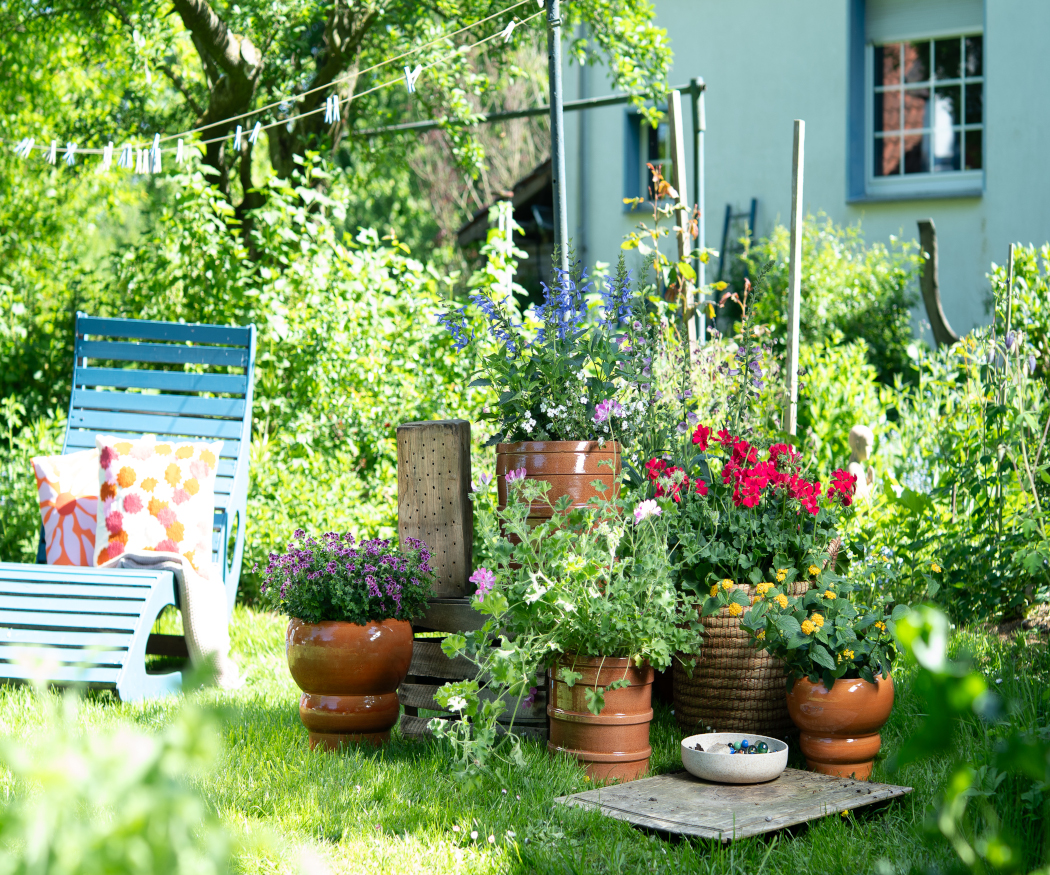
Naturalistic gardens are on-trend. They reflect a desire for authenticity, sustainability, and a harmonious coexistence between humans and nature. Lush blooms, rustic materials and charming details such as old wooden crates, beehives and bug hotels come together to create vibrant retreats that also provide valuable habitats for insects, birds and other animals. Geraniums are perfect for these types of garden. These low-maintenance flowering beauties can withstand heat and short dry spells, adding bright accents from spring until well into autumn. They also work well with bee-friendly plants such as yellow sage (Lantana camara), bacopa (Sutera diffusus) and anise-scented sage (Salvia guaranitica), and can be incorporated into creative crafting projects. The experts at Pelargonium for Europe (PfE) share their inspiring design ideas for nature-inspired gardens, including beautiful plant combinations featuring geraniums and decorative upcycling projects with step-by-step instructions.
Geraniums in naturalistic gardens – colourful and versatile
Geraniums are among the most reliable of summer-blooming plants. Loving sun and warmth, they flower profusely and continuously from May until the first frost, earning their reputation for hardiness and low levels of maintenance. They look great in baskets, containers or rustic wooden boxes, adding bold splashes of colour.
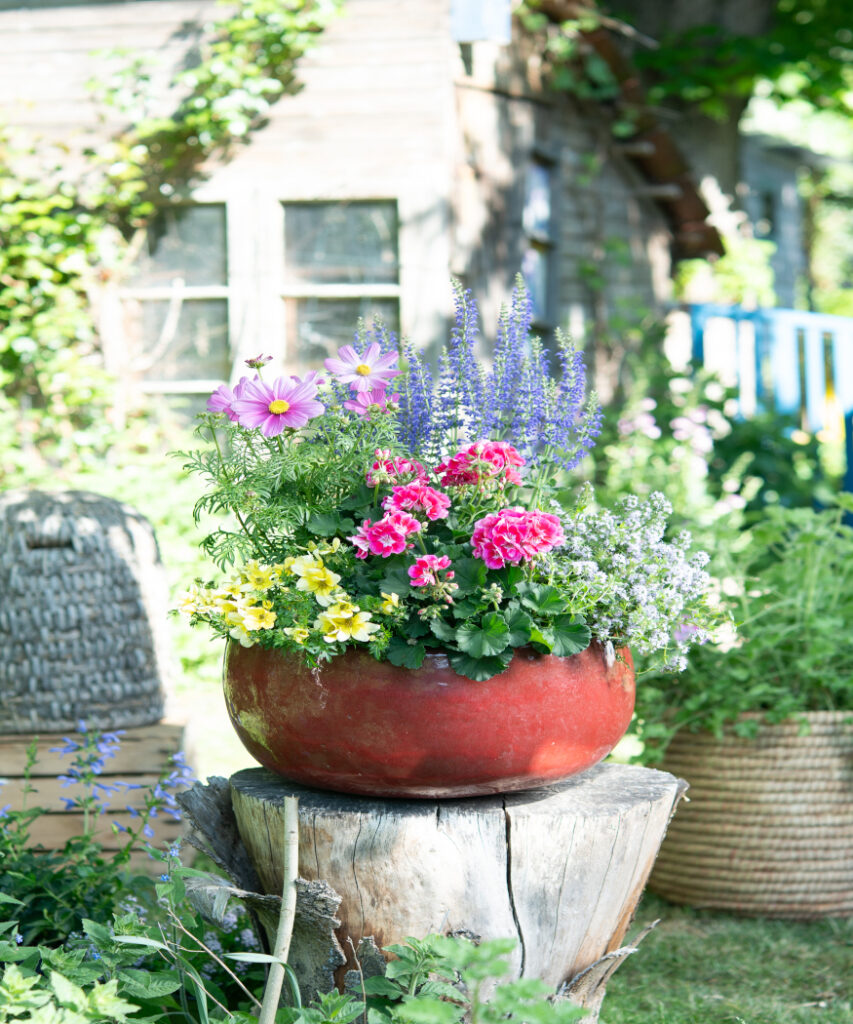
And their beauty is highlighted even more when combined with sun-loving herbs or summer flowers that attract bees and butterflies. One example is this combination on the left , featuring various geraniums alongside Balkan clary (Salvia nemorosa), cosmos (Cosmos bipinnatus), savory (Satureja montana) and fern-leaved beggar’s ticks (Bidens ferulifolia). This combination is not just visually appealing, it also promotes biodiversity in the garden.
Natural materials such as wood, terracotta and stone, as well as aged pots, highlight the garden’s naturalistic feel. To give your outdoor space a personal touch, add accent pieces with simple craft projects. From bug hotels to upcycled pots, you can create design features that are both useful and beautiful, making your garden unique.
Craft project 1: Tin can bug hotel
Homemade bug hotels are valuable habitats for insects and make a cheerful addition to your garden. This homemade version transforms simple tin cans into colourful ‘creatures’ that stand out among geraniums and bee-friendly summer flowers such as cosmos (Cosmos bipinnatus) and Balkan clary (Salvia nemorosa).
To make one, you will need tin cans, round wooden sticks/dowels, threaded rods, washers, nuts, paper-covered wire, colourful string, wooden beads, glue, short lengths of bamboo, and a drill.
Here’s how to make one step-by-step:
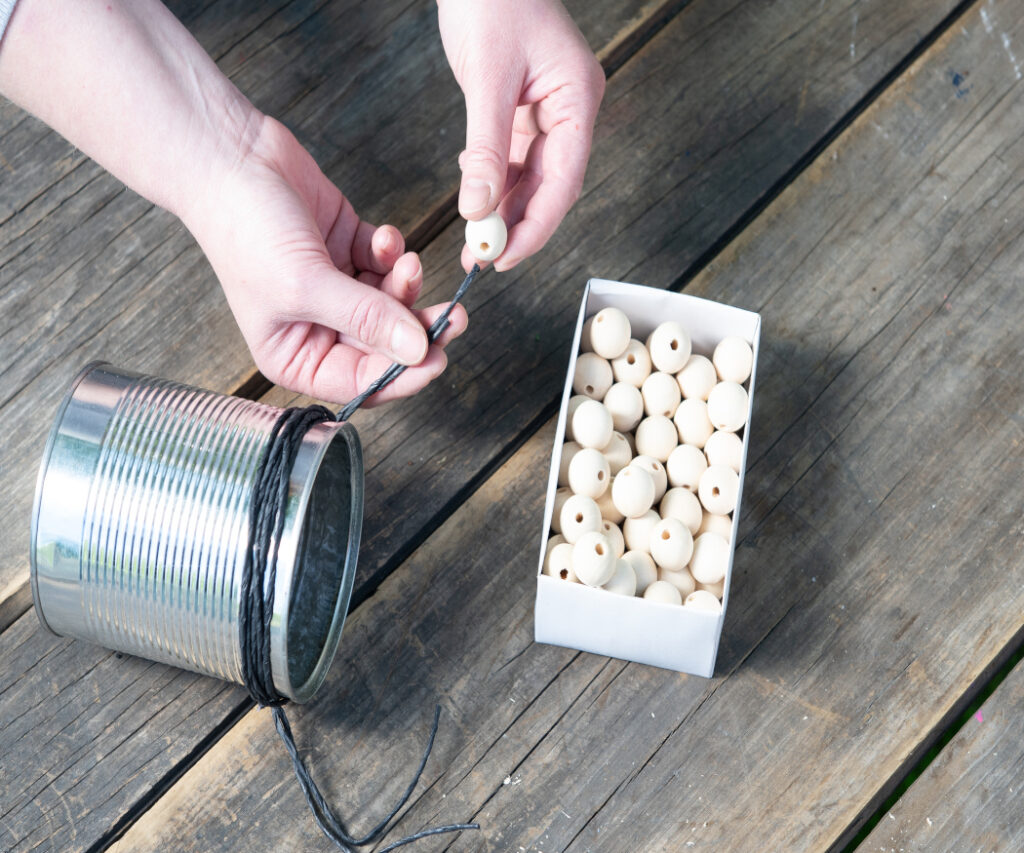
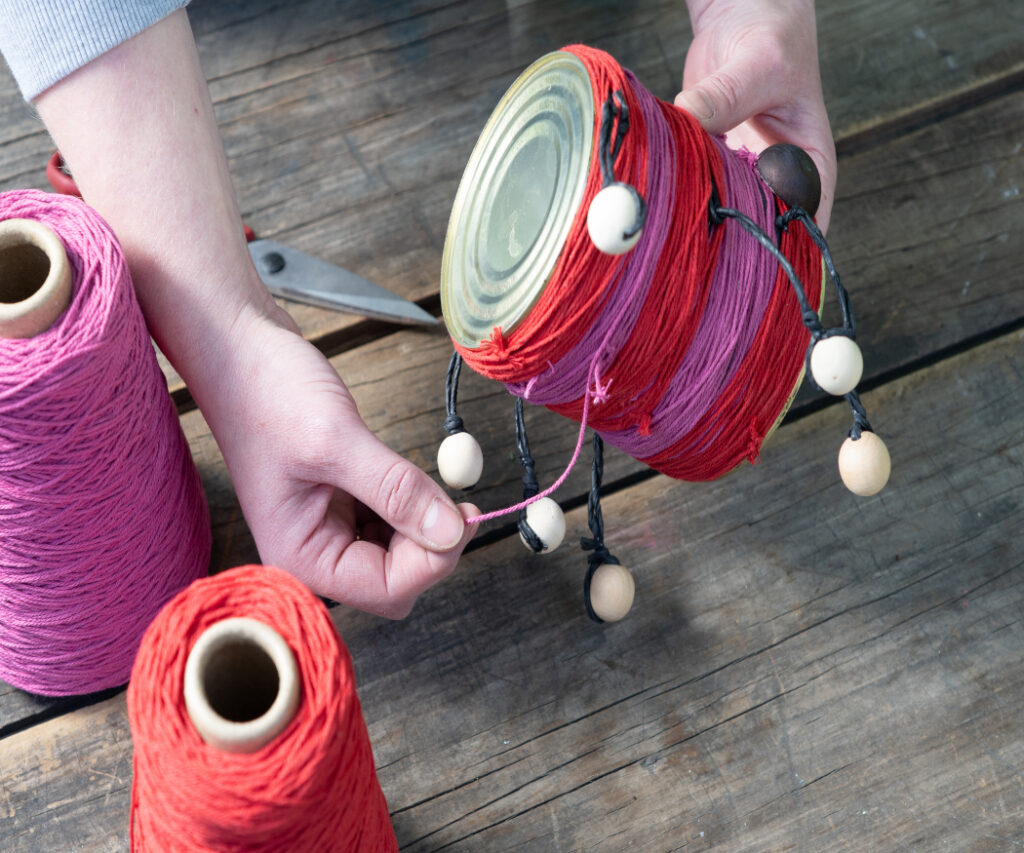
- Wrap the paper-covered wire around the tin to form six legs: two at the front, two in the middle, and two at the back. Then thread wooden beads onto the ends of the wire to form ‘feet’ and secure them by bending the wire round.
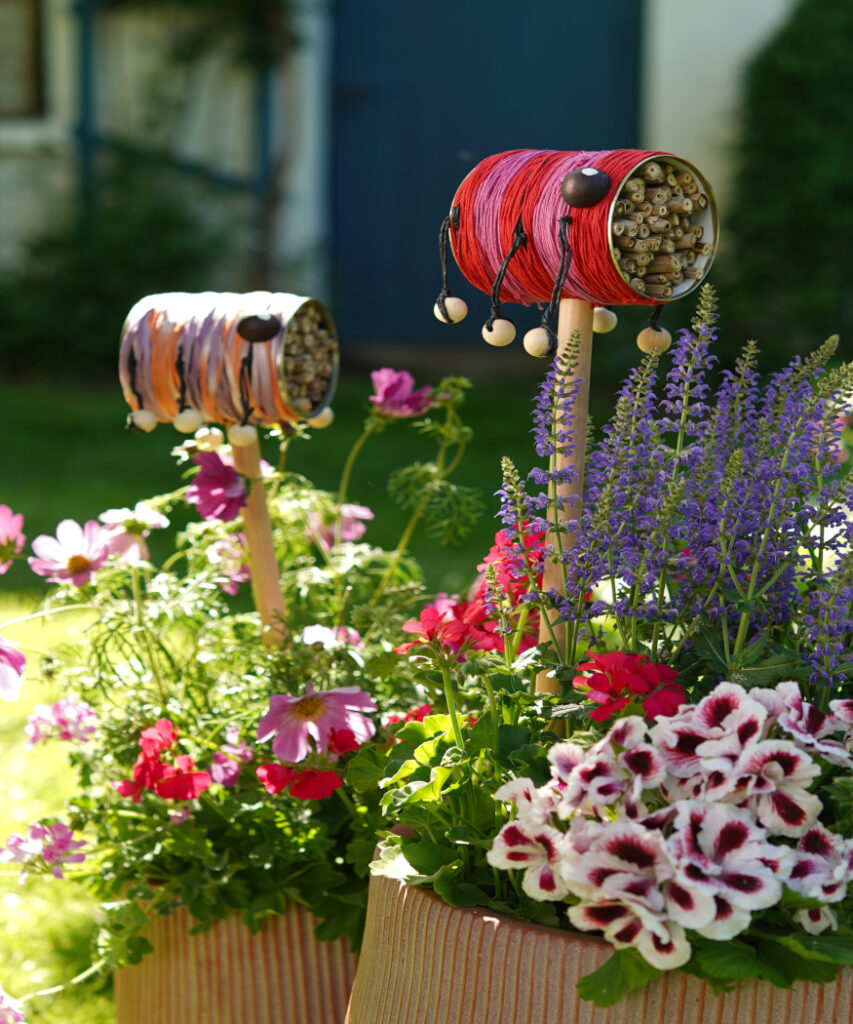
2. Wrap the tin tightly with the string until no metal is visible. Then glue two more beads to the outside of the tin to make ‘eyes’ for your creature.
3. To make the base, drill a hole in the round stick/dowel and insert a threaded rod.
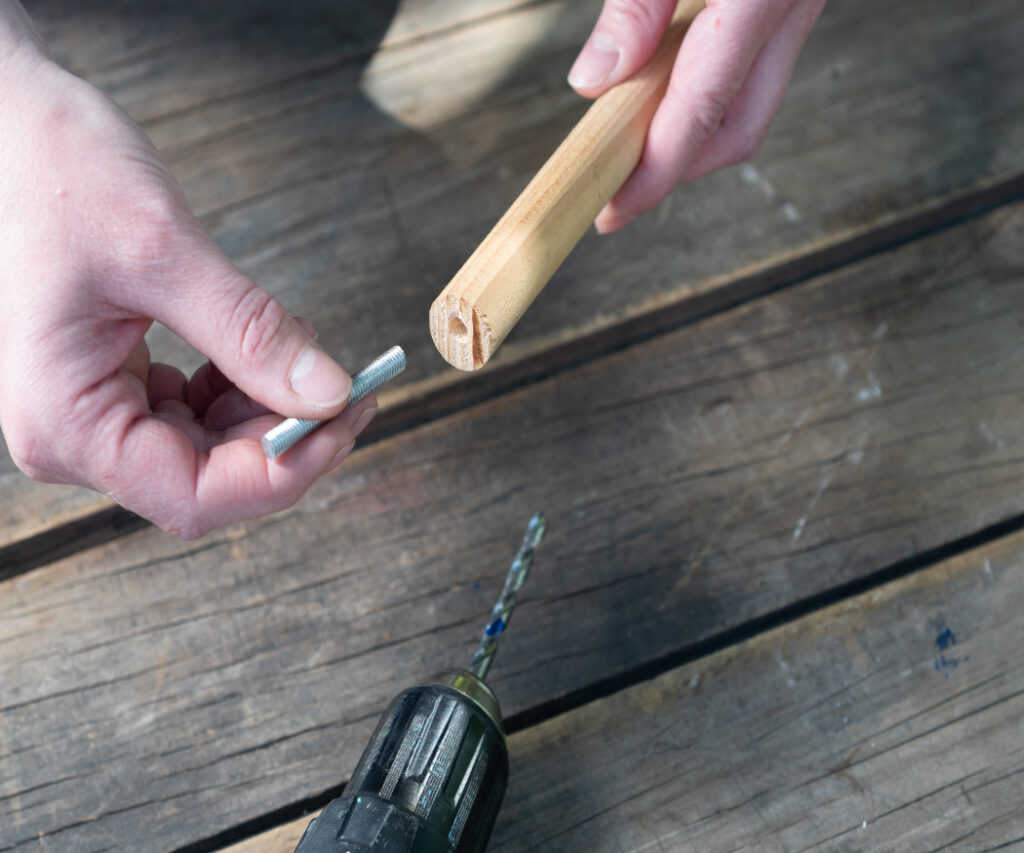
4. Drill a hole in the bottom of the tin, place the tin on the threaded rod and screw it to the wooden stick using a washer and nut.
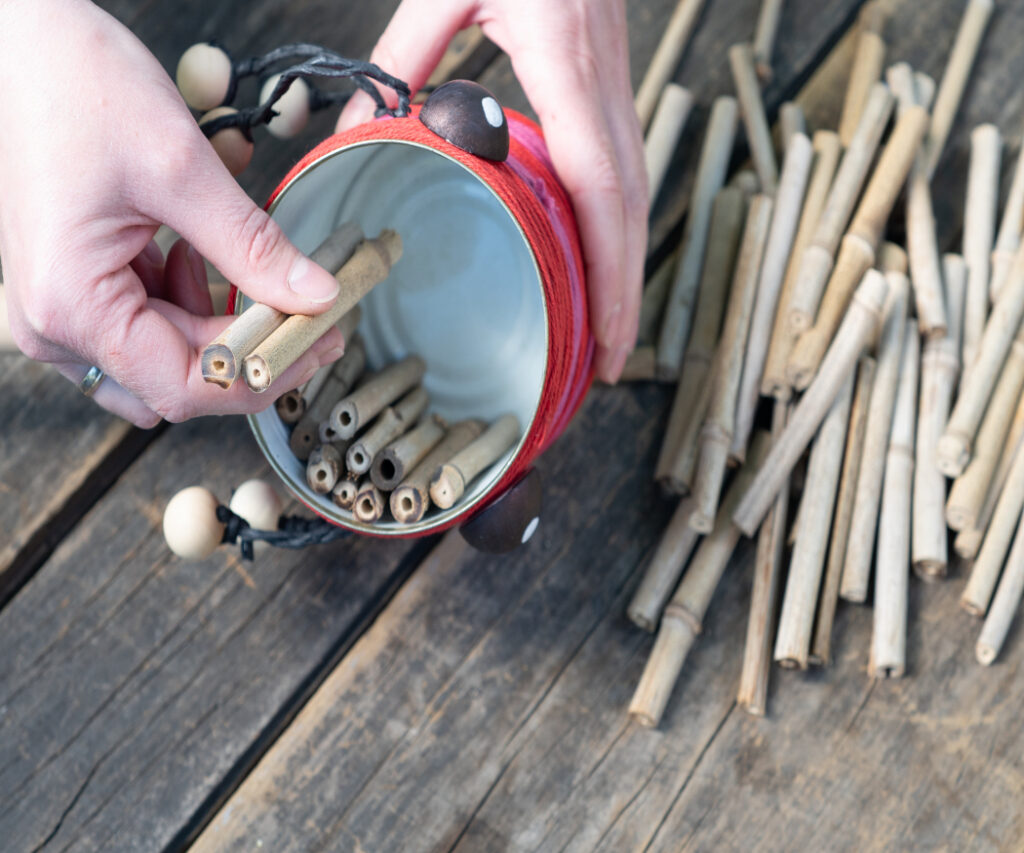
5. Fill the tin tightly with the lengths of bamboo to create nesting aids.
6. Finally, place it among geraniums and other flowers. Your little work of art is complete!

Craft project 2: Fruit crate mini raised bed
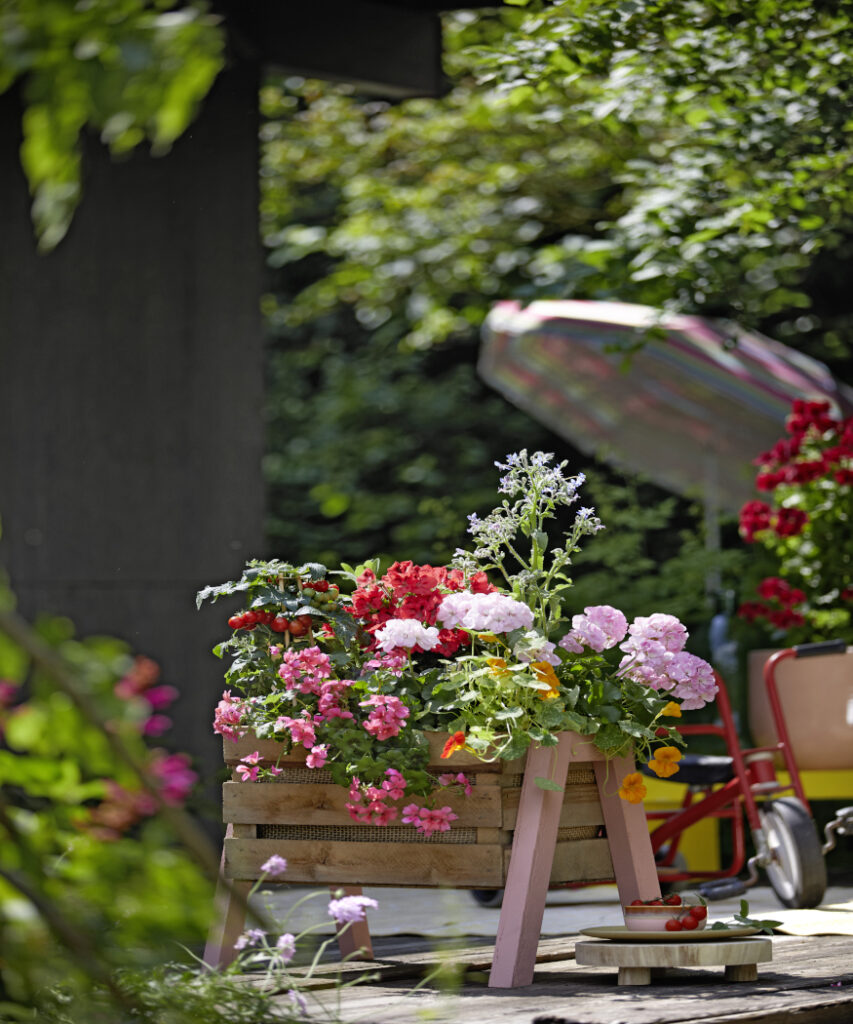
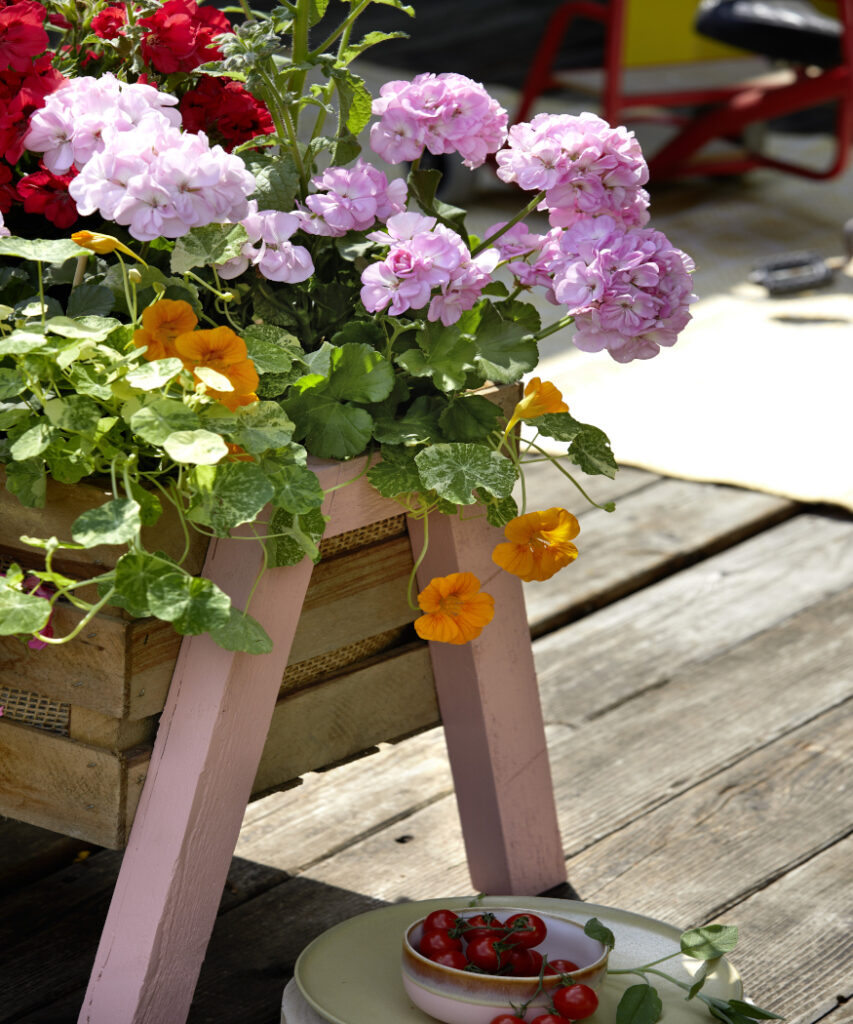
Transform old into new: an old fruit crate can easily be converted into a pretty mini raised bed. Planted with lush flowering geraniums, nasturtiums (Tropaeolum majus), borage (Borago officinalis), sage (Salvia officinalis) and cherry tomatoes (Solanum lycopersicum), the result is an arrangement that beautifully combines ornamental and culinary plants and provides plenty of food for insects.
You will need an old fruit crate, roofing battens, waterproof paint, screws, hessian, strong plastic sheeting (e.g. pond liner), expanded clay for drainage, compost, a staple gun and staples, a drill, a saw and sandpaper, flowering geraniums, nasturtiums, borage, sage (Salvia officinalis) and cherry tomatoes.
Here’s how to do it, step by step:
- Cut the roofing battens to size: 4 x legs 80–85cm long, 2 x crossbars 10cm long. Mitre the ends, sand and paint them with waterproof paint and leave to dry.
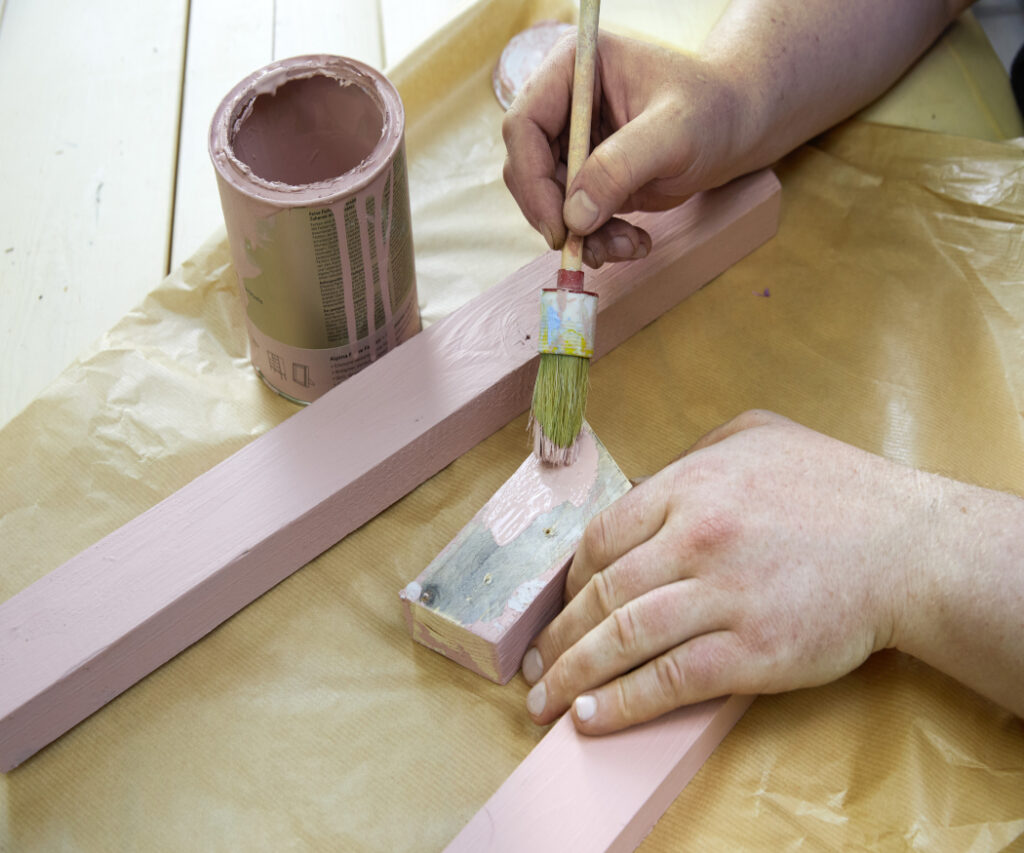
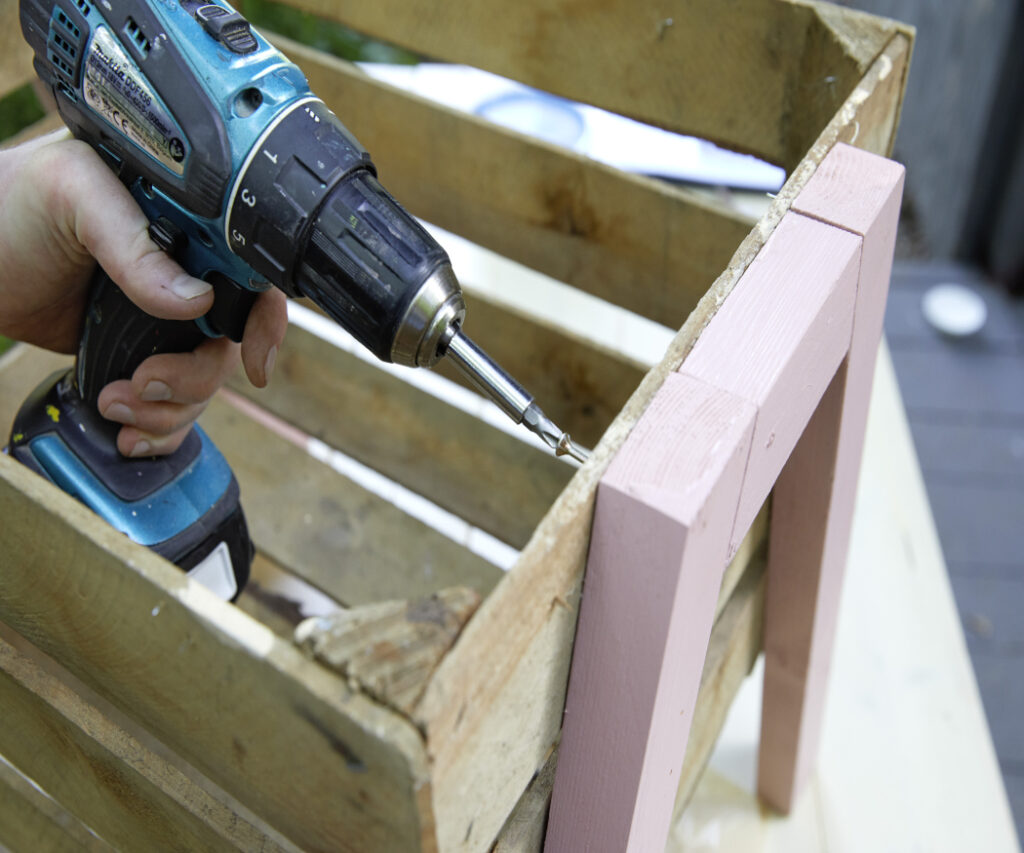
2. Screw one pair of legs together with a crossbar in between to create a sturdy side panel. The mitre cuts should be flush with each other to ensure the legs are slanted and stable. Repeat with the other pair of legs. Screw the finished side panels to the fruit crate, making sure the upper crossbar is flush with the top edge.
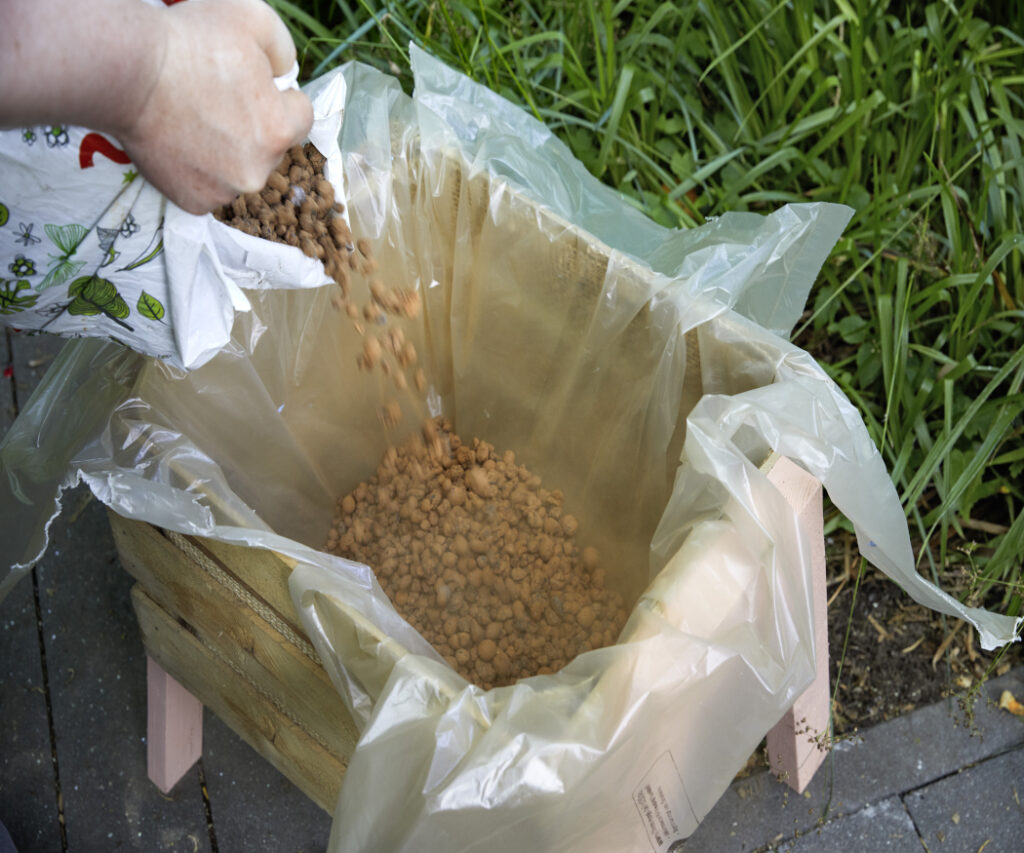
3. Line the crate, first with the hessian, then with the plastic sheeting, and staple both to the top edge. To prevent waterlogging, add a drainage layer of expanded clay.
4. Fill the crate with compost and plant the geraniums, nasturtiums, borage, sage and cherry tomatoes. Make sure there is enough space between each plant (about 20cm).
Thanks to their undemanding nature, geraniums will thrive in this arrangement, turning the raised bed into a colourful focal point.
Craft project 3: Colourful pot stand
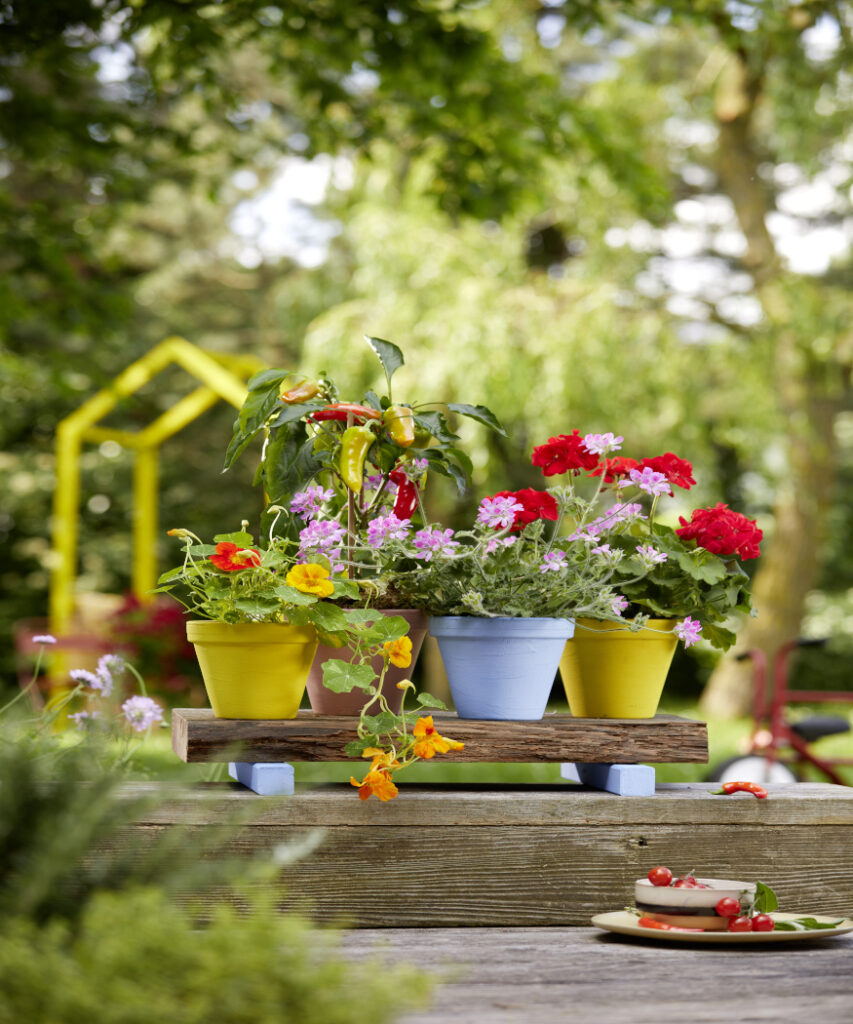
A colourful display of pots, containing scented and zonal geraniums, nasturtiums (Tropaeolum majus) and chilli plants (Capsicum annuum), on a homemade wooden platform not only looks beautiful and smells wonderful, but also provides fresh ingredients for cooking and offers plenty of food for insects. You can recreate this craft idea in just a few steps.
You will need a natural wooden plank, wooden batons, terracotta pots, waterproof emulsion paint, paintbrushes, screws, washers, compost, geraniums, nasturtiums and chillies.
Here’s how to do it:
- First, saw the wooden batons to the required length. Paint the batons and leave them to dry, then screw them to the underside of the plank.
2. Paint the pots in bright colours using the paint, then leave to dry completely.
3. Attach the pots to the top of the plank through the drainage hole, using screws and washers.
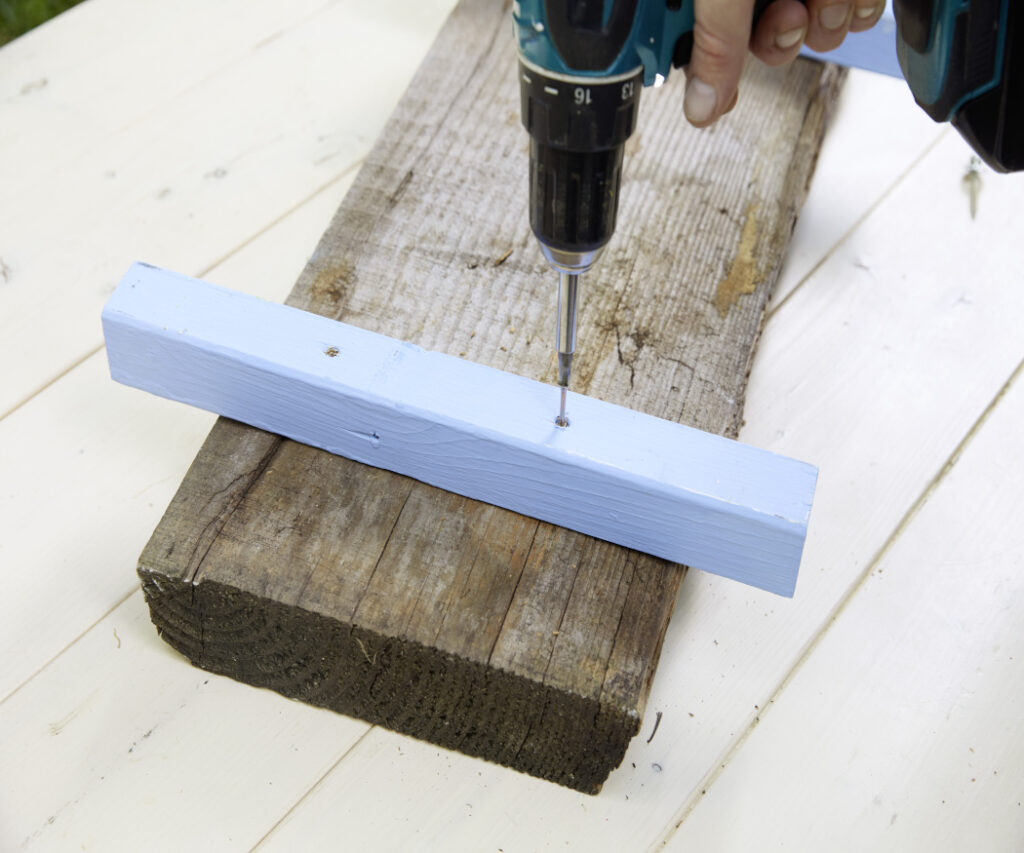
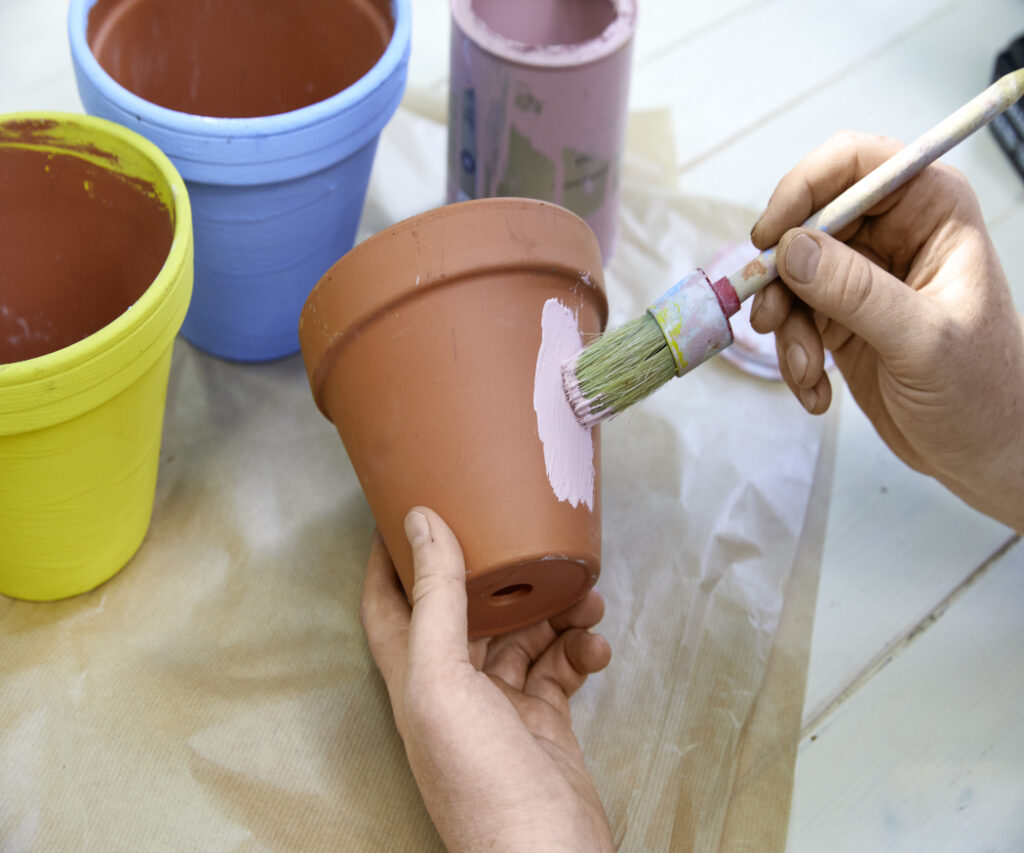
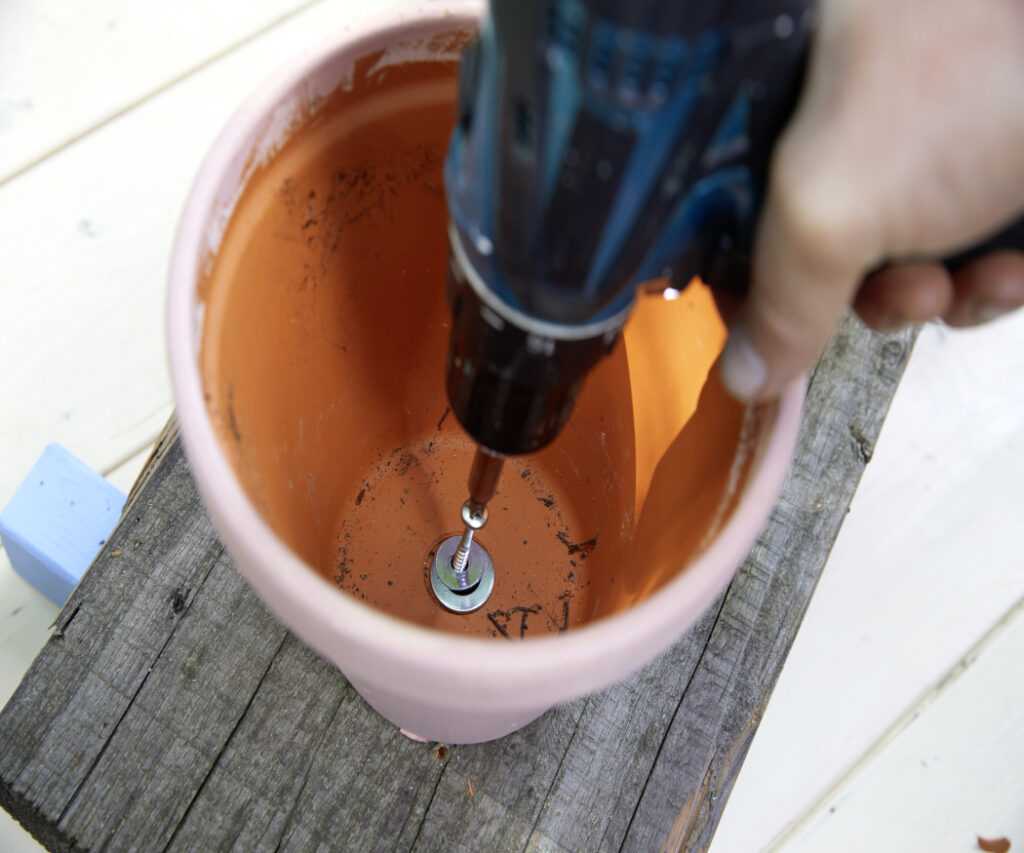
4. Finally, plant scented and zonal geraniums, nasturtiums and chillies in the pots and place your finished piece in a sunny spot.
Tip: A drainage layer of expanded clay added before the compost helps prevent waterlogging.
The result is a cheerful display that requires little effort yet brings a Mediterranean feel to your garden.
Craft project 4: Mini wooden crate ‘greenhouse’
Create decorative mini greenhouses using rustic wooden crates and colourful branches to showcase geraniums, fern-leaved beggar’s ticks (Bidens ferulifolia), tomatoes, chillies and nasturtiums in an original way. This creative project brings together beautiful flowers, fragrance and culinary delights, providing bees and butterflies with plenty of food.
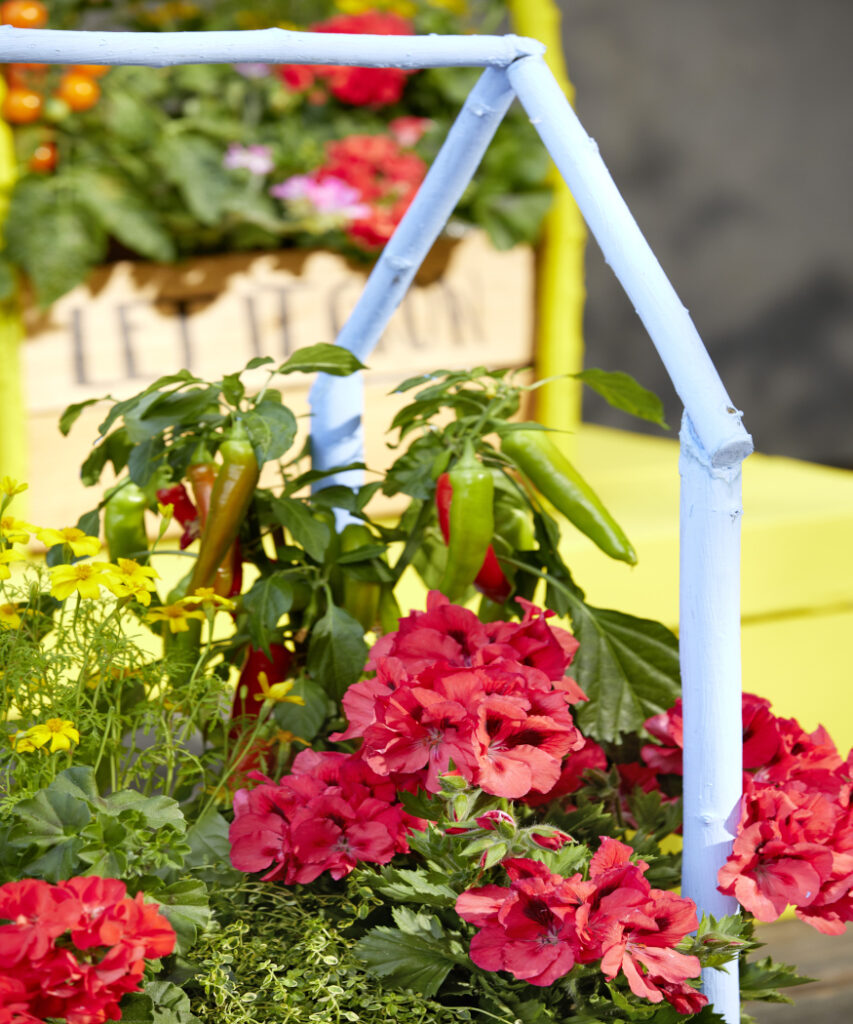
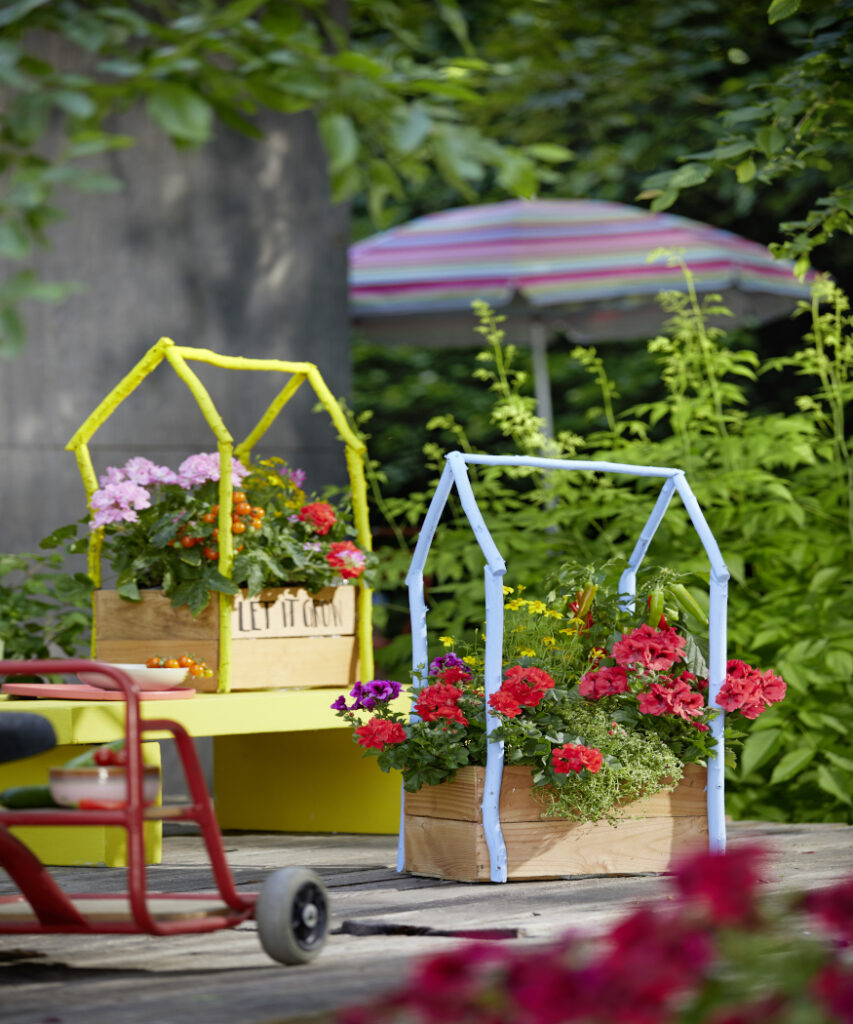
To make one, you will need simple wooden crates, straight branches (4 x long, 1 x medium, 4 x short, length depends on crate size), secateurs, waterproof paint, screws, a plastic liner, a stapler with staples, expanded clay, compost and plants (geraniums, fern-leaved beggar’s ticks, tomatoes, chillies and nasturtiums).
Here’s how to do it:
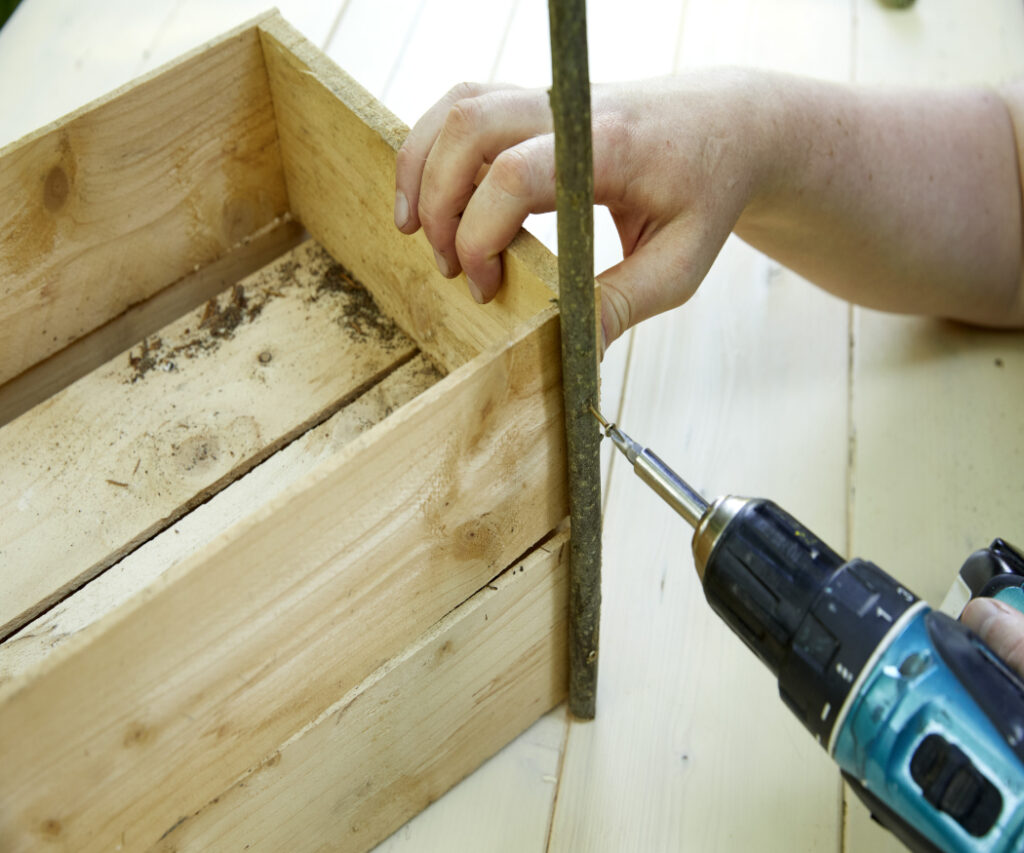
- Screw the four long branches to the corners of the crate. Cut the ends of each branch at an angle using secateurs, then attach the four short branches as gables. Finally attach the medium branch between the two gable ends to create a house shape.
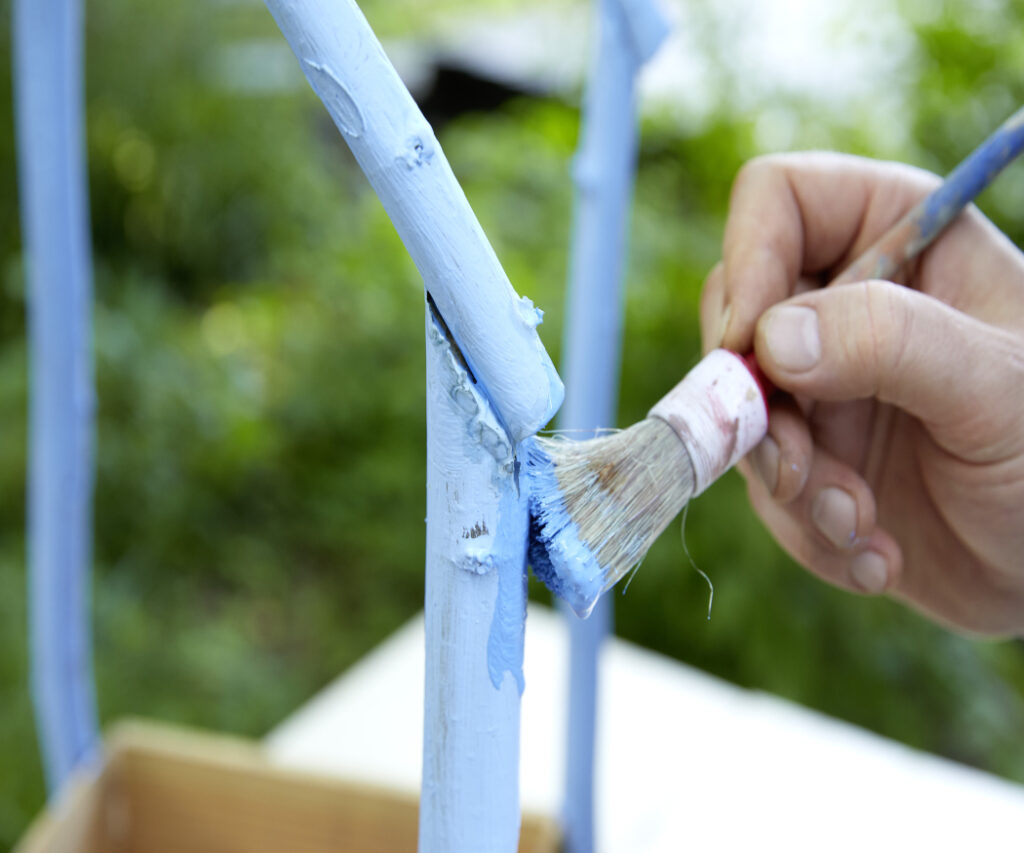
- Paint the branches with the waterproof paint and allow to dry.
- Line the box with the sturdy plastic sheeting and staple it to the top edge. To prevent waterlogging, add a drainage layer of expanded clay.

4. Fill with compost and plant up with the geraniums, fern-leaved beggar’s ticks, tomatoes, chillies and nasturtiums.
5. Place in a sunny spot and enjoy the colourful display.
Mediterranean combinations using geraniums
When an abundance of flowers meets Mediterranean aromas, a naturalistic garden is transformed into a mini holiday oasis.
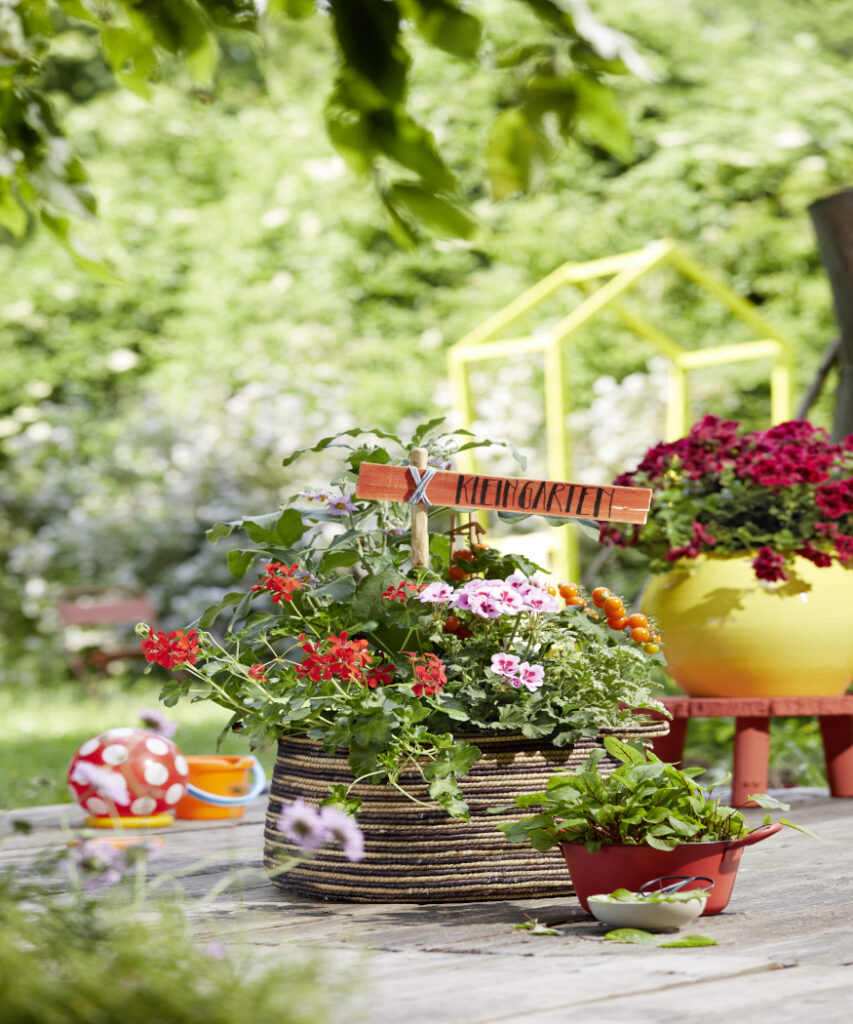
This mini garden in a wicker basket on the left features lush, easy-care zonal, trailing and scented geraniums, combined with thyme (Thymus vulgaris), tomatoes (Solanum lycopersicum) and aubergines (Solanum melongena). This colourful arrangement of culinary plants and beautiful flowers provides bees and other insects with plenty of food, creating a vibrant feature in this natural-looking garden that is both simple and striking.
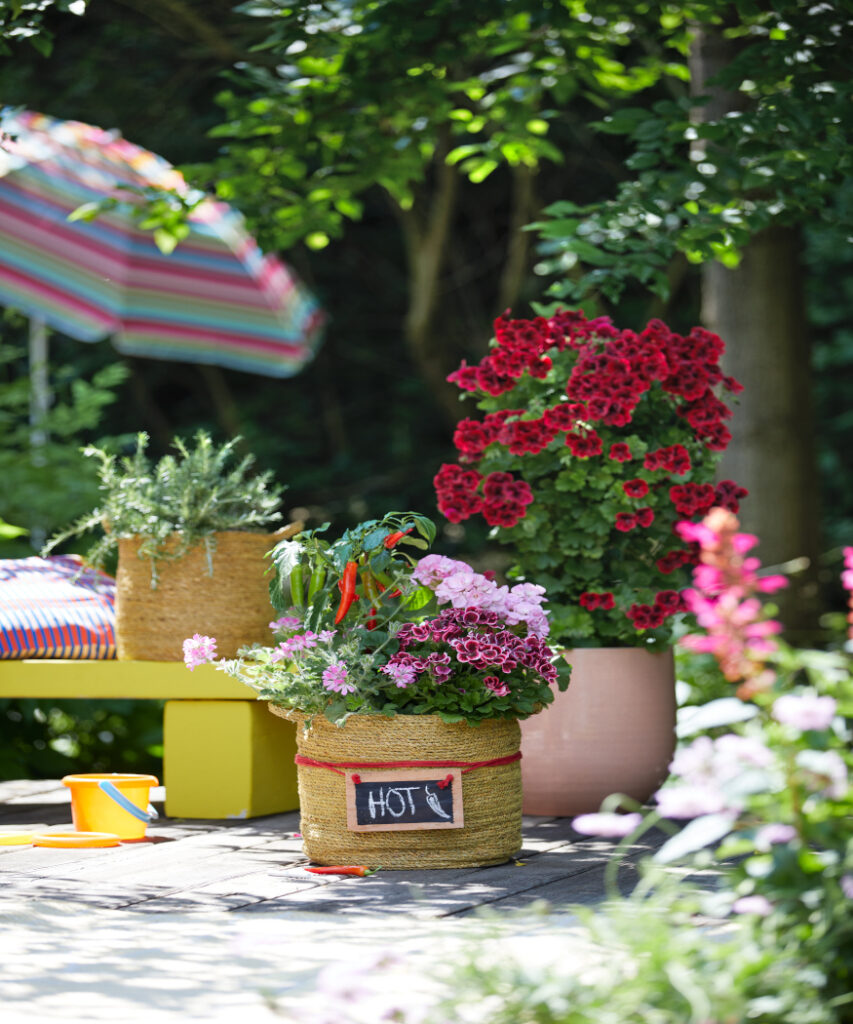
The planting on the right features sun-loving geraniums in bright colours, aromatic rosemary (Rosmarinus officinalis) and fiery chillies (Capsicum annuum), creating a sunny, Mediterranean atmosphere and transforming a nature-inspired garden on your balcony or terrace into a vibrant retreat.
Conclusion: sustainability meets the joy of flowers
Naturalistic gardens thrive on diversity, creativity, and a desire for authenticity, sustainability, and harmonious coexistence between humans and nature. Geraniums are ideal companions for this, being easy to care for, colourful, varied and hardy. Whether as part of attractive plant combinations or in creative craft projects, they bring gardens to life, providing inspiration and giving your outdoor space a unique character.