 English
 Dansk
Dansk Deutsch
 English
 Español
 Français
 Hrvatski
 Italiano
 Magyar
 Nederlands
 Norsk
Norsk Polski
 Română
 Slovenský
 Slovenščina
 Suomalainen
 Svenska
 Česky
Česky Ελληνική
 Български
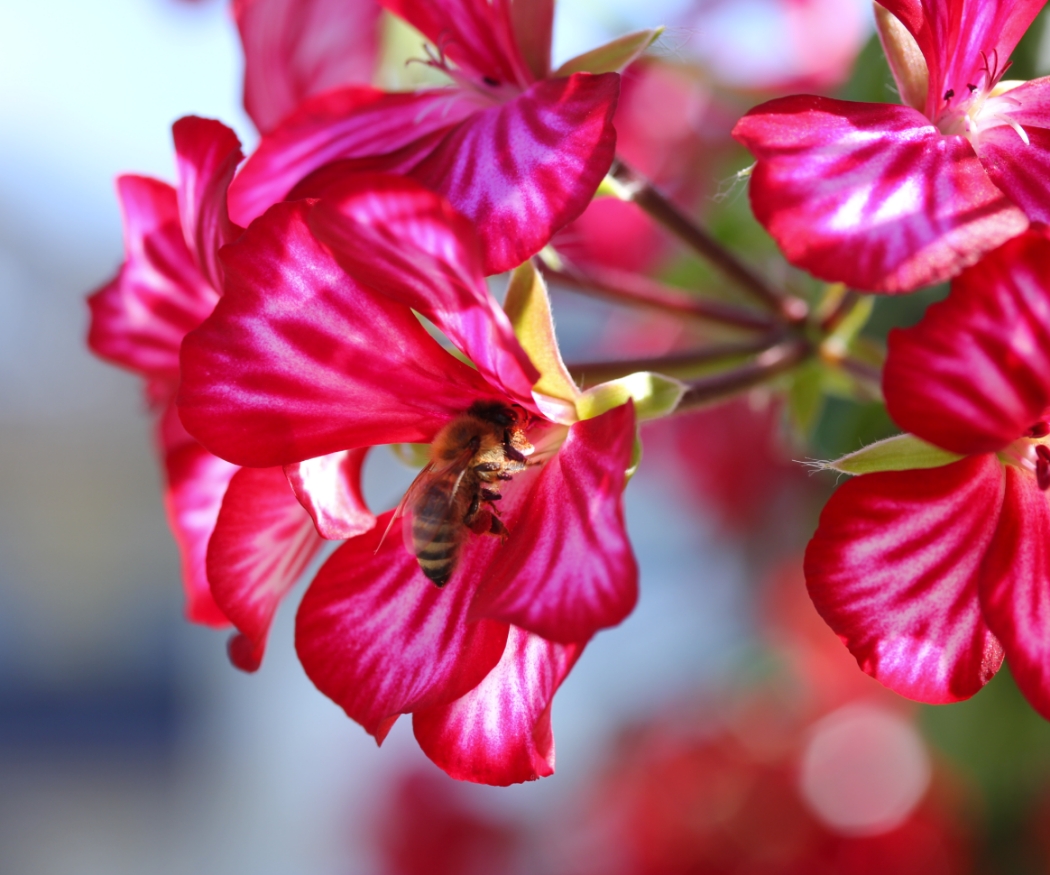
People who value an insect-friendly garden often ask themselves: Are geraniums useless to bees? The answer is no! When planted alongside other flowers, these easy-care plants can become a valuable part of a living ecosystem.
This guide will teach you which other insect-friendly balcony flowers go well with geraniums, and how you can use a bug hotel to attract bees and other beneficial insects to your balcony, terrace or garden.
The most important facts in brief:
Contrary to popular belief: Geraniums and insect protection are not mutually exclusive – it depends on the type of geranium and how you combine it with other summer flowers.
A late-summer food source: single-flowered geranium varieties provide pollen and nectar when many other flowers have finished blooming.
Lure effect: The bright colours of geranium petals attract insects. Combined with the right companion plants, you can create a real paradise for insects.
Perfect partners: Combining bee-friendly plants such as Balkan clary, garden speedwell and herbs maximises biodiversity in even the smallest of spaces.
Sustainable climate heroes: Geraniums are the ultimate South African survivalists, continuing to bloom tirelessly even when other balcony plants have long since given up.
Creating living spaces: A homemade insect hotel in a flowerpot of geraniums and bee-friendly plants transforms the planting from a mere insect ‘restaurant’ into a complete habitat.
Table of contents
- The most important facts in brief
- The geranium myth: why criticism is misguided
- Heat resilience as an ecological advantage: the geranium as a climate hero
- Insect-friendly balcony plants: combining geraniums cleverly, using the billboard principle
- Video tip: upcycling project – make an insect hotel for your planters
- Setp-by-step photo instructions for making an insect hotel for your planters
- Care tips for ensuring your geraniums bloom until the first frost
- FAQ: Your questions about geraniums and bees
The geranium myth: why criticism is misguided
The idea that geraniums are a ‘green desert’, offering no value to bees and insects, is outdated and one-sided. With the right knowledge of existing balcony plants and perennials, anyone can transform their balcony into a haven for insects with hardy geraniums.
Dense double cultivars are primarily for visual appeal. However, the stamens of single and semi-double geraniums (pelargoniums) are freely accessible and provide pollen and, in some cases, nectar. These flowers become a vital source of food for hungry insects, especially in late summer when many native wildflowers have already faded and autumn blooms are still waiting to appear.
Heat resilience as an ecological advantage: the geranium as a climate hero
The geranium originates in South Africa and loves the sun. It stores water in its fleshy stems, enabling it to continue blooming when other plants have long since given up. In an era of increasingly hot summers, the geranium truly stands out! After all, a plant that dies in midsummer offers nothing – neither visual appeal nor insect nutrition.
Many insect-attracting plants also have a short flowering period. Single-flowered geraniums, however, provide a constant supply of pollen and, in some cases, nectar until the first frost, bridging a critical supply gap in the gardening year. Last but not least, these most popular of balcony plants can tolerate the occasional hot, dry spell. This means less stress for you and the beneficial insects, and a permanently beautiful home.
Insect-friendly balcony plants: combining geraniums cleverly, using the billboard principle
The visual appeal of geraniums shouldn’t be underestimated, either. Their bright colours attract bees, butterflies and other insects from far and wide, like a billboard. Once they arrive at your home, these beneficial creatures will discover other treasures on your balcony too. Geraniums are the cornerstone of your entire ecosystem.
Geraniums attract, partner plants feed. This means you don’t have to choose between aesthetics and ecology. Important: when planting in the same container, ensure all partner plants have the same location and care requirements, and leave about 20cm between plants so they can all flourish. Our favourite combinations are:
Recipe 1: Romantic bee buffet with speedwell and scabious
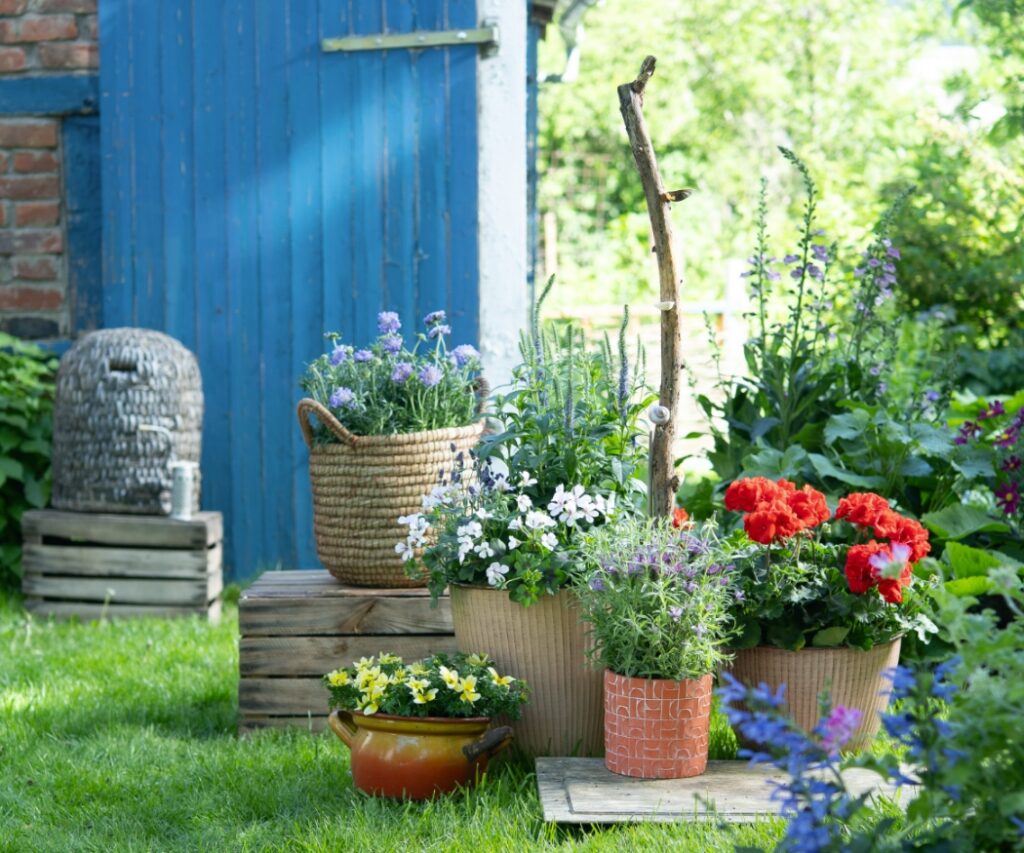
Combine geraniums with other sun-loving plants such as garden speedwell (Veronica longifolia), garden scabious (Scabiosa caucasica), bacopa (Sutera cordata or Chaenostoma cordatum) and horned pansy (Viola cornuta). This combination looks stunning in old wooden boxes or next to a straw beehive.
Recipe 2: Summer charm in a tub with cosmos and sage
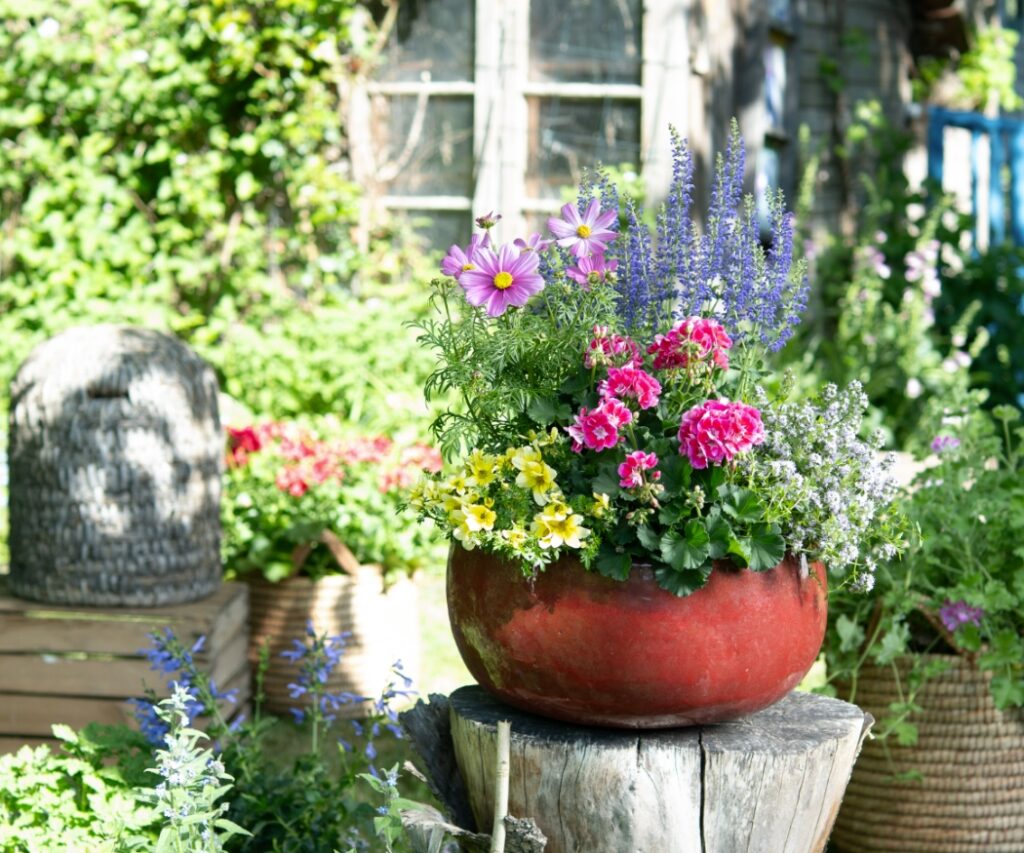
Mix geraniums with cosmos (Cosmos bipinnatus) and garden sage (Salvia nemorosa). This combination of different flower shapes provides food for various insect species.
Recipe 3: Mediterranean snack balcony
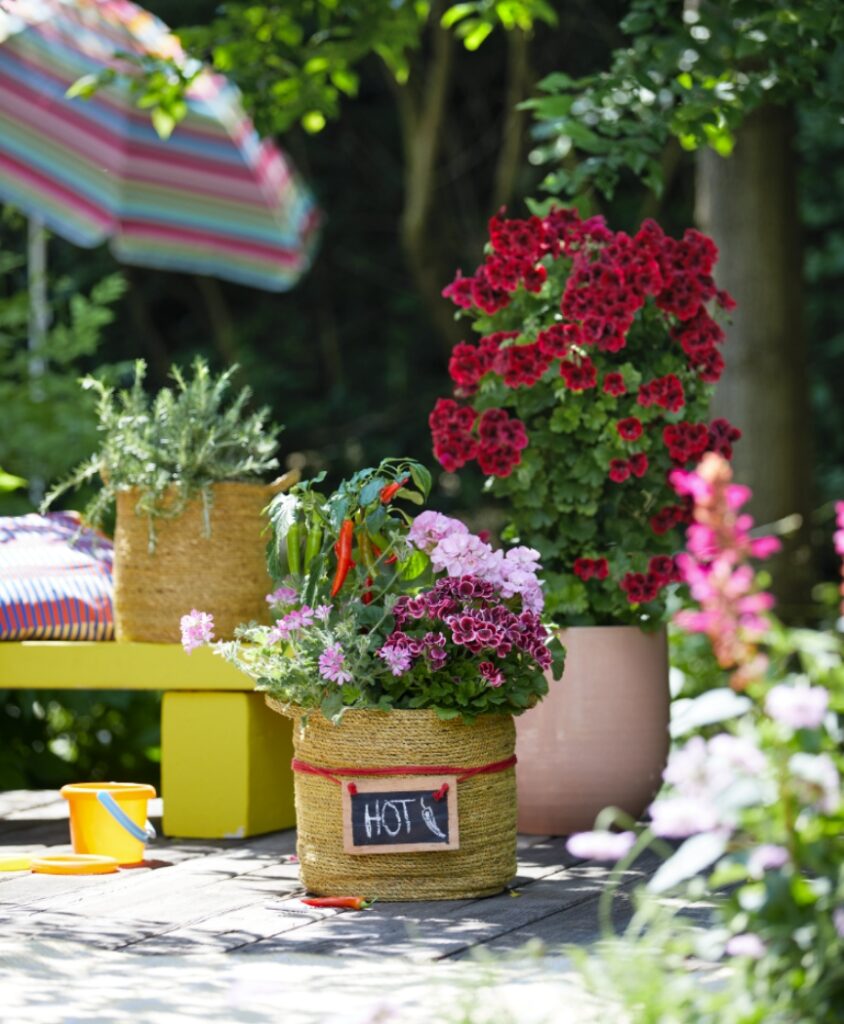
On the Mediterranean snack balcony, lush geraniums meet thyme (Thymus), rosemary (Rosmarinus officinalis), tomatoes (Solanum lycopersicum) and fiery chillies (Capsicum annuum). This colourful arrangement combines useful plants and beautiful flowers.
Recipe 4: Colourful country house idyll
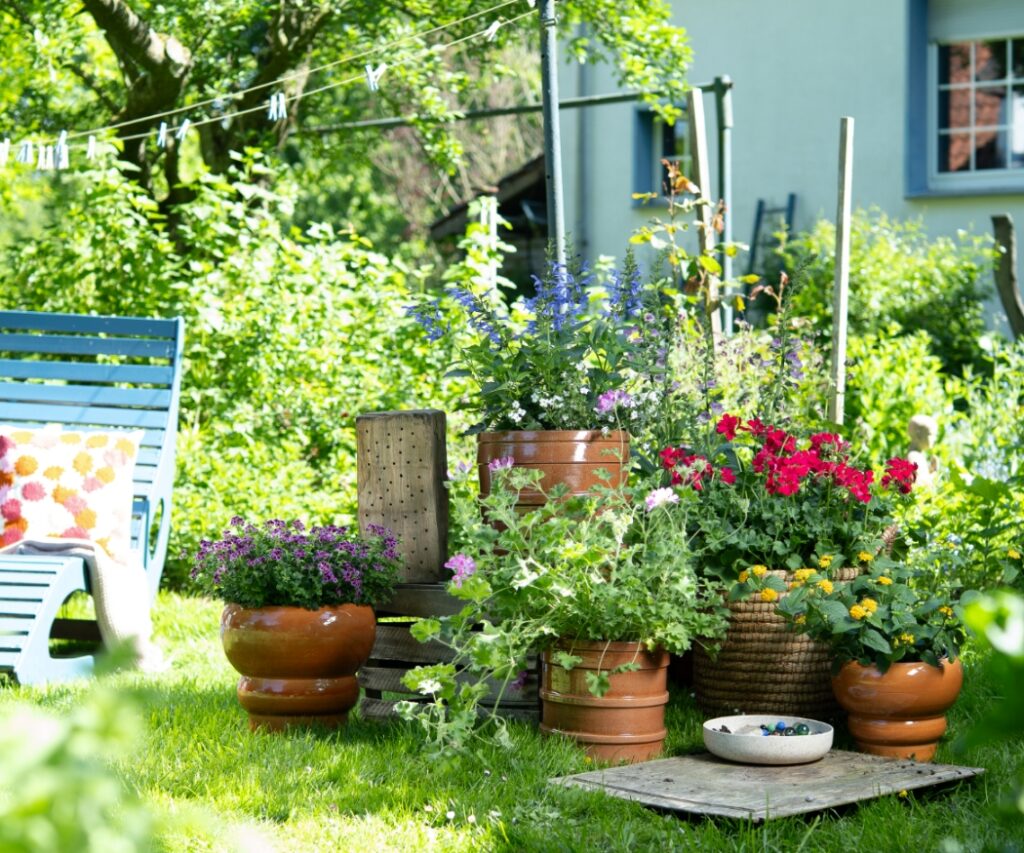
Combine geraniums with French lavender (Lavandula stoechas), garden speedwell (Veronica longifolia), garden scabious (Scabiosa caucasica), and horned pansies (Viola cornuta). This combination offers enormous diversity.
Video tip: upcycling project – make an insect hotel for your planters
Theory is dull, but practice is colourful! In our video, we show you how to make a stylish insect hotel out of a tin can and natural materials.
Here’s why this homemade project is a game changer:
• The nesting site is located right next to the buffet: this provides bees with a convenient location for finding food and raising their young.
• Perfect for children: a great project to bring the whole family closer to nature.
• Expert tip from the video: Make sure the edges of the tubes are smooth, so the insects don’t injure their delicate wings.
Step-by-step photo instructions for making an insect hotel for a planter
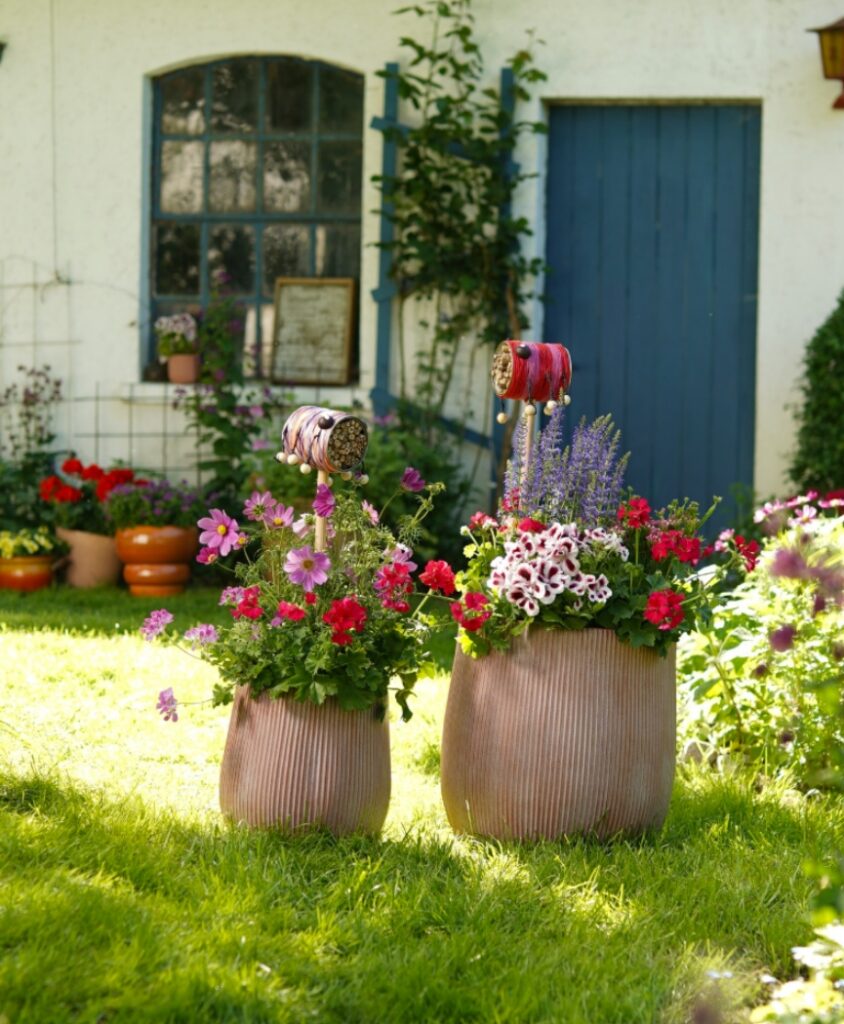
You will need:
• One clean, empty, standard tin can
• Paper-coated wire
• Six large wooden beads
• Colourful cord or wool
• All-purpose waterproof adhesive
• Two wooden hemispheres
• A round wooden pole, approx 1m long
• Drill & drill bit (smaller diameter than wooden rod)
• Threaded rod (M6 or M8), 15-20cm long
• 2 washers & nuts that fit your threaded rod
• Bamboo stems
• Secateurs
Step-by-step instructions
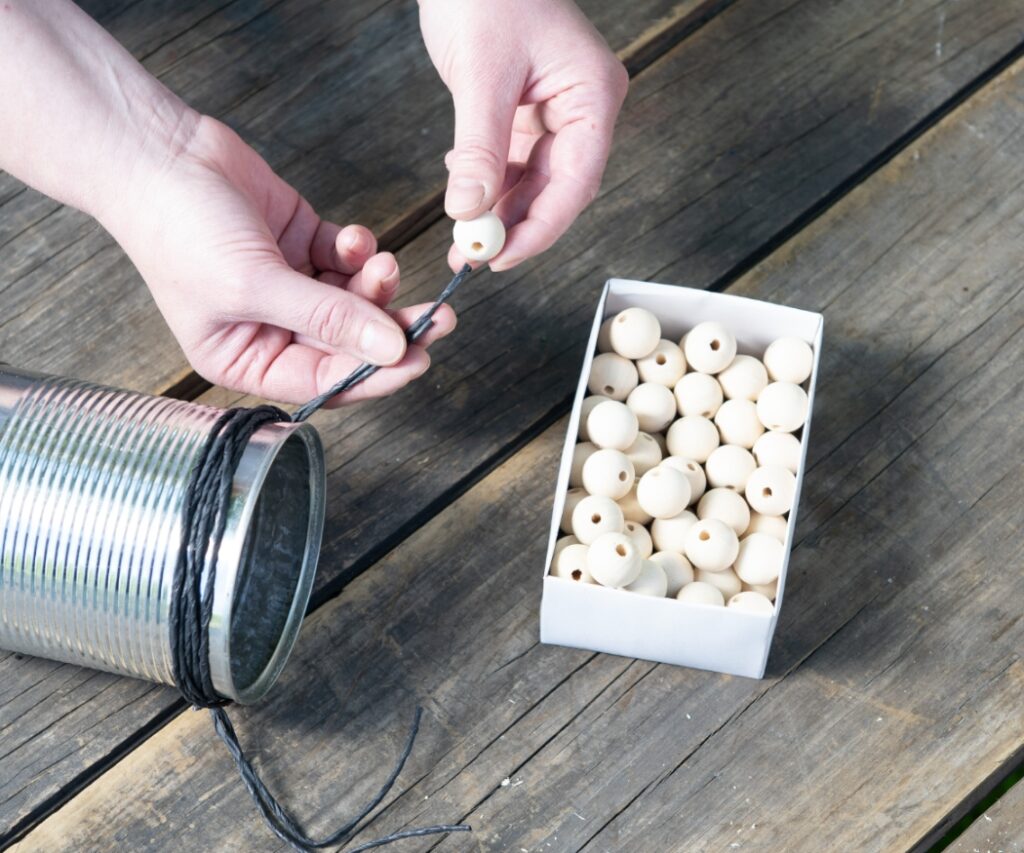
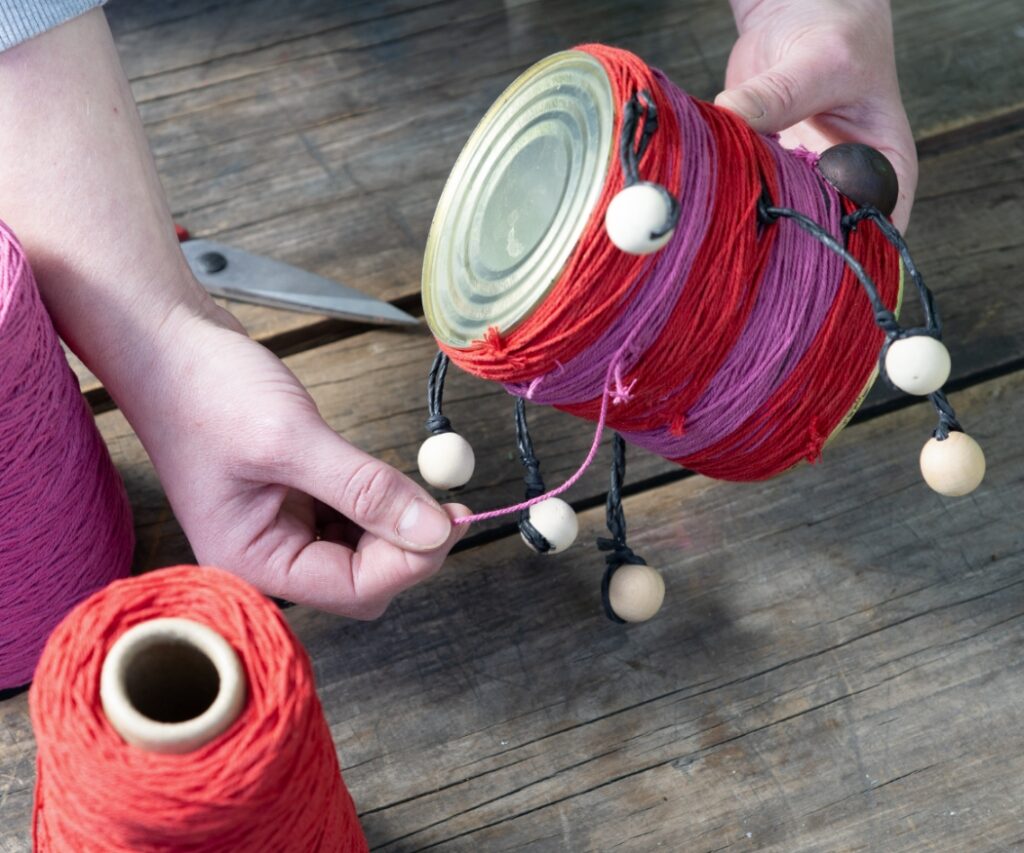
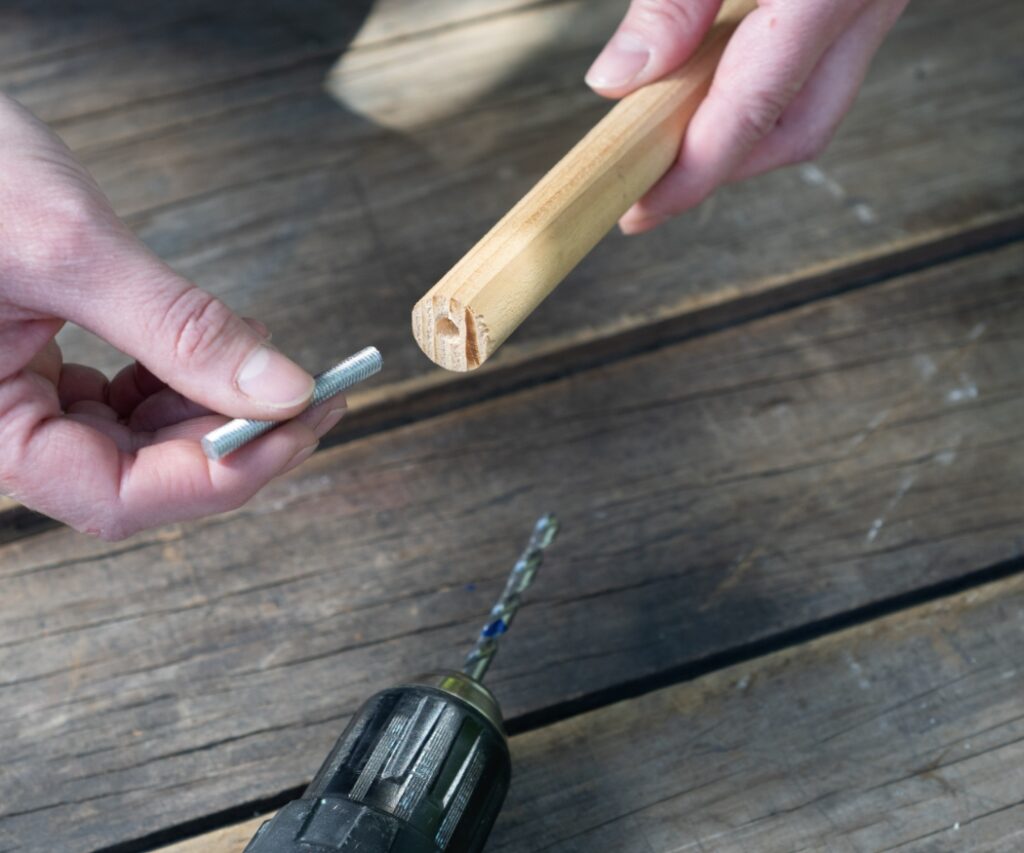
1. Shape the legs: Use the paper-covered wire to create six legs around the tin, then attach wooden beads to the ends to create feet.
2. Decorate: Apply the adhesive to the tin and wrap it completely with colourful cord/wool. Glue the wooden hemispheres onto the tin for eyes.
3. Assemble: On the side of your tin with the legs, carefully part the wool/cord to reveal the metal and drill a hole through the tin. Now drill another hole in the end of the wooden pole. Screw the threaded rod into this second hole. Then, slide a nut and a washer onto the threaded rod. Now place the tin onto the rod through the hole, securing it from the inside with another washer and nut.
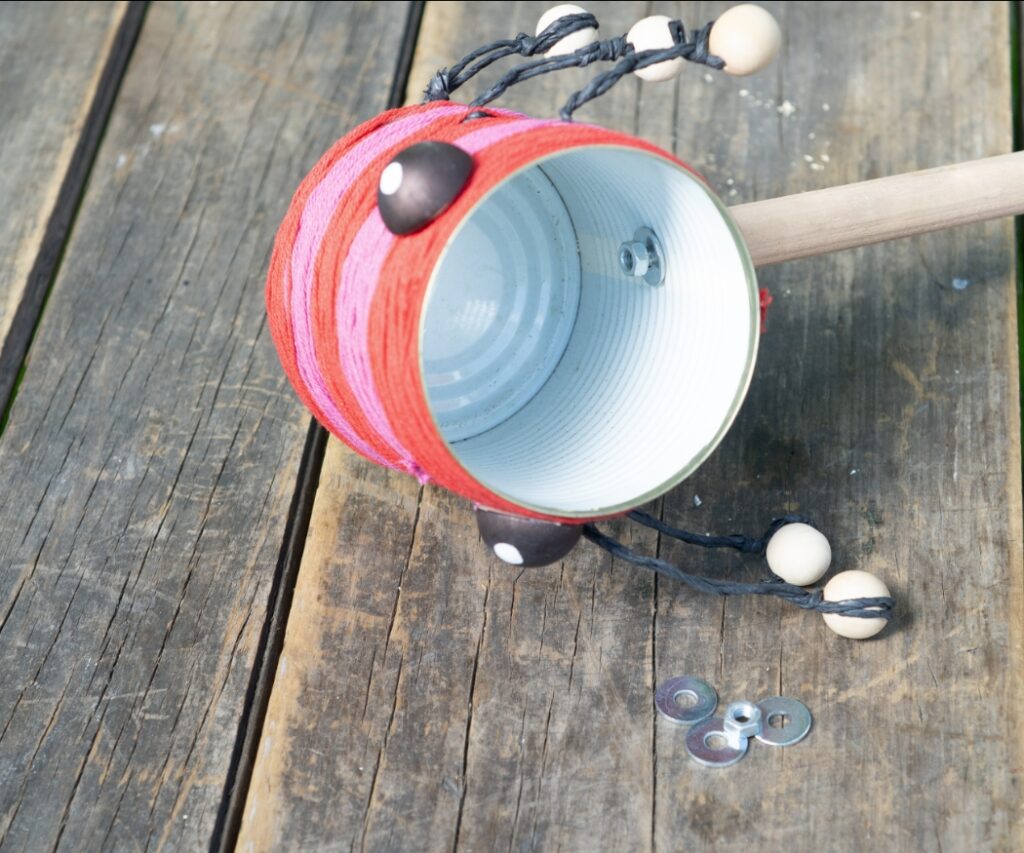
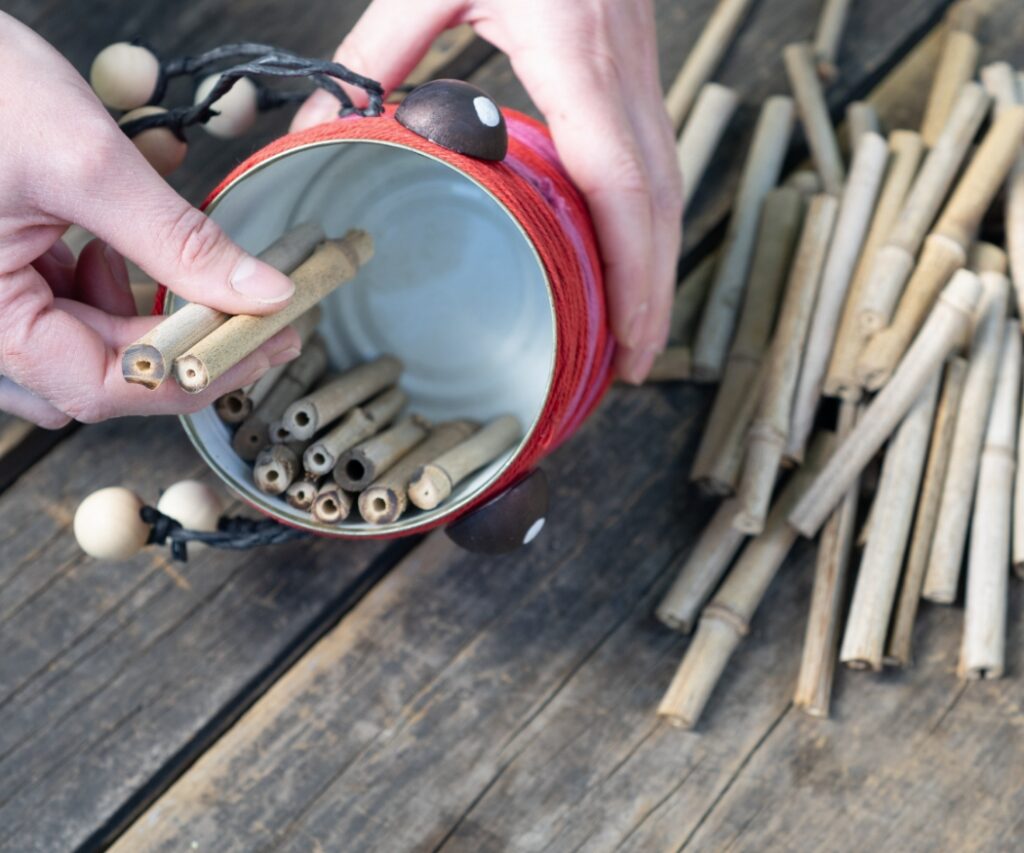
4. Fill the tin with sections of bamboo, the same length as the tin, trimming to size with the secateurs. Pack the bamboo pieces in tightly so they can’t fall out.
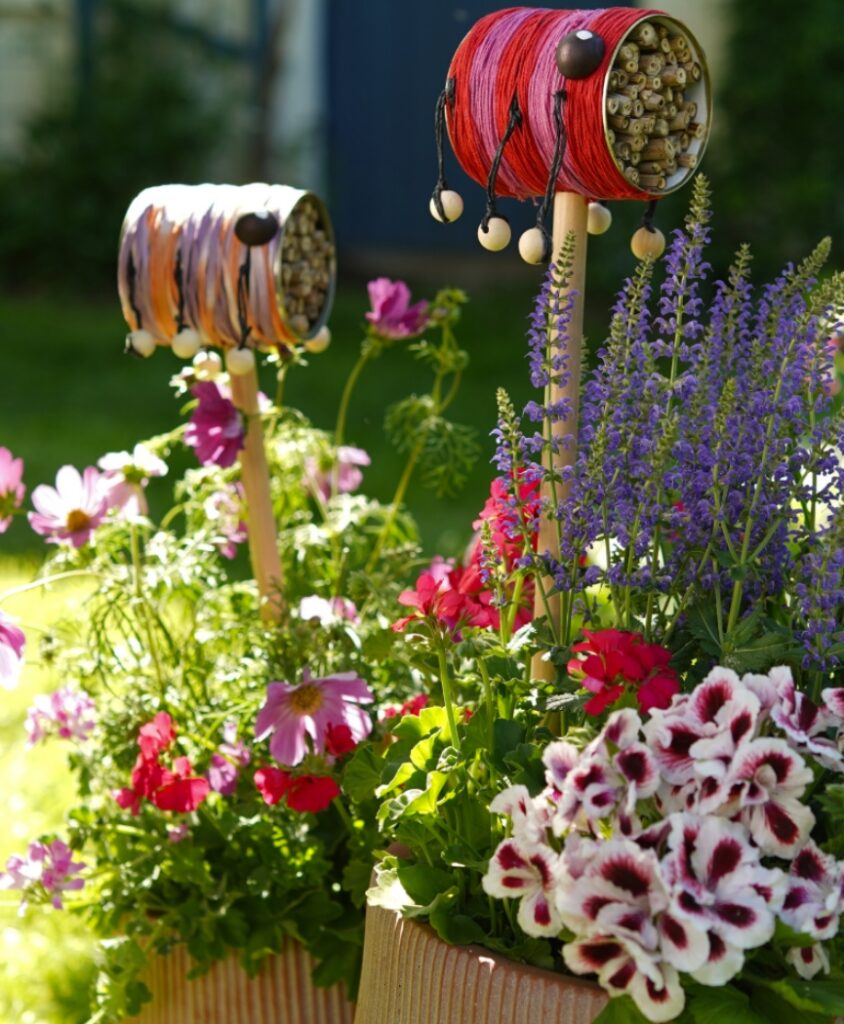
5. Placement: Place your insect hotel in a sunny spot, protected from the rain. For example, in a pot of geraniums and Balkan clary (Salvia nemorosa).
Care tips for ensuring your geraniums bloom until the first frost
• For maximum flowering, choose a spot in full sun.
• Be careful not to overwater! Allow the top layer of soil to dry out and ensure that any excess water can drain away.
• Geraniums are hungry plants. Use a slow-release or liquid fertiliser weekly.
Tip: Avoid home remedies such as coffee grounds – read here to find out why experts advise against them.
• Removing dead flowers regularly encourages new buds to form.
• Geraniums can be cultivated as perennials. Cut them back before the first frost and store them in a cool, bright place.
Ready for your own bee balcony?
Seek advice from a specialist retailer and find the perfect geraniums and complementary bee plants for your insect paradise. Together with regional nurseries, you can make the world a little more colourful and buzzing!
You may also be interested in:
Planting tips: Planting geraniums step by step
Flower power: Geraniums not flowering? The 4 most common reasons and solutions Sustainability: Adapted care for peat-free compost
FAQs: Your questions about geraniums and bees
Are geraniums in general bad for bees?
No, only dense, double-flowered cultivars can’t provide food. Single-flowered varieties and scented geraniums, however, are valuable sources of pollen, especially in autumn.
Which geraniums are bee-friendly?
Single- or semi-double varieties are much more bee-friendly than double types. Scented geraniums provide pollen and nectar and have a pleasant fragrance. Regal pelargoniums (Pelargonium x grandiflorum) often produce pollen and sometimes nectar, making them a better option than double-flowered geraniums.
How can I recognise a bee-friendly geranium?
Look for clearly visible yellow stamens in the centre of the flower.
Which other balcony plants attract the most bees?
Good options include lavender (Lavandula), heliotrope (Heliotropium), single-flowered beggar’s ticks (Bidens) and fairy fan-flower (Scaevola), as well as herbs such as thyme (Thymus) and oregano (Origanum).