 English
 Dansk
Dansk Deutsch
 English
 Español
 Français
 Hrvatski
 Italiano
 Magyar
 Nederlands
 Norsk
Norsk Polski
 Română
 Slovenský
 Slovenščina
 Suomalainen
 Svenska
 Česky
Česky Ελληνική
 Български
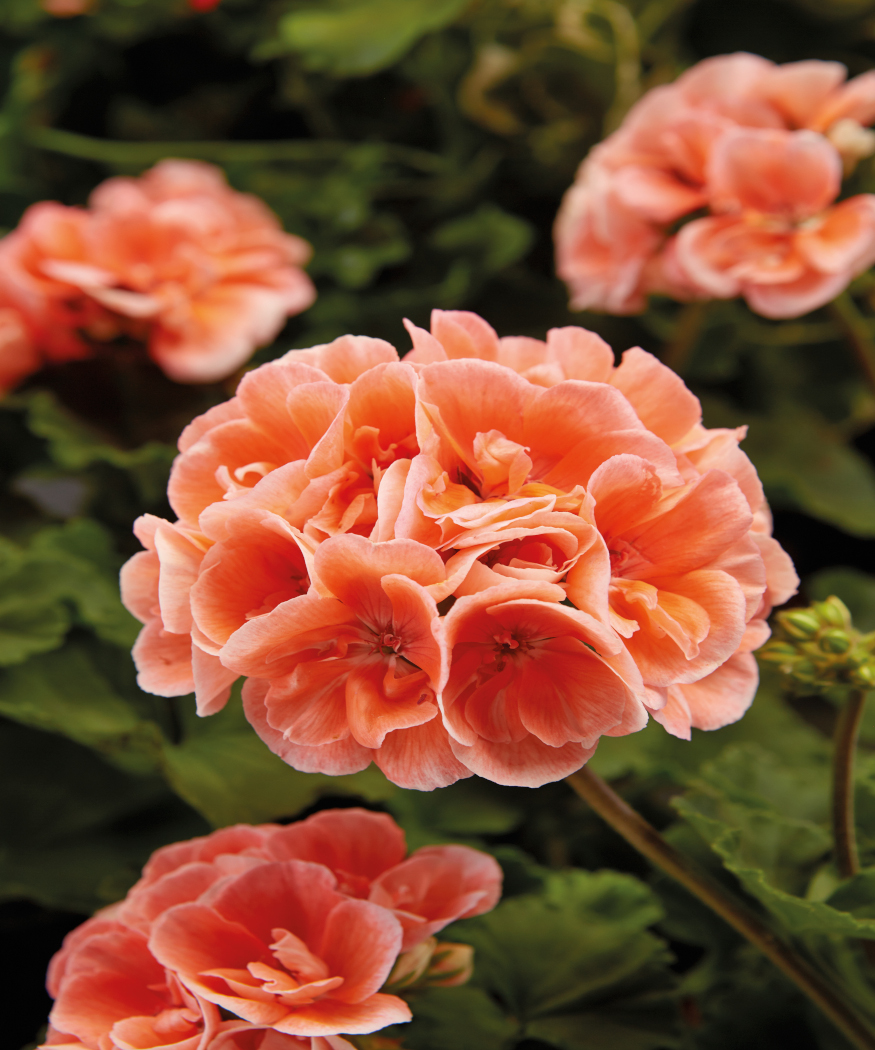
Whether sweltering heat, weeks of rain, or extended dry spells, summer doesn’t always show its kind side. For many flowering plants – whether on a balcony or in a garden – this is a real strain. Not so for geraniums: These beloved classics are considered true survivors, hardy enough to master even the unpredictable summers in Europe. The experts at Pelargonium for Europe (PfE) explain why geraniums are so resilient and how to best support them in extreme weather conditions.
Hardy, thanks to their South African roots
The wild forms of today’s geraniums originate from South Africa, where large temperature fluctuations, strong sunlight and irregular rainfall are commonplace. There, the plants learned to adapt to changing conditions. Modern cultivars have preserved this hardiness—and combined it with even more lush blooms, so today’s geraniums combine beauty with resilience, making them ideal for the changeable nature of European summers.
Still flowering, even without constant sun
Geraniums are sun worshippers. The more light they receive, the more luxuriant their blooms. On a south-facing balcony in full sun, they show off their full glory. However, these colourful classics also thrive in partial shade; only northern locations in full shade are unsuitable. They can even take summers with very little sunshine in their stride. While the abundance of blooms will be somewhat reduced, they’ll still offer color.
Blooming abundantly despite the heat
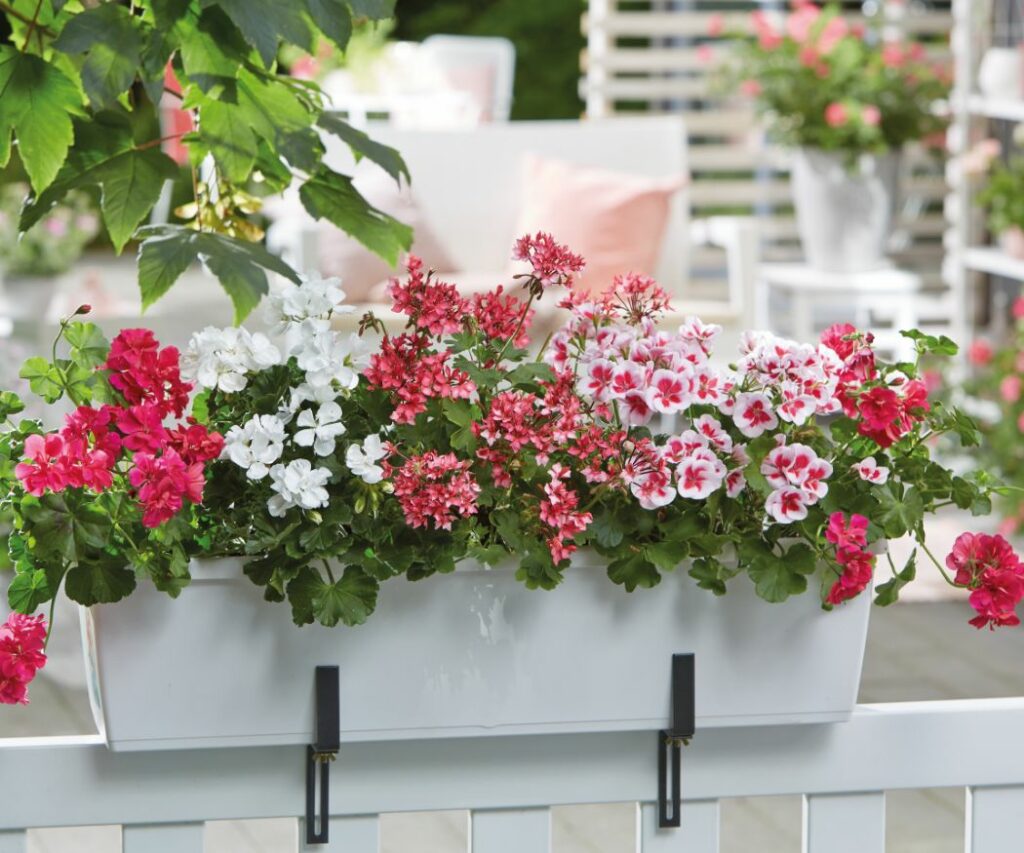
Fortunately, geraniums love warmth, as hot summer periods have become more common in recent years. In some parts of Europe, the number of hot days with temperatures above 30°C has tripled since the 1950s, and this trend is continuing. The situation is particularly acute in cities, where concrete facades and asphalt surfaces retain heat so it barely cools down at night. Tropical nights, where temperatures never drop below 20°C, are becoming more frequent. Unlike many other summer flowers, which suffer in high temperatures, geraniums can easily survive extreme heat.
To ensure they continue to flourish during hot periods, they need plenty of water. On particularly hot days, you may need to water them in the morning and evening. If you find this too challenging, water storage boxes or automatic watering systems are good alternatives. Using high-quality compost also helps. It can absorb and retain many times its own weight in water while remaining structurally stable. This means it doesn’t become compacted, but remains loose and permeable to air. This enables the roots to access oxygen while retaining enough moisture for hot days.
Well-equipped against drought
Geraniums are among the few summer flowers that can cope well with drought. Their fleshy leaves act as small water reservoirs, enabling them to survive several hot, dry days without watering. This makes them ideal for people who don’t have time to water their plants every day or who enjoy taking long weekends away. This advantage is especially apparent in planters and containers, where the soil dries out more quickly than in a flowerbed.
However, geraniums cannot survive entirely without water: If a drought persists for many weeks, even geraniums will reach their limits. Regular watering is important to maintain vigorous flowering. Another practical advantage is that they recover quickly from short-term water shortages – even after a brief dry spell, they’ll flourish and produce new flowers.
Indestructible in persistent rain
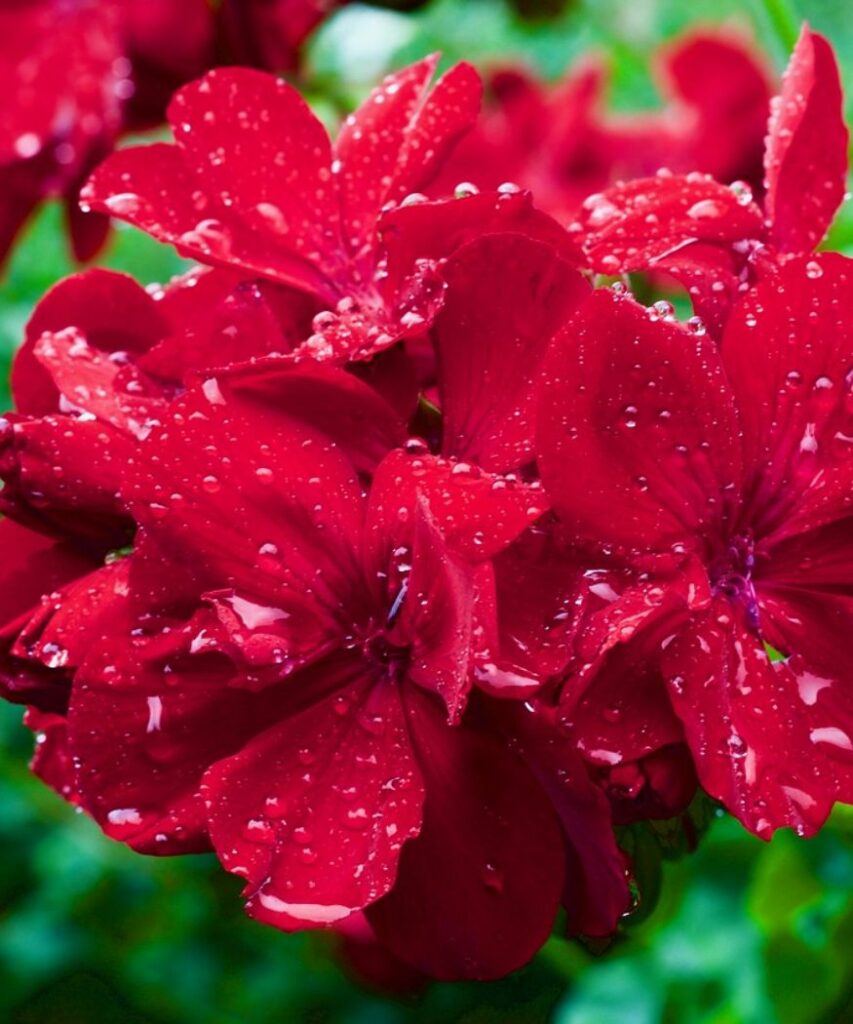
Many summer flowers can be damaged by prolonged rainfall. Geraniums dislike wet weather too, but they are comparatively resilient. If it rains continuously for several days, they benefit from being moved to a sheltered spot under a roof or near a house wall. However, even without this, geraniums don’t usually suffer lasting damage, as long as excess water can easily escape. It is important to use planters with proper drain holes, a loose drainage layer and stable compost. Saucers or planters should be removed to prevent water from accumulating. After heavy rainfall, remove soggy flowers and give your plants an extra dose of fertiliser to strengthen them. Usually, just a few sunny days are enough for geraniums to bloom again.
Tip: Single-flowering geraniums are less sensitive to rain than doubles.
Stable in the wind
Stormy days can be very damaging to plants on balconies. While geraniums are not among the most sensitive species, strong winds can still break off long shoots or damage flowers. This is especially the case with magnificent regal pelargoniums and other upright varieties with double flowers. They thrive best in sheltered locations, such as near a house wall or behind a balcony railing. In particularly draughty locations, trailing varieties should be planted in sturdy containers and tall geraniums should be regularly trimmed or pruned to keep them compact. This ensures they retain their well-groomed appearance even after windy days and continue to bloom tirelessly.