 English
 Dansk
Dansk Deutsch
 English
 Español
 Français
 Hrvatski
 Italiano
 Magyar
 Nederlands
 Norsk
Norsk Polski
 Română
 Slovenský
 Slovenščina
 Suomalainen
 Svenska
 Česky
Česky Ελληνική
 Български
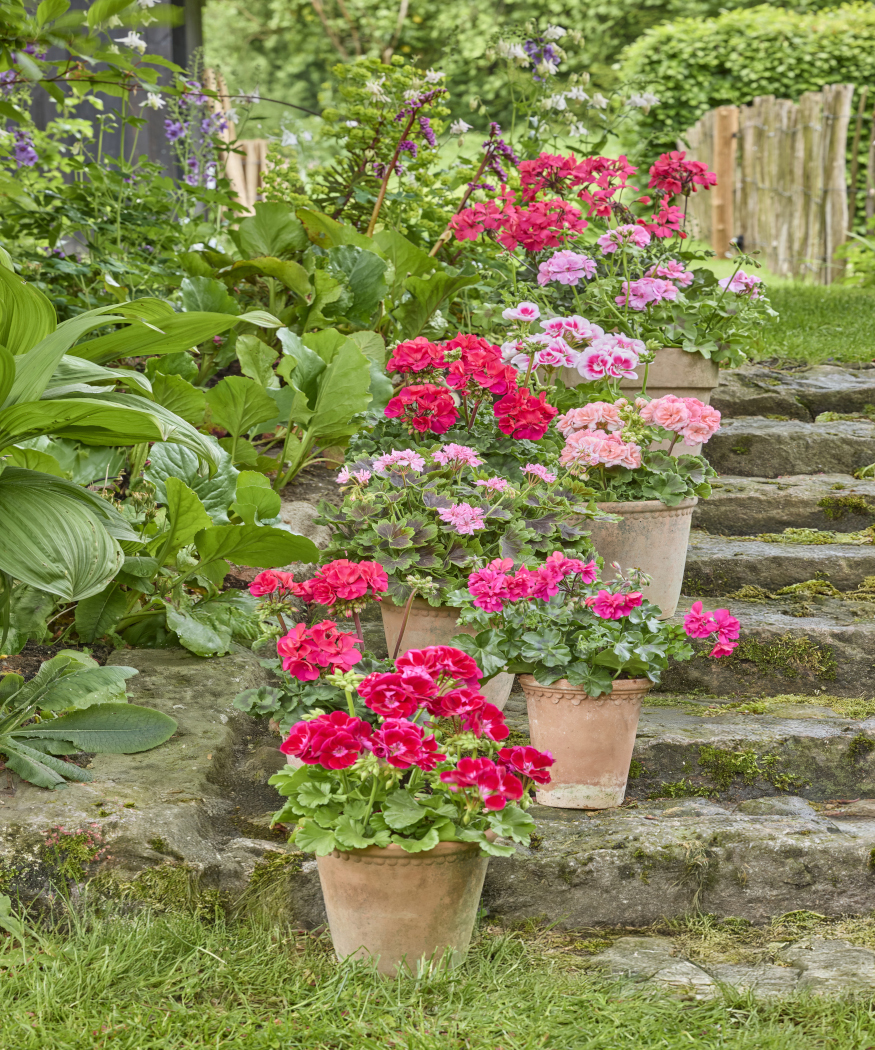
Geraniums are among the most popular summer flowers on balconies and patios. They are easy to care for, heat-tolerant, bloom profusely, and are truly versatile. Whether in a geranium-only arrangement or in combination with other plants, these versatile flowering wonders open up numerous design possibilities and inspire vibrant floral combinations. The experts at Pelargonium for Europe (PfE) share what to look for when creating summer planting ideas featuring geraniums.
Just geraniums: A play of diverse colours, flowers, and foliage
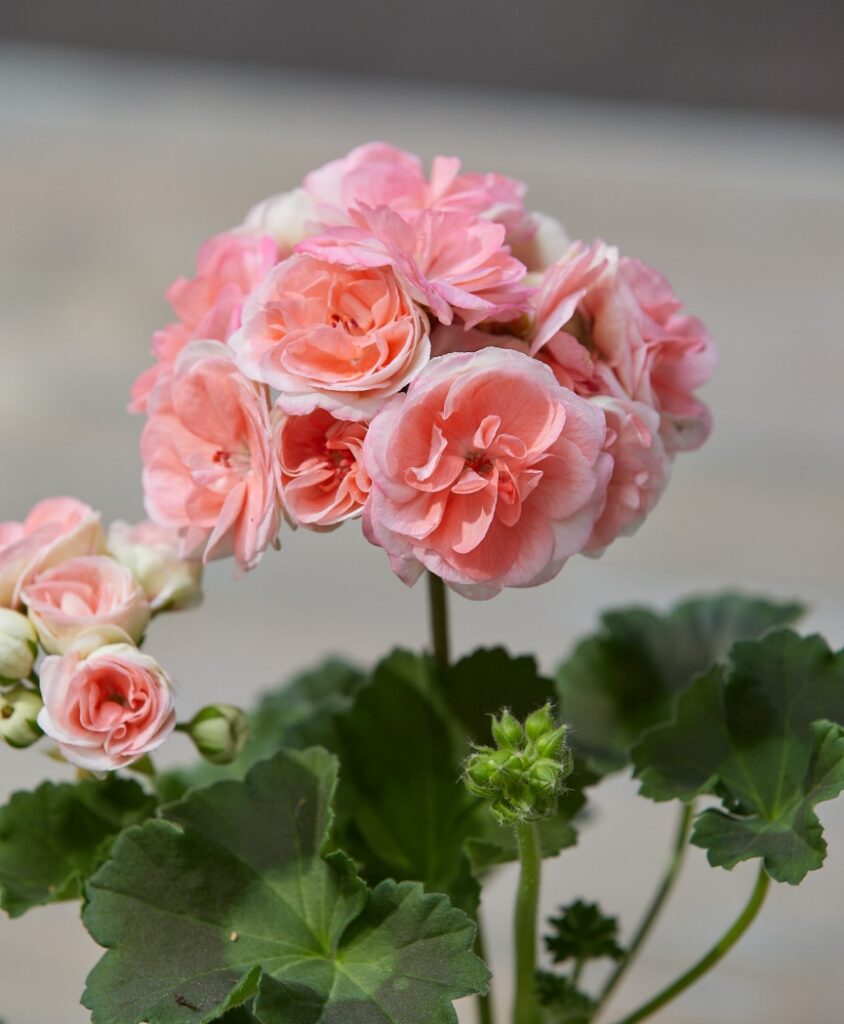
Geraniums boast an impressive variety of colours and shapes. As well as the classic trailing and zonal types, there are interspecific, regal (pelargonium), scented, butterfly, and ornamental foliage geraniums. Their flowers range from single to double and from small to large. Flower shapes are equally diverse, ranging from the classic round, star- or finger-shaped, to the more unusual that resemble roses, tulips, or butterflies. The foliage is astonishingly varied too: it can be smooth or hairy, light or dark green, and sometimes have a grey-green or reddish tinge. The leaves can be serrated, rounded, or saucer-shaped. Ornamental foliage geraniums are particularly striking, boasting eye-catching markings and multicoloured patterns.
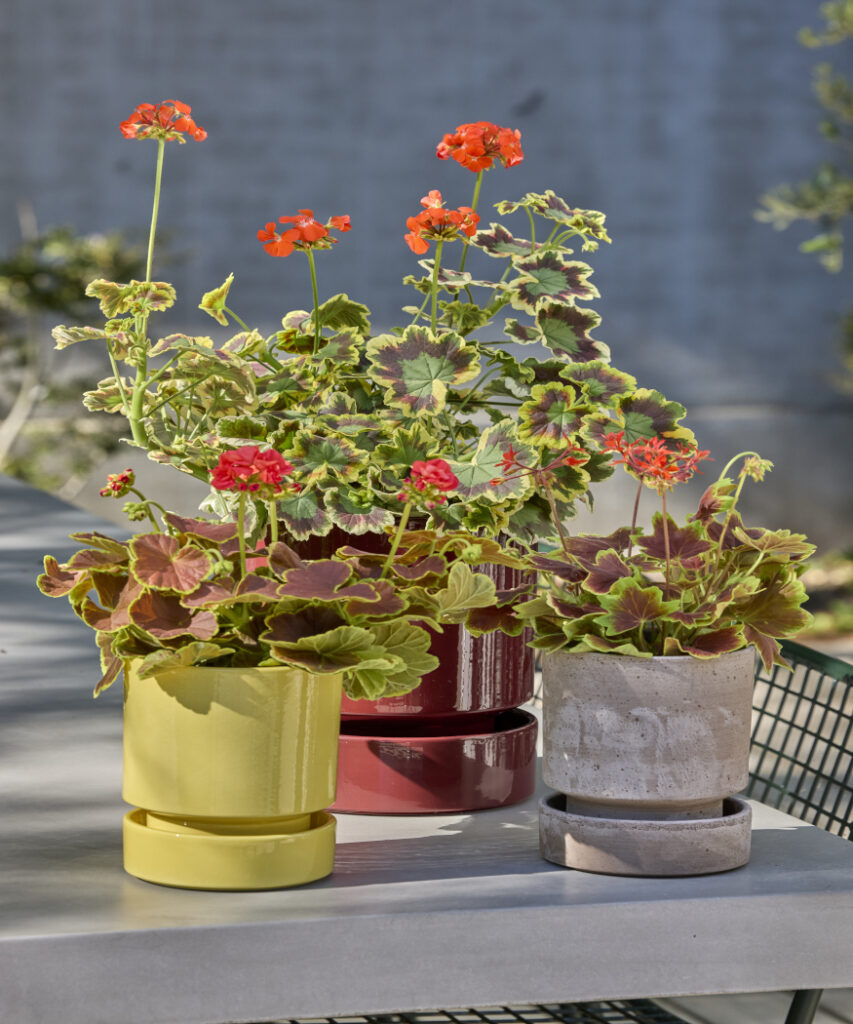
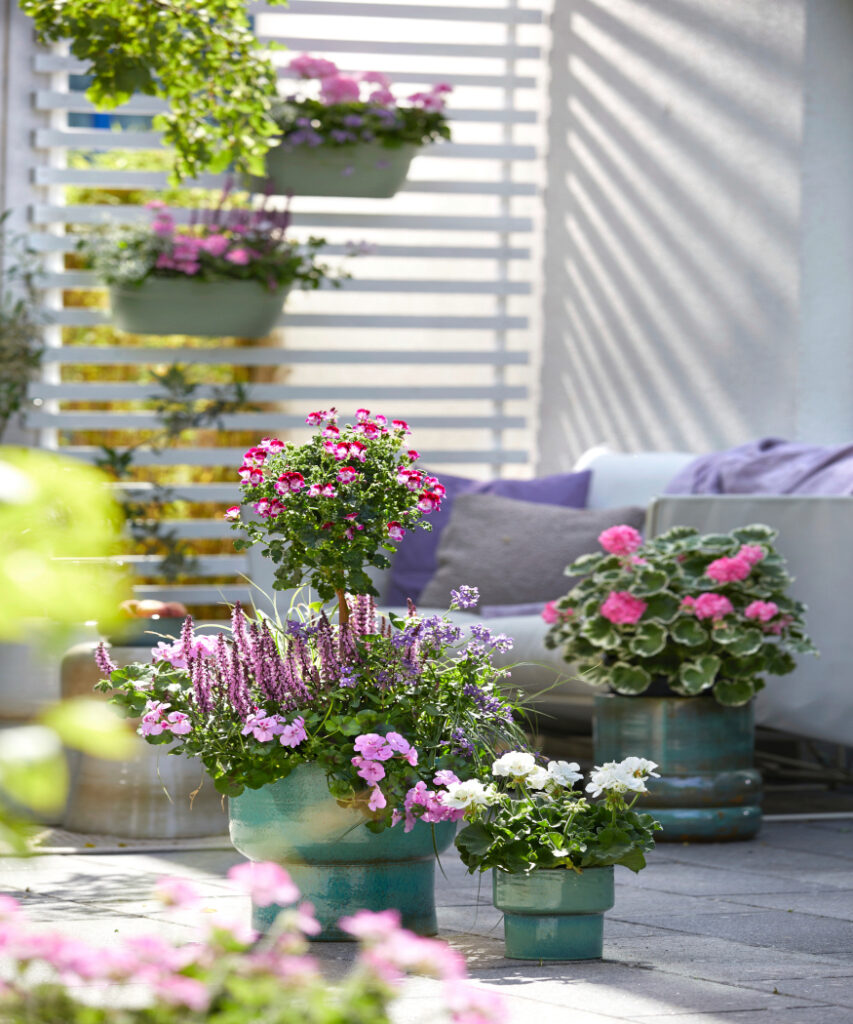
Thanks to their diversity, geraniums alone can be arranged in many different ways. Zonal geraniums add height and presence, while trailing varieties provide vibrant accents to the edges of containers and window boxes. Ornamental foliage geraniums, with their distinctive leaf colourings, bring tranquillity and act as structural elements. Scented geraniums complete the picture with their delicate blooms and aromatic foliage. These different types of geranium can create diverse, harmonious designs without the need for any other planting partners.
Mixed combinations: in the same container or in separate pots
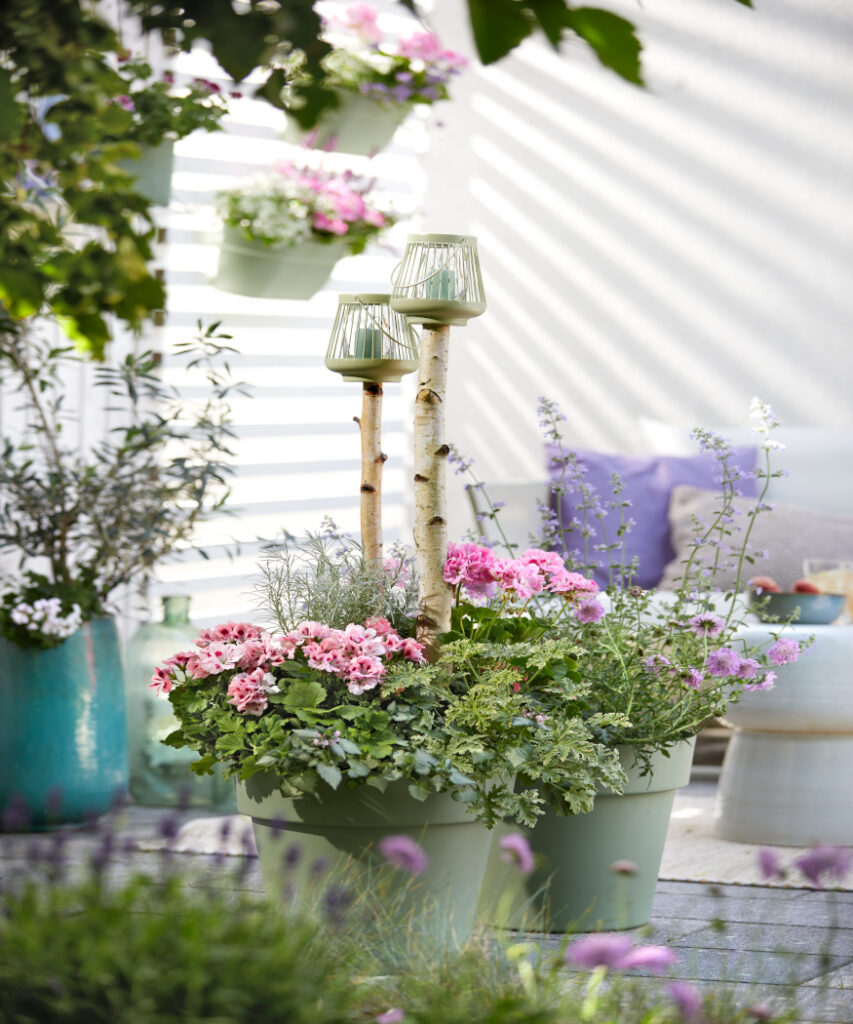
To create additional variety, you can combine geraniums with other flowering or foliage plants, provided they all thrive in a sunny to partially shaded location. To achieve this in the same container, the planting partners should have similar water and nutrient requirements. Well-suited flowering plants include lavender, petunias, bacopa, graceful spurge, verbena and yellow sage. Herbs such as thyme and sage also go well with geraniums. If you prefer contrasting foliage, sweet potatoes or heuchera would be good options.
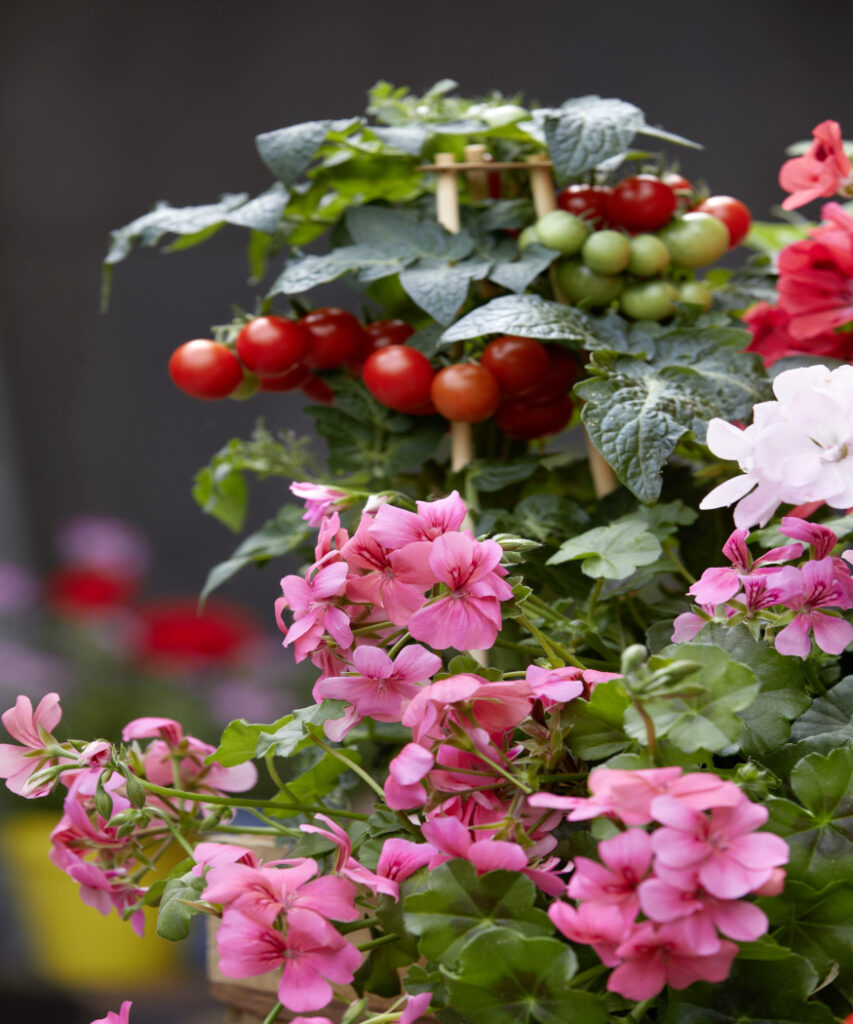
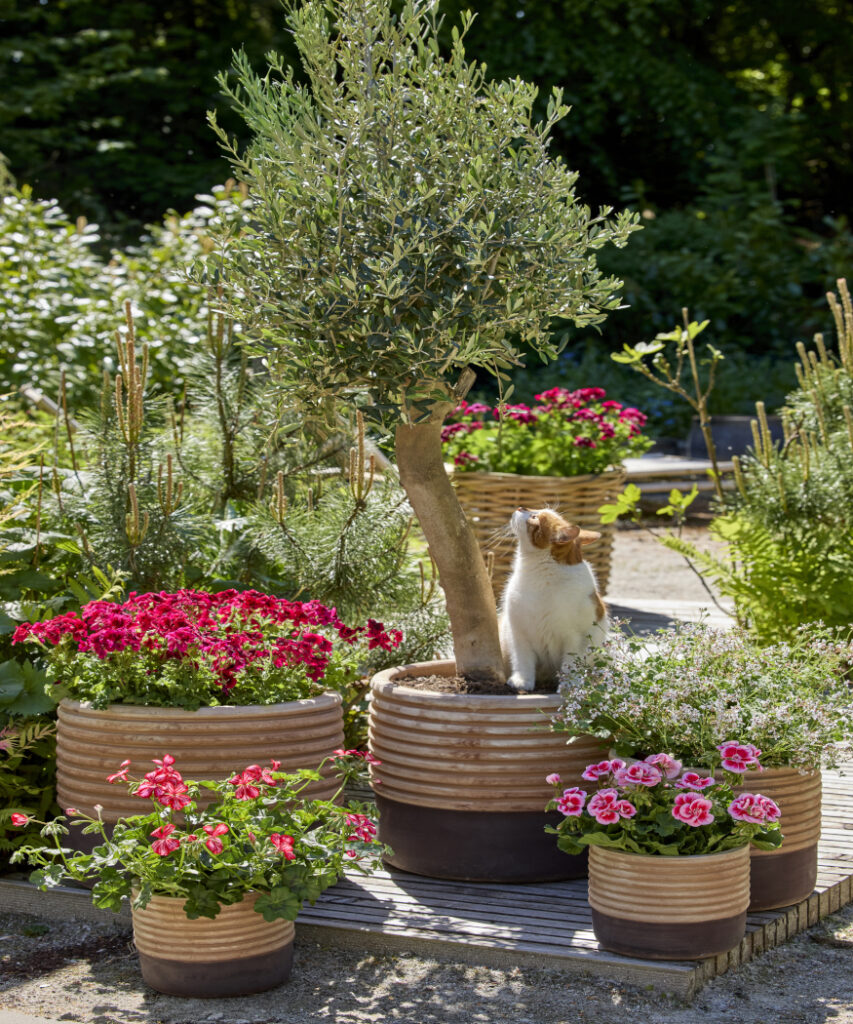
If the needs of individual plants differ significantly, potting them separately offers maximum design freedom. They can be placed in a large bowl or window box, still inside their pots, or in separate containers next to each other on a shelf, table or floor. This way, each plant can be cared for individually without compromising the overall visual effect. Arrangements incorporating strawberries, tomatoes or small olive trees are especially attractive.
Experiment with colours and sizes
Varying heights, leaf shapes and shades bring dynamism to a planting, creating a vibrant overall effect.
There are lots of colour scheme variations possible: Tone-on-tone combinations appear calm and harmonious, while contrasts in pink, white or blue provide freshness and luminosity. Plantings where the colours of the flowers and the green of the leaves are visually harmonious are really attractive, while silvery-green or variegated foliage can also complement a colour palette stylishly.
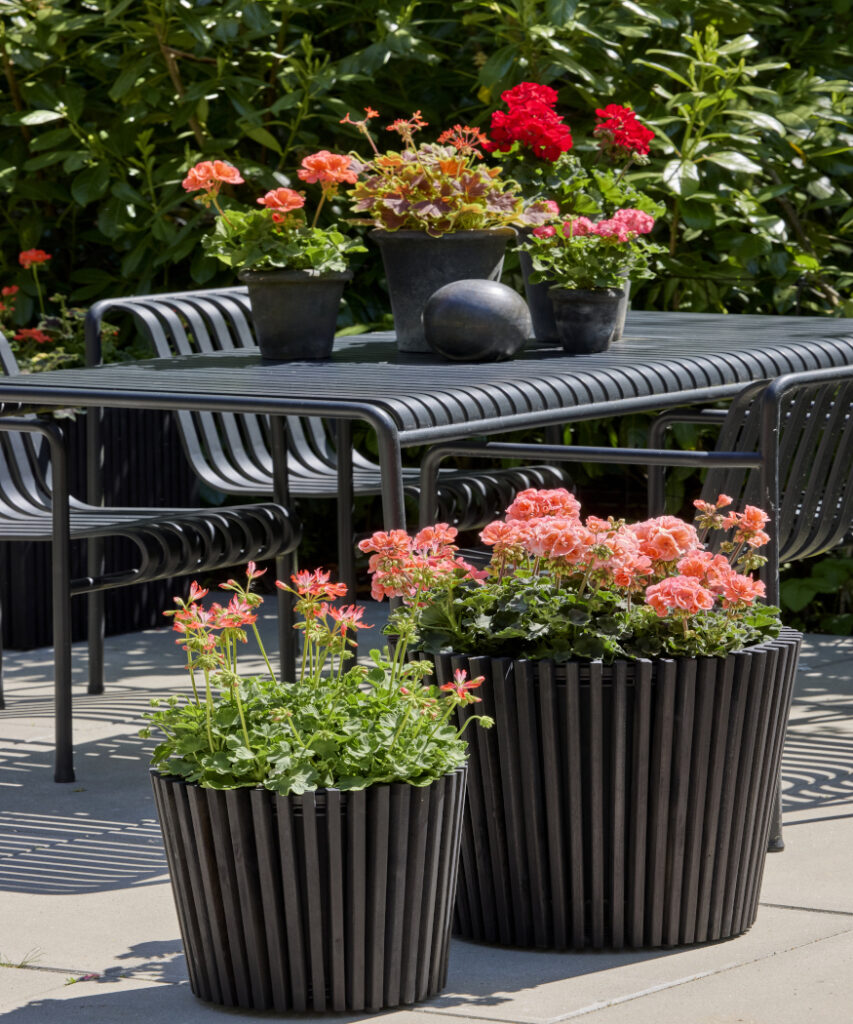
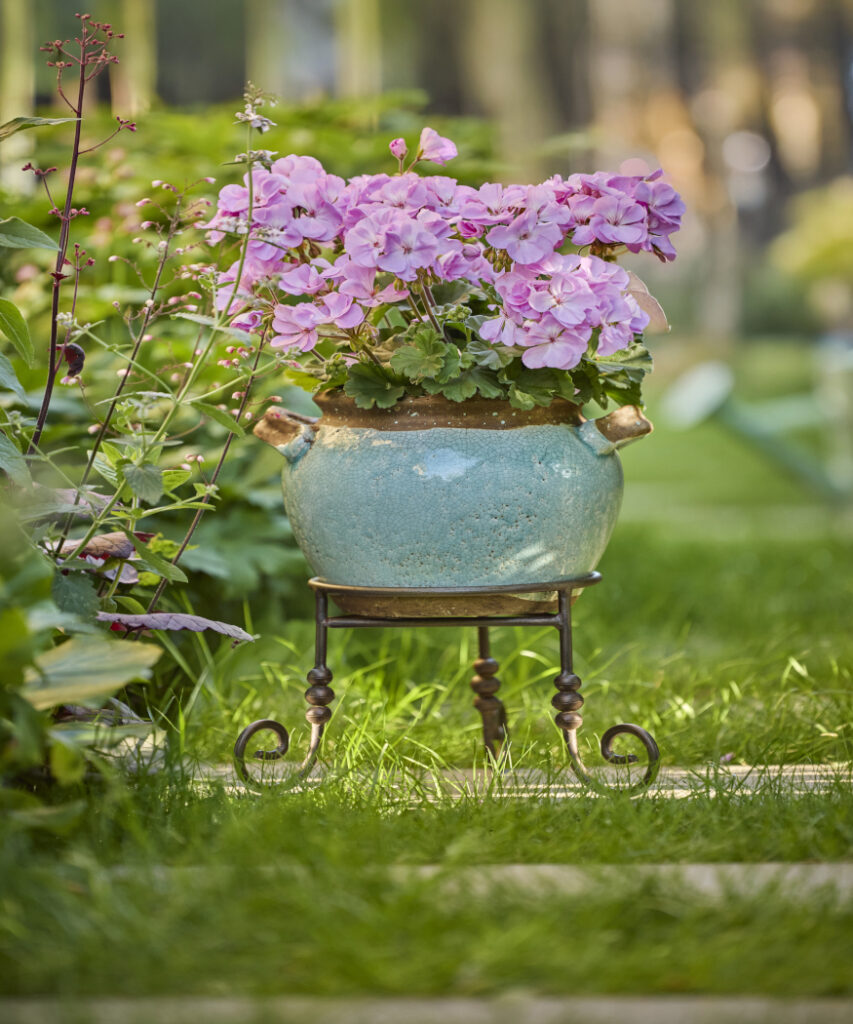
When designing with different sizes, we recommend a staggered approach: Large, upright species are ideal as focal plants and can be placed at the back of the planter or centrally in round containers. Zonal geraniums fulfil this role really well. Medium-height companion plants create a transition towards the front, while smaller, hanging varieties such as trailing geraniums loosely frame the arrangement.
For humans and bees: ornament meets utility
Geraniums are available in single, semi-double and double varieties. The double types are the most impressive, with their lavish beauty. However, they produce neither nectar nor pollen, so are primarily aimed at humans. However, many single- and semi-double geraniums do have something to offer insects such as bees. Their stamens contain pollen and some varieties produce nectar too. They are often visited by insects in late summer when hedges or perennials are no longer producing flowers.
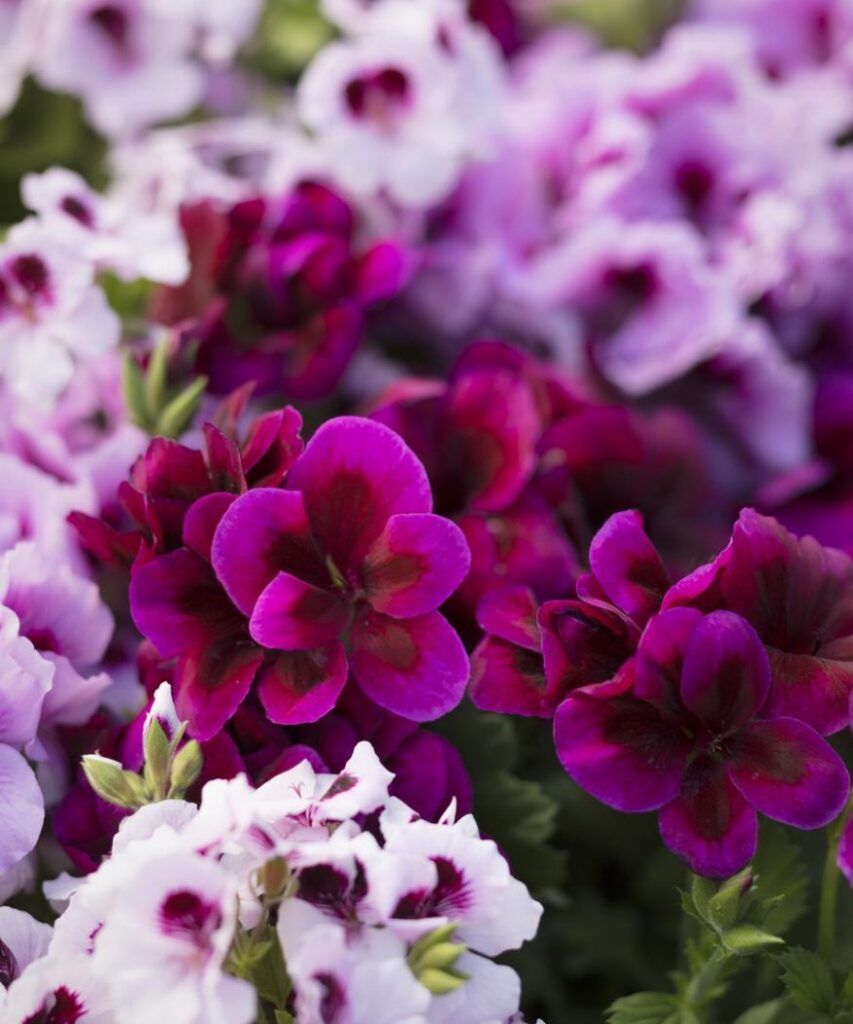
Even double geraniums can attract insects with their bright colours and large blooms, even if they don’t provide food. To make their visit worthwhile, combine doubles with bee-friendly plants such as lavender, nasturtiums, verbena or lobelia, or aromatic herbs such as thyme or sage. This also contributes to biodiversity on your balcony or terrace.
How to make geraniums thrive
Whether planted alone or in mixed combinations, geraniums grow quickly and vigorously and need space to develop properly. A distance of around 20cm from their neighbours is ideal for young plants to develop well. The container should also be the right size; a minimum height of 18cm ensures sufficient root space.
For planting, we recommend a high-quality balcony compost with good water retention and a permeable structure. A drainage layer of expanded clay or gravel, as well as drainage holes in the container, prevents waterlogging.
Regular fertilisation and the removal of dead blooms both promote flowering and ensure that geraniums and their companion plants look their best well into autumn.