 English
 Dansk
Dansk Deutsch
 English
 Español
 Français
 Hrvatski
 Italiano
 Magyar
 Nederlands
 Norsk
Norsk Polski
 Română
 Slovenský
 Slovenščina
 Suomalainen
 Svenska
 Česky
Česky Ελληνική
 Български
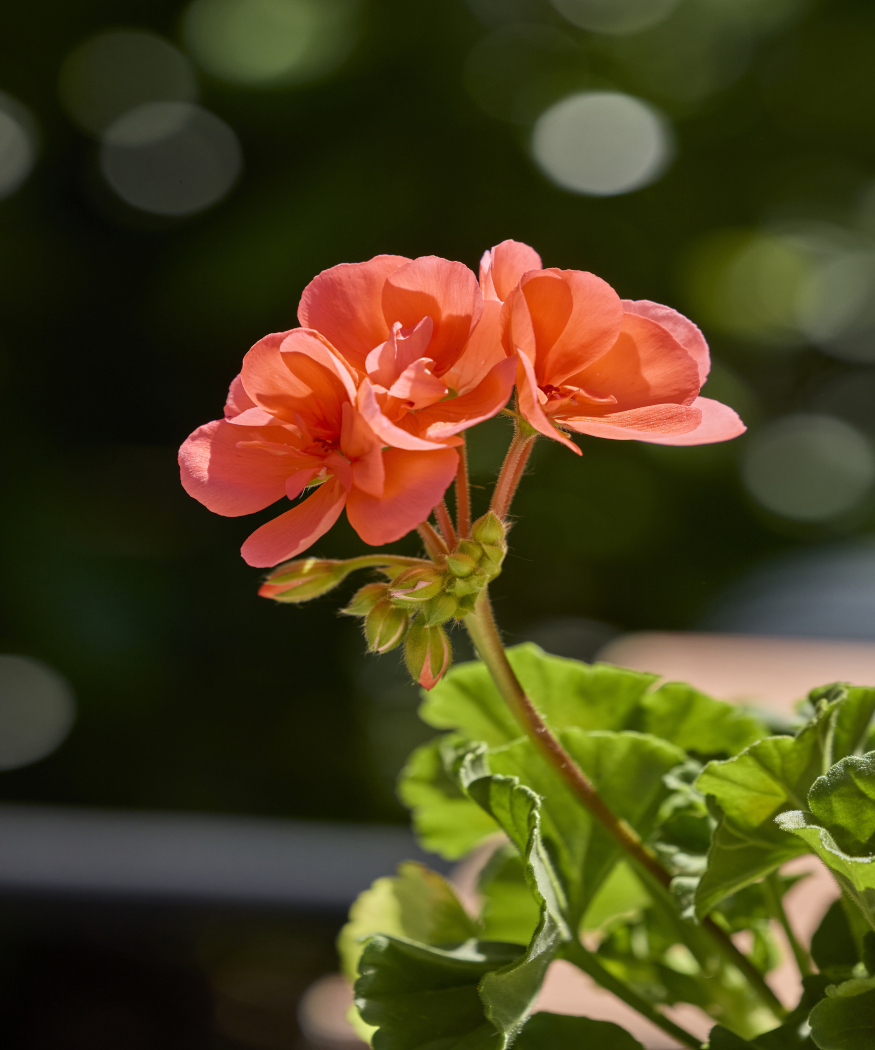
As spring approaches and balcony season begins, geraniums make a big comeback. Whether fresh from the garden centre or brought in from their winter home, now is the time to take a closer look at how to care for them properly. Although geraniums are often only kept as seasonal plants, they are actually perennials and can easily be overwintered. Both options have their respective merits. If you understand the plants’ requirements for watering, fertilising and pruning, you can make sure they grow healthily and bloom for as long as possible. The experts at Pelargonium for Europe (PfE) tell you how to care for geraniums throughout the year, from March through to February.
March: Refresh and enjoy the first flowers indoors
When the days become noticeably longer in March, it’s the ideal time to bring overwintered geraniums indoors and plant them in fresh compost. Pruning the shoots ensures bushy growth. They will then thrive in a spot in a conservatory, or on a veranda or windowsill. The first applications of fertiliser will stimulate growth. At temperatures of around 18–20°C, the first new shoots will soon appear. If you want flowers right away, you can find the first regal pelargoniums in bloom in specialist shops at this time. Originally bred as houseplants, these varieties boast magnificent flowers and bring colour and a touch of spring to bright interiors.
April: It’s almost time for the big moment!
Numerous geraniums are already available in shops. But be careful: April is still too early to plant them outdoors, as late frosts can occur until mid-May. To be on the safe side, wait a little longer before buying. However, if you can’t be patient, you can put the plants in a sheltered, sunny spot indoors, such as a conservatory or greenhouse, or on a windowsill. On warm days, place your geraniums outside for a few hours at a time to help them get used to the sun and wind gradually. They should still be kept indoors overnight, though. Starting early will allow you to begin the season with strong, flowering plants.
May: The start of the season
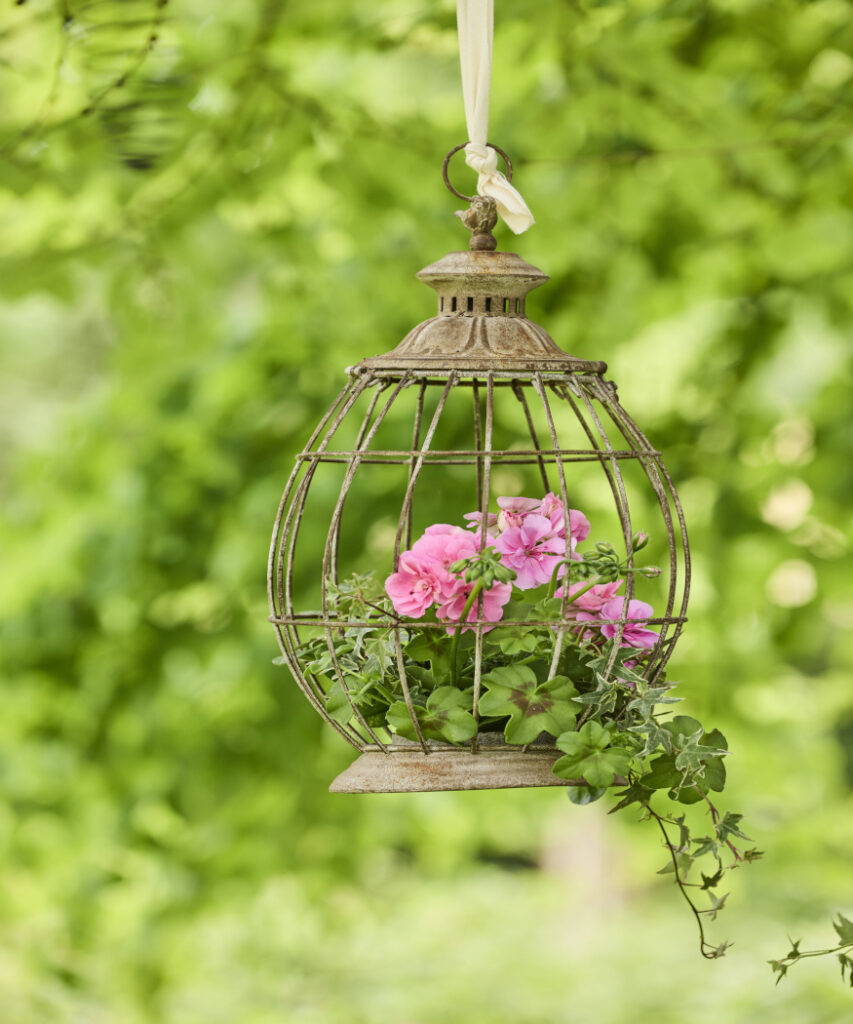
After about mid-May, the risk of frosts has passed and geraniums can finally be planted outdoors. Specialist retailers offer the greatest variety in May. If you buy large, well-developed plants, you can enjoy blooms sooner. Geraniums in boxes, containers, hanging baskets and beds quickly develop their full vigour in a sunny to semi-shaded location. As they grow fast and require more space than many other balcony plants, planters should be at least 18cm deep.
You should also allow a little more space between neighbouring plants – around 20cm. When planting, it’s important to use high-quality balcony flower compost with good water retention and a permeable structure. A drainage layer of expanded clay or gravel, as well as drainage holes in the pot, will prevent waterlogging. Pre-fertilised soil provides the plants with enough nutrients for the first few weeks. After that, you’ll need to add more fertiliser. Slow-release food is a convenient solution if you want to reduce the amount of work required later on.
June to mid-September: Perfect care throughout the summer
Geraniums are at their most beautiful during the summer months. Thanks to their fleshy leaves and stems, these easy-care flowering plants can store plenty of moisture, enabling them to survive short dry spells with ease. However, they still need regular watering to ensure strong growth and abundant flowering. On particularly hot, sunny days, you may need to water them in the morning and evening. The finger test will tell you whether they need watering: if the soil feels warm and dry to a depth of 2–3cm, it’s time to reach for the watering can. Important: Excess liquid must be able to drain away to prevent waterlogging. During prolonged periods of rain, remove outer planters and saucers and, if possible, move your geraniums under cover.
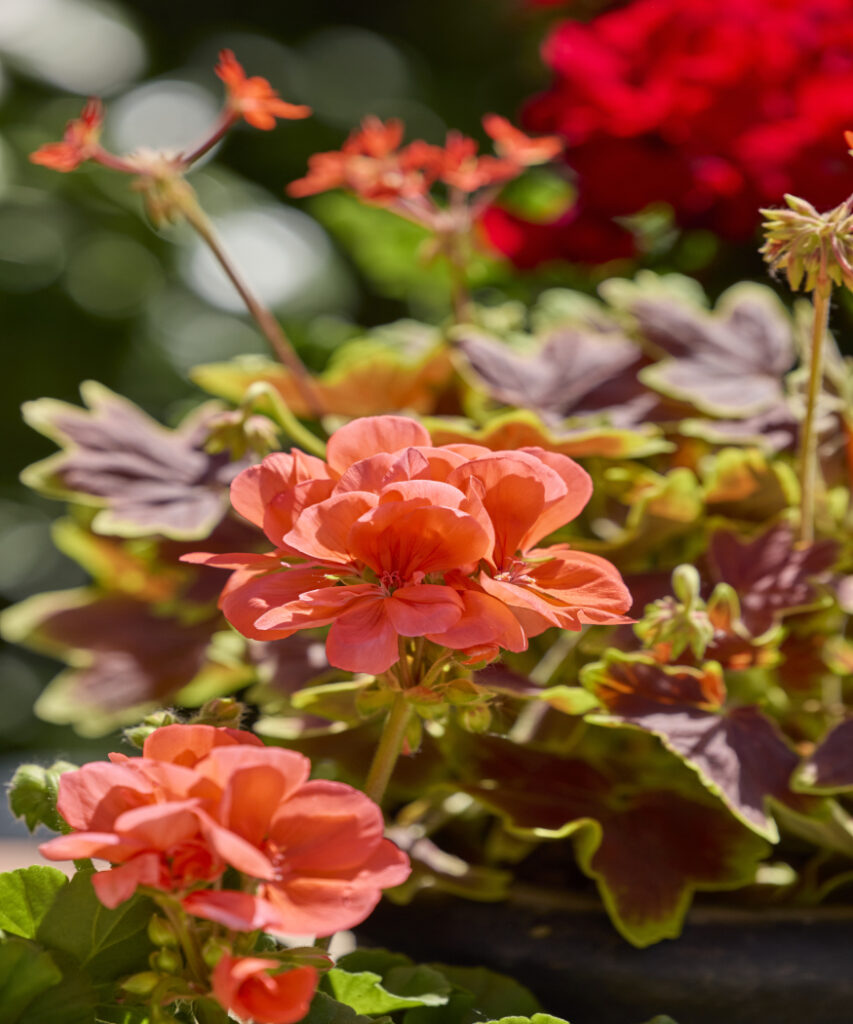
Nutrient supply also plays an important role during the summer months, as geraniums are very demanding plants. Even when planting with pre-fertilised soil or slow-release feed, the supply will usually be exhausted by midsummer. Your geraniums will now need fresh supplies. Applying a standard liquid fertiliser for flowering plants weekly or fortnightly, as instructed, will make they keep flowering abundantly and continue to look their best.
Regular pruning, i.e. removing dead or wilted parts, also supports flower formation and keeps the plants healthy. If you want to grow new geraniums for next year, you can take cuttings from the end of July and grow them separately.
Mid-September to the first frost: Geraniums as autumn displays
With good care, geraniums will bloom well into autumn. After the hot summer months, they often flourish again in cooler temperatures – right up until the first frost. As it is now cooler, the plants need significantly less water. Fertiliser is also no longer necessary from the end of September onwards: the days are getting shorter, the nights cooler, and growth is slowing down. The nutrients still present in the soil are now enough to get them through the last few weeks of the season.
From the first frost until February: Dormant period in winter quarters
Once night-time temperatures consistently fall below 5°C, it’s time to prepare your geraniums for their winter home. If you want to overwinter them, cut the plants back to about 10–15cm and remove all leaves and flower heads – this saves space and makes storage easier.
A bright, cool room with temperatures between 5 and 10°C is ideal. The dormant period begins in the winter months: geraniums stop growing and therefore require little care. Simply keep the soil slightly moist from time to time. They don’t need any fertiliser during this period.